FENGYU Tie Rod Ends Precision Steering Solutions for Global Vehicles

As a leading automotive parts manufacturer with over 30 years of expertise, FENGYU has earned trust in tie rod end production, delivering precision and reliability to the global aftermarket. Specializing in steering components, we offer a comprehensive range of tie rod ends designed to fit 90% of vehicle brands—including Japanese, Korean, American, and European models—making us the top choice for Honda tie rod ends, Ford steering tie rod ends, Chevrolet tie rod ends, Nissan tie rod ends, and Dodge tie rod ends, among others.

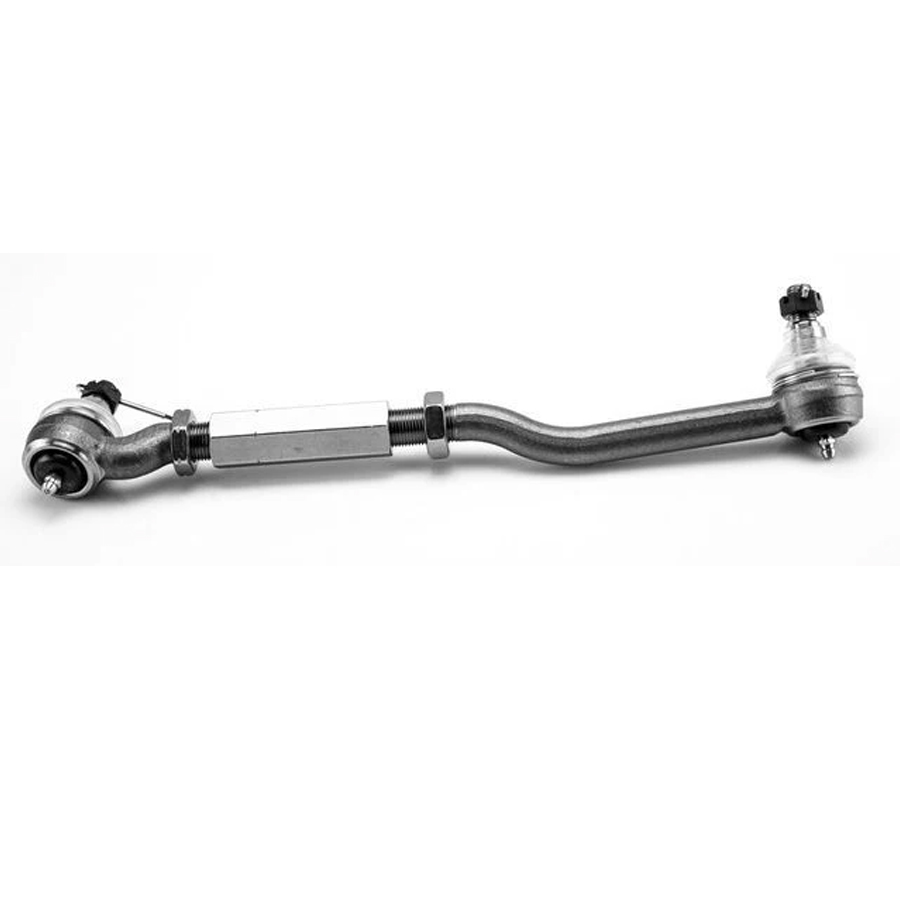
Honda tie rod end replacement


Built for Precision: Quality Materials & Engineering

At FENGYU, every tie rod end is engineered to ensure smooth, responsive steering, starting with premium materials. Our steering tie rod ends feature high-strength alloy steel bodies, forged for exceptional durability to withstand the rigors of daily driving, sharp turns, and rough terrains. The critical ball joint assembly, precision-machined for tight tolerances, ensures consistent rotation, eliminating steering play and enhancing control.


To protect internal components, our tie rod ends are equipped with EPDM rubber dust boots, resistant to oil, heat, and corrosion, shielding against dirt, moisture, and road debris—key to extending lifespan in harsh conditions. Hardware, including tie rod end studs and nuts, is forged from high-tensile steel, guaranteeing secure installation and long-term stability, even under heavy steering loads.
 

Tailored for Your Business: OEM/ODM Flexibility

Understanding the aftermarket’s diverse needs, FENGYU offers flexible customization to elevate your brand. Choose from finishes like silver or black oxide coating for tie rod ends, add laser-etched logos or part numbers for brand recognition, or opt for personalized packaging—from branded color boxes to custom polybags. With a low MOQ of 100 pieces per model, we make it easy for distributors, wholesalers, and importers to access tailored solutions without large inventory commitments, backed by competitive factory-direct pricing.


Quality You Can Depend On: Testing & Certifications

Quality is the cornerstone of FENGYU’s tie rod ends. Every unit undergoes rigorous testing, from raw material inspections to pre-shipment audits. We validate dimensional accuracy, ball joint rotation smoothness, torque resistance, and corrosion resistance to meet or exceed OE standards—ensuring consistent performance across all products. Our commitment is reinforced by IATF 16949 and ISO 9001 certifications, giving you confidence that every FENGYU tie rod end meets global quality benchmarks.


Supported by Expertise & Reliable Service

We stand behind our tie rod ends with a robust warranty and responsive support. All products come with a warranty, and our after-sales team is ready to assist—simply share photos or videos of concerns, and we’ll promptly resolve issues with refunds or replacements in your next order. With 30+ years of export experience, we ensure timely delivery: our ready stock of 100,000+ units enables quick turnaround, while custom orders are fulfilled within 30–45 days.


Partner with FENGYU for Steering Excellence

Whether you need Honda Civic tie rod ends, Ford F-150 steering tie rod ends, or solutions for other models, FENGYU combines quality, flexibility, and expertise to support your business. We don’t just supply parts—we build partnerships, helping you stay competitive in the aftermarket.


Looking for a trusted tie rod end supplier? Contact FENGYU today to explore our range, discuss customization, and grow with parts built for precision.

Why FENGYU Ball Joints Are the Trusted Choice for Global Automotive Aftermarkets

In the complex ecosystem of automotive components, few parts are as critical to safety and performance as the ball joint. Serving as the linchpin between a vehicle’s suspension and steering systems, a high-quality ball joint ensures smooth handling, stable control, and durability across diverse driving conditions. For over three decades, Xiamen Fengyu Autoparts Co., Ltd. has stood out as a leading manufacturer of premium ball joints, earning trust from clients worldwide. Let’s explore why FENGYU ball joints are the go-to choice for passenger cars, SUVs, and trucks across Japanese, Korean, European and American vehicle brands.

nissan ball joint


A Legacy of Excellence: 30+ Years of Manufacturing Expertise

Founded in 1997, FENGYU has built a distinguished reputation in the automotive aftermarket (AM) sector, with over 30 years of focused experience in developing and producing steering, suspension, and brake components. What began as a regional manufacturer has evolved into a globally recognized supplier, thanks to an unwavering commitment to precision engineering and superior craftsmanship. Today, FENGYU operates a state-of-the-art facility equipped with over 200 sets of advanced manufacturing equipment, boasting an annual production capacity of 10,000,000 pieces and ready stock of over 100,000+ units—ensuring quick response to global demand.

Certifications are a testament to FENGYU’s dedication to quality. The company holds ISO9001 and IATF certifications, rigorous standards that validate its adherence to international quality management systems. These certifications, combined with decades of export experience spanning 30+ countries, make FENGYU a reliable partner for businesses seeking consistent, high-performance automotive parts.


Engineering Excellence: What Makes FENGYU Ball Joints Stand Out

At the core of FENGYU’s success lies its relentless focus on product quality. Every ball joint undergoes a battery of rigorous tests to ensure it meets or exceeds OE (Original Equipment) standards. These tests include dimensional accuracy checks to guarantee perfect fitment, durability trials to withstand millions of cycles of use, and corrosion resistance assessments using salt spray testing—critical for parts exposed to harsh weather and road conditions. Torque and impact tests further validate that FENGYU ball joints can handle the stresses of daily driving, from urban commutes to off-road adventures.


FENGYU ball joints are engineered to fit a wide range of vehicles, making them a versatile solution for aftermarket needs. Whether you’re servicing a Japanese Honda, a Korean Hyundai, a European BMW, an American Ford, or a Chinese domestic model, FENGYU offers ball joints tailored to 90% of automobile brands. This compatibility extends across passenger cars, rugged SUVs, and heavy-duty trucks, ensuring that no matter the vehicle type, FENGYU has a ball joint that delivers reliable performance.
honda ball joint

Flexibility for Every Business Need: Low MOQ, Competitive Pricing, and Custom Solutions

FENGYU understands that aftermarket businesses have diverse needs, which is why it prioritizes flexibility in its services. One of the key advantages of partnering with FENGYU is its low minimum order quantity (MOQ) of 100 pieces per model. This customer-friendly policy allows small to medium-sized businesses to access premium parts without the burden of large inventory commitments, making it easier to test new markets or meet niche demand.


Competitive pricing is another cornerstone of FENGYU’s offering. As a factory-direct supplier, FENGYU eliminates middleman costs, passing savings directly to clients. This factory-direct model also ensures transparency in pricing and faster communication, streamlining the ordering process for businesses worldwide.


For clients with unique requirements, FENGYU offers robust OEM/ODM customization services. Whether you need ball joints tailored to specific vehicle models, branded with your company logo, or designed to meet unique performance specifications, FENGYU’s R&D team works closely with clients to deliver bespoke solutions. The process is seamless: provide your design specifications or trademark authorization, and FENGYU handles the rest—from prototyping to production—ensuring your custom parts meet the same strict quality standards as its standard offerings.


Beyond the Product: Lifetime Warranty and Exceptional Support

FENGYU stands behind its ball joints with a lifetime warranty, a promise that speaks to the confidence in its product durability. This warranty ensures that clients can offer their customers peace of mind, knowing that FENGYU parts are built to last. In the rare event of an issue, FENGYU’s responsive after-sales service team is ready to assist, providing quick solutions to minimize downtime for businesses.


Delivery efficiency is another area where FENGYU excels. For ready stock items, delivery can be arranged within 1–3 days, ensuring urgent orders are met promptly. For custom or large-quantity orders, lead times are kept reasonable at 30–45 days, with clear communication throughout the production process. This reliability in delivery has made FENGYU a preferred supplier for time-sensitive projects.
 

Why Choose FENGYU Ball Joints for Your Business?

In a market flooded with automotive parts, FENGYU stands out as a partner that combines quality, flexibility, and service. Whether you’re a small auto repair shop, a regional distributor, or a global chain, FENGYU’s ball joints offer the perfect balance of performance and value. With OE-level quality, broad vehicle compatibility, low MOQ, competitive pricing, and custom solutions, FENGYU empowers businesses to meet customer needs effectively.


Backed by 30+ years of expertise, ISO9001/IATF certifications, and a track record of satisfied clients, FENGYU is more than a supplier—it’s a collaborator invested in your success. From standard replacements to bespoke designs, FENGYU’s ball joints are engineered to deliver reliability, mile after mile.


Ready to elevate your automotive parts inventory? Choose FENGYU ball joints for factory-direct quality, professional support, and the confidence that comes from partnering with a trusted industry leader. Contact the FENGYU team today to discuss your needs and experience the difference quality and service can make.

What Is Refrigeration Gas 404A Used For? A Guide to Its Core Applications

Refrigeration gas 404A is a blended HFC refrigerant known for its reliability and strong performance, especially in low and medium-temperature systems. For years, it has been a trusted choice across various sectors in the United States that require consistent and powerful cooling.

Its versatility makes it suitable for a wide range of demanding commercial and industrial environments. Here are the primary applications where refrigeration gas 404A is used:


1. Commercial Refrigeration


This is the most common sector for R-404A. It is engineered to perform exceptionally well in the daily grind of retail and food service environments. Key uses include:

  • Supermarket Display Cases: The open-air coolers and freezers lining grocery store aisles.

  • Walk-In Coolers & Freezers: Essential for restaurants, grocery stores, and food distributors to store perishable goods in bulk.

  • Ice Machines: Widely used in hospitality, food service, and healthcare to produce ice reliably.


2. Transport Refrigeration


The ability of refrigeration gas 404A to maintain a consistent temperature under varying conditions makes it ideal for mobile applications. It is frequently used in:

  • Refrigerated Trucks and Trailers: Keeping produce, frozen foods, and other temperature-sensitive items safe during transit.

  • Refrigerated Shipping Containers: Used for overseas and rail transport of perishable cargo.


3. Industrial Cooling


In more heavy-duty settings, refrigeration gas 404A provides the robust cooling capacity needed for large-scale operations. These applications include:

  • Cold Storage Warehouses: Large facilities that store frozen and refrigerated goods before distribution.

  • Food Processing Plants: Used in blast freezers and other cooling processes during food production.


In essence, refrigeration gas 404A is a versatile refrigerant designed for equipment that needs to achieve and maintain cold temperatures efficiently, from a local restaurant's walk-in freezer to a cross-country refrigerated truck.

Why is R-410A Being Banned?

R-410A, a popular refrigerant gas used in air conditioners and heat pumps, is often mentioned in discussions about refrigerant phase-outs. However, contrary to widespread belief, R-410A is not being banned globally. What’s happening is a gradual shift in refrigerant choices due to environmental concerns, regulatory changes, and industry trends.


Here’s why this confusion exists:

Environmental Impact

R-410A is a blend of hydrofluorocarbons (HFCs), which are potent greenhouse gases (GHGs). When released into the atmosphere, they contribute significantly to global warming. This has led to its inclusion in the Montreal Protocol and subsequent Kigali Amendment agreements aimed at reducing substances that harm the ozone layer and exacerbate climate change.

Although R-410A does not deplete the ozone layer (unlike its predecessor R-22), its high global warming potential (GWP) makes it a target for phasedown rather than an outright ban.


Regulations

Several countries, particularly in Europe and the U.S., are adopting stricter regulations on refrigerants with high GWP. In the U.S., the American Innovation and Manufacturing (AIM) Act aims to reduce the use of high-GWP refrigerants like R-410A by 85% over the next 15 years, replacing them with lower-GWP alternatives. Similarly, the EU’s F-Gas Regulation has set guidelines for reducing the use of HFCs.

However, R-410A is not banned outright. Instead, it's being phased out in favor of refrigerants with a lower GWP, such as R-32 or natural refrigerants like CO2.

Transitioning to Low-GWP Alternatives

While R-410A remains in use today, the industry is evolving. Manufacturers are increasingly shifting towards more eco-friendly options like R-32, which has a GWP of about one-third of R-410A. This transition is seen as a necessary step toward achieving global climate goals, but it's being implemented gradually, allowing existing systems using R-410A to remain operational.


Conclusion

R-410A is not being banned outright; instead, its use is being reduced as part of a broader push for more sustainable refrigerants. The shift is driven by climate policy, and while it might cause some confusion, it’s clear that the goal is to reduce the environmental impact of refrigerants, not to eliminate them entirely.

So, while R-410A may not have a permanent place in the future of HVAC systems, its gradual phase-out is part of an important environmental transition. The future of refrigerants is moving toward more sustainable options, and R-410A is just one step in the process.

What is Centrifugal Pump? Parts, Working Principle and Types

Introduction

A centrifugal pump is a mechanical device that converts the rotational energy of an impeller into fluid kinetic energy to transport liquids. Centrifugal pumps are widely used in industries such as water treatment, oil and gas, chemical processing, and HVAC systems, and are key equipment for efficient liquid transportation. In this article, we will explore the working principle of centrifugal pumps, their key components, different types, and applications to help you gain a comprehensive understanding of what centrifugal pumps are. Continue reading to learn more!

what is centrifugal pump

How Does a Centrifugal Pump Work?


The working principle of a centrifugal pump involves an electric motor driving the impeller to rotate at high speed, thereby causing the liquid inside the pump to form a rotating flow and generating high kinetic energy at the impeller outlet. Under the influence of centrifugal force, the liquid flows along the pump casing toward the outlet or is transported to the next stage impeller. Simultaneously, a low-pressure zone forms at the center of the impeller due to the outflow of liquid, creating a pressure difference with the liquid at the suction inlet, which drives the liquid to continuously enter the pump body. As the impeller continues to rotate, the pump achieves continuous suction and discharge, completing the liquid transportation process.  


Centrifugal Pumps Parts

The centrifugal pump parts mainly consist of impellers, pump casings, pump shafts, bearing assemblies, sealing devices, suction and discharge ports, and drive motors. The following are the functional characteristics of each component:

Centrifugal Pump parts


Impeller: The impeller is the rotating element that imparts kinetic energy to the fluid, generating centrifugal force to move the liquid outward.

Pump Casing: The casing encloses the impeller and directs the flow of liquid from the impeller to the discharge outlet while converting velocity into pressure.

Shaft: The shaft transmits mechanical energy from the motor to the impeller, maintaining stable rotation and alignment.

Bearing Assembly: Bearings support the shaft and reduce friction, making is smooth and precise operation.

Mechanical Seal or Packing: Prevent liquid from leaking along the shaft where it exits the casing.

Suction and Discharge Nozzles: The suction nozzle allows fluid to enter the pump, while the discharge nozzle guides it out under pressure.

Motor or Driver: The motor provides the necessary power to rotate the impeller and drive the pumping process.


Types of Centrifugal Pumps

industrial centrifugal pumps have a variety of designs and models to meet different industrial application needs. The following are some common types:


Magnetic Drive Pumps: Utilize leak-free magnetic drive technology, suitable for transporting flammable, explosive, or toxic media (such as solvents, liquid chlorine).

Semi-Submersible Pumps: The motor is exposed above the liquid surface, suitable for applications with significant fluctuations in water level (such as drainage stations, temporary flood control).

Self-priming pumps: Equipped with an air release function, eliminating the need for manual priming, suitable for intermittent suction (e.g., ship ballasting, construction site drainage).

Diaphragm pumps: Utilize diaphragm reciprocating motion to transport high-viscosity or particulate-containing liquids (e.g., slurry, paint).

Water pumps: General-purpose design for clean water transportation (e.g., municipal water supply, agricultural irrigation).

Acid pumps: Manufactured using corrosion-resistant materials (e.g., PVDF, Hastelloy), specifically designed for acidic media (e.g., sulfuric acid, hydrochloric acid).

Alkali pumps: Equipped with special seals and material processing techniques, suitable for strong alkaline liquids (e.g., sodium hydroxide, electrolyte).


What is centrifugal pump used for?


Industrial centrifugal pumps are widely used across multiple industries:

Water & Wastewater: Transferring clean water, sewage, and stormwater in treatment plants.

Oil & Gas: Transporting crude oil, refinery fluids, and seawater in offshore operations.

Chemical & Pharma: Handling corrosive acids, solvents, and sterile pharmaceutical liquids.

Power Plants: Circulating boiler feedwater, cooling water, and condensate in energy generation.

Mining & Manufacturing: Pumping abrasive slurries and industrial coolants.

Agriculture: Distributing irrigation water and agrochemicals efficiently.

what is centrifugal pump used for

Advantages of Centrifugal Pumps


High Efficiency: Engineered for optimal energy conversion, delivering superior flow rates with minimal power consumption.

Low Maintenance: Simplified mechanical design with only one rotating component (impeller) reduces wear and maintence.

Compact Footprint: Space-saving vertical/horizontal configurations adapt to constrained industrial layouts.

Material Versatility: Available in stainless steel, cast iron, fluoroplastic and advanced polymers to handle corrosive/abrasive media.

Pulsation-Free Operation: Continuous rotary motion ensures smooth, vibration-free fluid transfer critical for precision processes.


Conclusion

Centrifugal pumps are versatile, highly efficient, and widely used, making them the core equipment of modern fluid delivery systems. As a professional pump solution provider, we focus on meeting the special fluid handling needs of various industries and offer comprehensive customized services. If you need the most suitable pumping solution for your working conditions, please feel free to contact our technical experts for consultation.


Enhance Your Industrial Cooling Strategy with Air Cooled Screw Chillers

You gain immediate advantages when you implement central cooling in your facility. An industrial air cooled screw chiller delivers outstanding energy savings and boosts operational efficiency, especially in demanding industrial environments. Recent studies show these chillers excel in reliability and cut operational costs by using advanced controls and leveraging ambient air. You can count on this technology to strengthen your central heating and cooling system and improve your hvac performance. With proven energy optimization, you take a confident step toward better operational efficiency and long-term savings.


Key Takeaways

  • Industrial air cooled screw chillers boost energy savings and improve cooling reliability in demanding environments.

  • Central cooling systems provide consistent temperature control, reduce downtime, and support scalable industrial operations.

  • Advanced compressor and control technologies enhance efficiency, lower noise, and enable precise system monitoring.

  • Regular maintenance and compliance with standards maximize system lifespan and maintain peak energy efficiency.

  • Choosing modern refrigerants and energy-efficient designs helps reduce environmental impact and supports sustainability goals.


Central Cooling Overview


china air cooled industrial chiller


System Principles

Central cooling delivers consistent temperature control across your entire facility. You use a network of supply and return ducts to circulate cool air efficiently. The system draws in warmer air, cools it, and then distributes it back through supply ducts. You can choose between split-system units, which separate indoor and outdoor components, or packaged units that combine everything in one cabinet. Proper sizing and installation are essential. You follow industry protocols for load calculation and equipment selection to ensure optimal performance. You also need to design ductwork carefully, seal and insulate ducts, and position equipment to reduce noise and airflow issues. Adhering to manufacturer guidelines for refrigerant charge and airflow helps you maintain efficiency. You also meet standards like ASHRAE 62.1-2010 for ventilation and air quality, which ensures a safe and comfortable environment for your team.


Industrial Applications

You find central cooling essential in many industrial environments. The OMC-100ASH air cooled screw chiller supports industries such as rubber, plastics, petroleum, chemical, electrical, paper, textile, brewing, pharmaceuticals, machinery, food, and beverage processing. These sectors rely on precise temperature control to maintain product quality and protect sensitive equipment. You benefit from advanced hvac solutions that deliver reliable cooling even under heavy loads. Central cooling allows you to scale operations and adapt to changing production needs. By integrating a robust chiller, you ensure stable operation and reduce downtime, which is critical for maintaining productivity and meeting industry standards.


Industrial Air Cooled Screw Chiller Features

air cooled screw chiller supplier

Compressor Technology

You benefit from advanced compressor technology when you choose an industrial air cooled screw chiller. Semi-hermetic screw compressors offer several advantages over open-type models:

  • The intermediate flange connection reduces leakage risk, keeping your system secure.

  • Direct refrigerant cooling for the motor eliminates the need for a fan, lowering noise and boosting stability.

  • The design minimizes refrigerant and oil leakage, supporting long-term reliability.

  • Noise reduction improves your working environment.

  • Enhanced cooling capacity meets high-load demands in industrial settings.

Brand-name semi-hermetic screw compressors feature four-grade capacity control. This technology reduces electrical impact during startup and increases energy efficiency. You experience smoother operation and consistent temperature control, even during peak production periods.


Control Systems

You gain precise control and monitoring with the Siemens PLC and LCD touch screen interface. The centralized control system tracks critical parameters such as temperature, pressure, phase sequence, and motor conditions. The menu-driven LCD touch screen makes adjustments easy and provides real-time visualization of your chiller’s running state. You can select your preferred language for operation, making the system accessible for your team.

Energy optimization and load tracking are key features in modern industrial air cooled screw chillers. Variable speed drives on compressors, pumps, and fans can reduce energy consumption significantly. Studies show that optimizing condensing temperature and chilled water flow rates can increase the coefficient of performance and lower annual electricity use. Automated fault diagnostics help you detect issues early, minimizing downtime and maintenance costs. Advanced systems use real-time sensor data and AI-driven analytics to provide actionable insights and predictive maintenance.


Safety Feature

Description

Operational Risk Reduction

Automatic Shutdown Systems

Detect operational irregularities and shut down the chiller automatically.

Reduces equipment damage by up to 40%, prevents failures.

Pressure Relief Valves

Release excess pressure to prevent equipment rupture.

Lowers catastrophic failure risk by up to 50%.

Temperature Monitoring

Continuously monitors temperature and sends alerts if unsafe levels occur.

Enables real-time intervention, maintaining safe conditions.


Benefits of Central Cooling


Industrial Air Cooled Screw Chiller


Energy Efficiency

You achieve remarkable energy efficiency when you implement central cooling in your facility. Advanced air cooled screw chillers use semi-hermetic compressors with patented rotor profiles, which increase efficiency by up to 30% compared to standard models. The integration of electronic control systems and optimized refrigerants can reduce energy consumption by nearly 60%. You benefit from automatic load tracking and precise temperature management, which ensures that your system only uses the energy required for current conditions. This energy-efficient design not only lowers your utility bills but also supports your sustainability goals.


Cost Savings

You realize substantial cost savings with central cooling systems. Air cooled screw chillers offer several financial advantages over traditional cooling solutions:

  • Lower energy consumption leads to reduced utility expenses.

  • Minimal maintenance requirements decrease repair and service costs.

  • The absence of cooling towers and water treatment systems cuts installation and ongoing maintenance costs.

  • Simple design and easy maintenance contribute to long-term cost-effectiveness.

  • Combined, these factors deliver significant operational and maintenance savings for your business.

You can allocate more resources to core operations and growth, rather than spending on frequent repairs or complex maintenance routines.


Reliability

You depend on reliable cooling to maintain productivity and protect equipment. Central cooling systems equipped with advanced safety features, such as automatic shutdown, pressure relief valves, and continuous temperature monitoring, minimize the risk of unexpected failures. The patented compressor design with enhanced bearing life and built-in oil pressure systems ensures stable operation under varying loads. You experience fewer breakdowns and longer system life, which translates to less downtime and greater peace of mind.


Scalability

You gain flexibility and scalability with central cooling solutions. Modular designs allow you to expand your cooling capacity as your facility grows. You can customize systems to meet specific industrial requirements, ensuring adaptability and efficiency. For example, using multiple cooling distribution units enables you to achieve redundancy and maintain optimal performance during expansion. Modular and customizable systems support future upgrades and changes, helping you respond quickly to evolving production needs.


Environmental Impact

You make a positive environmental impact by choosing central cooling systems with advanced refrigerants and energy-efficient controls. Switching to modern refrigerants with lower global warming potential reduces harm to the environment and complies with international regulations. Research shows that these upgrades can decrease energy consumption by up to 60%, resulting in a 13% to 16% reduction across various environmental impact categories. Lower electricity demand means less reliance on fossil fuels, which conserves natural resources and reduces emissions. Space-saving designs, such as packaged rooftop units and modular systems, free up valuable indoor space, minimize noise, and simplify maintenance. These features support operational efficiency and contribute to sustainable facility management.


Implementation Steps

You strengthen your facility’s performance when you integrate an industrial air cooled screw chiller into your central heating and cooling system. Begin by assessing your current cooling and heating demands. Identify the areas where temperature control is critical for production or equipment safety. Select a chiller model that matches your load requirements and fits seamlessly into your central hvac network.

Next, plan the installation process. Coordinate with your engineering team to determine the best placement for the chiller, considering airflow, accessibility, and noise reduction. You benefit from factory-tested units that arrive ready for installation, reducing downtime and ensuring reliable startup. Connect the chiller to your existing piping and electrical infrastructure. Use the advanced control panel to calibrate temperature settings and monitor system performance.

After installation, conduct a thorough commissioning process. Test the chiller under real operating conditions to verify output, safety features, and integration with your central heating and cooling system. Train your staff on the control interface and routine maintenance procedures. Schedule regular inspections to maintain peak efficiency and extend equipment life.


Key Considerations

Customization plays a vital role in meeting your facility’s unique requirements. You can select special materials for corrosion resistance, enabling operation with deionized water or sea water. Unique physical configurations allow you to fit the chiller into challenging spaces. Advanced controls and instrumentation provide precise temperature management for sensitive processes. Dual refrigeration systems offer redundancy, ensuring uninterrupted cooling for critical applications.

You may require explosion-proof designs for hazardous environments or special pumps for high-pressure demands. Standard options include custom paint finishes, outdoor packages, remote switching, and additional safety switches. These features have proven effective in demanding industrial settings, delivering reliable performance and safety.


Why Water-Cooled Screw Chillers Are Leading the Cooling Industry

Why Water-Cooled Screw Chillers Are Leading the Cooling Industry


Water-cooled screw chillers are the top choice in cooling systems. The market for these chillers will be worth over $4.8 billion in 2025. Big companies buy these chillers because they save energy, can grow with needs, and help the environment. Experts know it is important to watch new trends. Smart technology and new rules help people stay ahead in cooling system ideas.

  • Water-cooled screw chiller models use up to 30% less energy than old systems.

  • The market gets bigger as chillers show they work well for businesses and factories.

  • New ideas like modular design and predictive maintenance make more people use water-cooled screw chillers.


Water-Cooled Screw Chiller Basics


How Water-Cooled Screw Chillers Work

A water-cooled screw chiller cools big buildings and factories. It has two main loops. One is the refrigeration loop. The other is the chilled water loop. The refrigeration loop uses the vapor compression cycle. This cycle lets the refrigerant change between liquid and vapor. It helps absorb heat and then release it. The chilled water loop sends cold water to places that need cooling.

Here is how water-cooled chillers work step by step:

  1. The screw compressor takes in low-pressure refrigerant vapor. It squeezes the vapor to make it hotter and under more pressure.

  2. The condenser moves heat from the refrigerant to the cooling water. The cooling water goes to the cooling tower.

  3. The expansion valve drops the pressure and temperature of the refrigerant.

  4. The evaporator takes heat from the chilled water. This cools the water for the building or process.

  5. The cycle starts again. This keeps cooling steady and efficient.

This process makes water-cooled screw chillers great for keeping temperatures stable in many places.


Key Components

Every water-cooled screw chiller has important parts. These parts work together to keep things cool:

Component

Role in Cooling Process

Compressor

Squeezes low-pressure refrigerant gas into high-pressure gas. This makes it hotter and helps move heat.

Condenser

Takes heat from the refrigerant and gives it to the cooling water. This turns the refrigerant into a liquid.

Expansion Valve

Lowers the pressure and temperature of the refrigerant. This helps it absorb heat better.

Evaporator

Takes heat from chilled water or fluid. This makes the refrigerant turn into vapor and cools the fluid.

Chilled Water Loop

Sends chilled water to places that need cooling.

Condenser Water Loop

Sends cooling water to take heat from the refrigerant. The water then goes to the cooling towers.

Water Boxes

Direct water flow in the evaporator and condenser. This helps heat exchange work better.

Power Unit

Controls the electricity for the chiller. It includes starters and circuit breakers.

Controls

Watch and change how the chiller works. They can make alarms and let people control the chiller remotely.

These main parts help water-cooled chillers work well, last long, and stay reliable in tough places.


Energy Efficiency Advantages

Water-cooled screw chillers are very good at saving energy. They use water to move heat. This helps them cool big buildings well. Using water makes them use less energy. It also helps building owners follow green rules. Experts use SEER, EER, and COP to check how well chillers work. These numbers tell us how much cooling comes from the power used. Lower approach temperatures mean the chiller works better.


Variable Speed Drives

Variable speed drives, or VSDs, help chillers save more energy. VSDs let the compressor change speed when needed. This means the chiller does not always run at full power. It uses less energy when cooling needs are low.

  • VSDs stop energy waste by slowing the compressor instead of turning it off and on.

  • Studies show VSD chillers use about 11% less energy each year than chillers that run at one speed.

  • In big buildings, VSDs can save over a million kilowatt-hours every year.

  • Tip: VSDs make chillers work better and last longer. They also help save money over time.


Advanced Heat Exchangers

Advanced heat exchangers help chillers move heat faster. New designs, like falling-film evaporators and special tubes, use less refrigerant and energy.

  • Hybrid evaporators mix old and new ideas for better cooling and less harm to the planet.

  • Stronger tube materials stop rust and help move heat better.

  • These changes let chillers reach COP values up to 4.98, showing they save a lot of energy.
    Better heat exchangers also make chillers smaller. This saves space and helps them fit in tight spots.


Innovations in Water Cooled Screw Chiller Technology

Large capacity water cooled screw chiller

IoT and Smart Controls

New water-cooled screw chillers use IoT and smart technology. These systems collect data like temperature and humidity. They also track how much work the chiller is doing. Smart controllers use this information to help the chiller work better. This makes the chiller use less energy and run more smoothly.

  • IoT lets chillers change quickly when things change.

  • Smart controls can cut energy use by half compared to old chillers.

  • One factory in Beijing used 25% less energy in a month after adding smart controls.

  • These systems watch the equipment and make small changes to keep things working well.

  • This means fewer problems and better control of temperature.

Facility managers need to check their systems before adding IoT. They should pick equipment that works with the new tech. Staff must learn how to use the new system. Regular checks and care, like fixing sensors and checking networks, keep things running well. More people want energy-saving and green systems, so smart chillers are becoming popular.

Note: IoT and smart controls are a big step for cooling systems. They help companies save money and have less downtime.


Sustainable Refrigerants

The industry now wants to use sustainable refrigerants to protect the environment. Old refrigerants like R-134a can harm the planet. New rules say companies must use greener choices. The U.S. SNAP program and some states, like California, limit high-GWP refrigerants in new chillers.

  • New refrigerants like R-454B, R-1234ze(E), R-1233zd(E), R-513A, R-515B, and R-32 have much lower GWP.

  • Some have GWP close to 1, so they are almost climate-neutral.

  • These new refrigerants help chillers work better and follow strict rules.

  • Most are not flammable or only a little flammable, so they are safer.

  • Top companies now sell chillers with these refrigerants to cut carbon without losing performance.

Natural refrigerants like ammonia, CO2, and hydrocarbons have very low GWP. But they can be harder to use because of safety and cost. Using better refrigerants shows how new ideas and rules are changing cooling.


Scroll Compressor Integration

Adding scroll compressors is another big change in water-cooled screw chillers. Now, some chillers use both screw and scroll compressors together. This is called a hybrid system. It uses the best parts of each compressor.

  • Scroll compressors are good when the chiller does not need to work as hard.

  • Screw compressors are better when the chiller needs to cool more.

  • Hybrid chillers can switch between the two or use both, depending on what is needed.

This design helps chillers use less energy and work better. It also makes chillers more reliable. Hybrid chillers can fit many building sizes and uses. These changes help chillers meet new needs and support a greener world.

Tip: Hybrid systems give more choices and save energy. They are a smart pick for new buildings and upgrades.


Water-Cooled Chillers Market Trends

Market Growth Drivers

The water-cooled chillers market is getting bigger as cities grow. More factories and buildings need better cooling. The global chillers market was $3.86 billion in 2024. It may reach $4.66 billion by 2032. This growth happens because cities are growing fast. More factories are being built. Old cooling systems need to be replaced. Asia-Pacific is the biggest market for chillers. It has over 40% of the market. Southeast Asia wants more water cooled chillers.

Many things help the water-cooled chillers market grow:

  • Water cooled chillers use less energy than air-cooled ones in big buildings.

  • New rules make building owners pick greener cooling systems.

  • Smart cooling systems, like IoT chillers, help save energy and watch equipment.

  • Hotter weather and bigger cities mean more cooling is needed.

  • More money and new buildings mean more chillers are needed.

  • Green buildings and saving money on energy keep the market strong.

Note: The water-cooled chillers market has some problems. These include high starting costs and not enough water. But smart tech and new refrigerants give good chances for growth.


Scalability and Application Range

Water cooled chillers are important for big jobs and factories. They use cooling towers outside to get rid of heat. They work at lower temperatures than air-cooled chillers. This makes them use less energy. They help keep places like factories, data centers, and hospitals cool.

Some main features of water cooled chillers are:

  • They can cool big places very well.

  • Their designs can be changed to fit many spaces.

  • They are quick to set up and do not stop work much.

  • They work in many different temperatures for many jobs.

A table below shows how water cooled chillers help in different places:

Application Area

Benefit of Water Cooled Chillers

Data Centers

High capacity, small footprint

Manufacturing Plants

Stable cooling for heavy equipment

Hospitals

Reliable temperature control

Commercial Buildings

Energy savings and easy scaling

Water cooled chillers are the best pick for city cooling systems. Their small size and easy design help big places add more cooling fast. As cities get bigger and the world gets hotter, water-cooled chillers will stay important for big, efficient cooling.


Overcoming Challenges

Water Management

Water-cooled screw chillers have some water problems. Corrosion happens when air, minerals, or germs get inside. If different metals touch, they can cause leaks. Dirt and small bits from bad water or dirty towers can block pipes. This makes it harder for the chiller to cool things down. These problems make the chiller less efficient and can break it.

  • Condenser tubes can get dirty from things in the water.

  • Buildup inside the tubes slows water and makes the chiller work more.

  • Cleaning with chemicals or brushes keeps the chiller working well.


How much water chillers use depends on the city. For example, Miami chillers use about 2,010 kGal each year. Chicago chillers use only 549 kGal each year. Some cities charge a lot for water, which can cancel out energy savings. Using more cycles in cooling towers can cut water use by half.


Installation and Maintenance

Good installation and care help chillers last longer. Facility managers use smart tools and IoT sensors to watch temperature, shaking, and how well the chiller works. They look for leaks, clean tubes, and treat water to stop rust and dirt. Workers keep records and follow safety steps, like using lockout/tagout and PPE.

  • Each year, they check wires, look for leaks, and test controls.

  • Cleaning and water treatment stop clogs and help cooling.

  • Training helps workers find problems early and avoid mistakes.

A good maintenance plan helps chillers last longer and break down less often.


Future of Water Cooled Chillers

Evolving Demands

The water-cooled chillers market is changing as new rules and technology appear. Companies want chillers that use less energy because energy prices are going up. They look for chillers with variable speed compressors and better heat exchangers. These features help save power and lower costs.
Facility managers now like smart controls and automation. IoT and AI systems let them watch chillers in real time and fix problems before they get worse. These tools help chillers work better and stop long breaks.
People care more about the environment, so the market is moving to safer refrigerants. Hydrofluoroolefins and natural choices like ammonia and carbon dioxide are better for the planet.
Saving water is also important now. New water treatment, closed-loop cooling, and hybrid systems help use less water but keep chillers working well.
The market is also starting to use renewable energy like solar and geothermal. Better materials help chillers last longer and stop rust. Rules and rewards push companies to pick greener technology.

The water-cooled chillers market is moving toward being greener, saving money, and using smart tech.


Anticipated Advances

In the next ten years, water-cooled chillers will get much better. Compressor technology, refrigerant control, and variable-speed drives will help chillers save more energy and work better.
Manufacturers want to add more smart controls and IoT features. These upgrades will let people check chillers from far away and fix problems before they start.
Eco-friendly refrigerants with low global warming potential will become normal as rules get stricter.
Modular designs and custom options will help companies get chillers that fit their needs.
Smart building systems will connect with chillers to save even more energy.
New rules, like the F-Gas Regulation in Europe, make the market create safer and greener chillers.

  • New changes in the water-cooled chillers market will help companies follow rules and work better.

  • The market will keep growing as cities get bigger and need more cooling.

  • Manufacturers will work on making chillers reliable, flexible, and good for the environment.


Water-cooled screw chiller systems are very popular. They save a lot of energy and use new technology.

Market Highlights

Details

Market Share

Water cooled chillers have 56.4% in 2024

Growth Drivers

They save energy, use smart controls, and eco-friendly refrigerants

People who pick cooling systems should choose water cooled chillers. These chillers are reliable and ready for the future. It is smart to follow new trends to keep doing well.


Core Power for Crystal-Clear Water The Next Generation of Shinhoo Pool Pumps

A swimming pool’s long-lasting clarity depends on more than just routine cleaning—it relies on the strength and stability of the pump at its heart. When facing extreme climates and harsh environments, only a pump built with durability, stable output, and extended service life can ensure water remains consistently pure. Shinhoo’s latest pool pumps, designed for demanding conditions, combine advanced engineering with innovative materials to provide a complete solution for pool water management.


Comprehensive Protection System

Shinhoo pool pumps are engineered with an IP55-rated fully sealed motor, capable of withstanding high-pressure water jets from any direction. Resistant to salt mist, heavy rain, and airborne dust, the pump is shielded by an integrated protective housing made of high-strength materials. This housing not only absorbs physical impact but also blocks UV damage, effectively extending the pump’s service life by up to 300%—outperforming industry standards.


Durable Hydraulic System

At the core of the overcurrent system is a fully polymer-based hydraulic module, eliminating metal-to-water contact and removing the risk of rust. High-performance composite materials have been tested with 2000 hours of salt spray exposure and 5000 corrosion cycles, ensuring complete resistance against aggressive water chemistry, including sodium hypochlorite oxidation. This level of protection guarantees water quality that meets drinking water standards.


Long-Life Sealing Technology

The pump employs silicon carbide seals with a Mohs hardness rating of 9.5—five times more wear-resistant than standard seals. An automatic dynamic compensation structure maintains precise sealing gaps, enabling over 10,000 hours of leak-free operation.


High-Efficiency Copper Core Motor

Every Shinhoo pool pump is powered by a 100% copper winding motor, offering 40% higher conductivity than aluminum alternatives. This results in a 25°C reduction in operating temperature and 30% lower energy losses. Built with vacuum varnish impregnation, F-class insulation (resistant to 155°C), and reliable performance in temperatures ranging from -20°C to 60°C, the motor is designed for consistent operation in all conditions.


Intelligent Operation and Maintenance

Shinhoo pool pumps integrate user-focused features that simplify daily maintenance:

A 3L oversized strainer basket with a 200-mesh fine filter captures microscopic debris, reducing cleaning frequency by 50%.

A self-priming lift of 2.5 meters allows flexible installation for underground or rooftop pools.

An ergonomic handle ensures single-handed installation, increasing efficiency by 60%.


Smarter, Greener Pool Pumping

Shinhoo’s innovation in pool pump technology also extends to digital control and energy savings. The digital pool pump options enable precise performance monitoring, while variable speed pool pump models allow users to optimize flow rates according to pool size, usage, and seasonal needs. By adjusting motor speed, these pumps consume significantly less power, making them the ultimate energy-efficient pool pump solution.


Where advanced material science meets precision engineering, Shinhoo delivers pumps that serve as the foundation of a healthy pool ecosystem. With unmatched durability, intelligent features, and sustainable efficiency, Shinhoo pool pumps are built to protect crystal-clear water—season after season, year after year.

What Is a Telescopic Belt Conveyor and How Does It Work?

In busy logistics hubs and warehouses, moving goods efficiently is a top priority. One tool that’s become increasingly important in this process is the telescopic belt conveyor. If you've ever seen a long conveyor sliding in and out of a truck like a giant mechanical arm, you've likely seen one in action. But what exactly is it, and how does it actually work?


Let’s break it down in a way that combines technical understanding with real-world application.


A Simple Definition

At its core, a 4 extension loading and unloading conveyor is a kind of conveyor system that can extend and retract, much like a telescope. This movement allows it to reach inside trucks or containers for easier loading and unloading. The design significantly reduces manual handling, improves safety, and speeds up operations.


In more technical terms, it's a multi-section conveyor where the nested sections slide out to extend the length. The belt moves continuously along these sections, even as the conveyor extends or contracts.


How Does It Work?

Now let’s get into the mechanics—without sounding like a textbook.


Imagine you’ve got a truck backed up to your dock. Instead of sending in workers to carry boxes one by one, you roll up the telescopic conveyor. At the press of a button (or using manual control in simpler models), the conveyor slides forward, reaching deep inside the truck.


The moving belt—usually made from durable rubber or PVC—carries boxes from the vehicle right into the warehouse or the other way around. Some models even let you adjust the height or tilt the conveyor to match different truck sizes or dock levels.


And when the job’s done? Just retract the conveyor back like a telescope and roll it away. Simple, right?


Key Features (from a Practical Viewpoint)

While tech specs matter, most warehouse managers care more about how it helps:

Adjustable length – So you can handle different truck sizes.

Height control – For aligning with containers or dock heights.

One-person operation – Reduces manpower costs.

Fast belt movement – Speeds up loading and unloading dramatically.

Safety mechanisms – Like emergency stop buttons and anti-slip belts.


Where Is It Used?

You’ll find mobile telescopic belt conveyors in a lot of places:

Logistics centers shipping thousands of parcels daily

Online retail fulfillment hubs (think e-commerce giants)

Courier and express parcel services

Airports, for baggage handling

Warehouses and storage facilities


Basically, if there are goods constantly coming in and going out, a telescopic conveyor makes the job smoother.


Why Are Telescopic Belt Conveyors So Popular?

Now, let’s get real. Time is money—and in logistics, wasted time equals wasted revenue. A conveyor that extends into a truck eliminates time-consuming, back-breaking labor. Not to mention, it cuts down the chance of workplace injuries.


From a formal point of view, telescopic conveyors are recognized as effective solutions for enhancing logistics productivity, operational safety, and space optimization.


And let’s not forget the long-term cost savings. Fewer injuries mean fewer insurance claims. Faster operations mean quicker turnaround. That’s good news for your bottom line.


Whether you’re running a small warehouse or managing a large distribution center, investing in a telescopic belt conveyor can seriously streamline your operations. It's not just a piece of equipment—it’s a way to modernize your entire loading process.


So next time you’re stuck waiting on slow, manual unloading? Just imagine how a telescopic conveyor could slide right in and change everything.
Telescopic Belt Conveyor

Why Use an Explosion-Proof Submersible Pump?

In environments like the petrochemical industry, coal mines, and underground engineering, where flammable and explosive media are present, an explosion can cause significant damage and loss to life and property. However, there's one piece of equipment that can ensure our safety: the explosion-proof submersible sewage pump. Explosion-proof submersible sewage pumps play a vital role in flammable and explosive environments. When the explosive gas mixture inside the motor explodes, the pump's flameproof casing withstands the impact and high temperatures, preventing damage. Furthermore, internal flames cannot penetrate the casing's mating surfaces and ignite the external explosive atmosphere, thus preventing the fire from spreading and increasing the risk. Explosion-proof submersible sewage pumps provide a strong safeguard for the safety of life and property. Currently, there are numerous brands of explosion-proof submersible sewage pumps on the market, and their quality varies widely. Therefore, when purchasing, be sure to choose a reputable brand and ensure that its quality meets relevant standards.


Today, I'd like to recommend several explosion-proof submersible sewage pumps.


1. Tsurumi KTX Series Explosion-Proof Submersible Sewage Pump

This pump has a maximum diameter of DN100 and a maximum power of 11 KW, making it suitable for applications with low flow and head requirements.


Discharge Bore(mm):50 - 100

Motor Output(kW):0.4 - 11

The HSX/KTX series are submersible explosion-proof drainage pumps. Equipped with high-chromium cast iron impellers excellent in wear resistance, they are built to heavy-duty specifications. The HSX-series pump is single-phase powered, and the shaft-mounted agitator prevents air locks, which tend to occur in vortex or semi-vortex pumps. The KTX-series pump is three-phase powered and built to high head specifications, and the slim design allows the pump to be placed in a confined space.


2. Domestic BQS Mining Flameproof Submersible Pump

This pump has a maximum flow rate of 2000 m³/h, a maximum head of 800 m, and a maximum power of 315 KW. Customizable power options are available, making it suitable for high flow rates, high heads, and drainage in most harsh working conditions.

3. Domestic WQB Series Ordinary Explosion-Proof Submersible Sewage Pump

This pump has a maximum power of 200 KW and a maximum flow rate of 3000 m³/h. It can be used in chemical plant environments requiring standard explosion-proof conditions, such as stormwater and domestic water drainage.

4. Domestic BWQG Series Stainless Steel Explosion-Proof Submersible Sewage Pump

This pump features a stainless steel casing and can be used in corrosive environments where explosion protection is required. It can also be equipped with a mixing device to shred impurities in the medium before discharging them, preventing impeller entanglement.