When it comes to industrial cooling solutions, a one-size-fits-all approach often falls short of meeting specific operational needs. This is where a customized industrial water chiller can make a significant difference. Unlike standard models, customized chillers are designed to match the unique requirements of your facility, ensuring optimal performance and energy efficiency. Whether you need a chiller for a large manufacturing plant or a smaller industrial setup, customization allows you to get the perfect fit.
The Power of a Customized 100 HP Industrial Chiller
For industries that require substantial cooling power, a customized 100 hp industrial chiller is an ideal choice. These chillers are built to handle large-scale operations, providing reliable cooling even in the most demanding environments. Customization ensures that the chiller not only meets your cooling requirements but also integrates seamlessly with your existing systems, enhancing overall efficiency and reducing downtime.
Why Choose a China Screw Type Industrial Chiller?
China is known for its advanced manufacturing capabilities, especially in the field of industrial chillers. A china screw type industrial chiller offers robust performance with a focus on energy efficiency and durability. These chillers are equipped with state-of-the-art screw compressors that provide precise temperature control, making them suitable for a wide range of industrial applications. Opting for a screw type chiller from a reputable Chinese manufacturer ensures you get a reliable and cost-effective solution.
The Benefits of a China Air Cooled Industrial Chiller
When space and water resources are limited, an air-cooled chiller becomes a practical solution. A china air cooled industrial chiller is designed to operate efficiently without the need for extensive water cooling systems. This makes it ideal for industries located in areas where water conservation is a priority. Moreover, air-cooled chillers from China are known for their compact design and low maintenance requirements, making them a popular choice among industrial users.
Partnering with a Water Cooled Screw Chiller Factory
For industries that require high cooling capacity with minimal energy consumption, a water-cooled screw chiller is often the best option. Partnering with a water cooled screw chiller factory allows you to benefit from expert engineering and manufacturing processes. These factories specialize in producing high-quality, efficient chillers that are tailored to meet your specific needs, ensuring optimal performance and longevity.
Making the Right Choice for Your Industrial Cooling Needs
Selecting the right industrial chiller is crucial for maintaining the efficiency and productivity of your operations. Whether you need a customized industrial water chiller, a customized 100 hp industrial chiller, or a china screw type industrial chiller, understanding your specific requirements is the first step. By working with a reputable manufacturer, you can ensure that your chiller system is designed to deliver the best results for your business, keeping your operations cool and efficient year-round.
Oumal Chiller. As a leading water cooled screw chiller factory in China, we offer a wide range of products, including china air cooled industrial chillers and screw type industrial chillers that are built to last and perform under the most demanding conditions.Contact us today. Let Oumal Chiller be the solution you need for efficient, reliable and customized industrial cooling.
What are the advantages of using glycol in chillers?
Using glycol in chillers offers several advantages, including:
Lower Freezing Point: Glycol mixtures have a much lower freezing point than water, which prevents the coolant from freezing in the chiller system, especially in low-temperature applications. This property makes glycol ideal for environments where temperatures can drop below the freezing point of water.
Improved Heat Transfer Efficiency: Glycol enhances the heat transfer properties of the coolant, which can improve the overall efficiency of the chiller system. This results in better cooling performance and energy savings.
Corrosion Inhibition: Glycol-based coolants often contain corrosion inhibitors that protect the metal components of the chiller system from rust and corrosion. This extends the lifespan of the equipment and reduces maintenance costs.
Enhanced Fluid Stability: Glycol solutions are chemically stable and less likely to degrade over time compared to other coolants. This stability ensures consistent performance and reduces the need for frequent fluid replacement.
Wide Temperature Range: Glycol chillers can operate effectively across a wide range of temperatures, making them suitable for various industrial applications, from low-temperature cooling to high-temperature heat rejection.
Reduced Risk of Biological Growth: Glycol inhibits the growth of bacteria and algae, which can be a problem in water-only systems. This reduces the need for biocides and other chemical treatments, lowering maintenance costs and complexity.
Non-Flammability: Most glycol solutions are non-flammable, making them safer to use in environments where flammable coolants might pose a risk.
Compatibility with Various Systems: Glycol is compatible with a wide range of materials commonly used in chiller systems, including metals and plastics, reducing the risk of material degradation or failure.
Lower Viscosity at Low Temperatures: Glycol solutions maintain lower viscosity at low temperatures compared to pure water, which helps in maintaining fluid flow and reducing the load on pumps and other components.
Environmental and Safety Considerations: Propylene glycol, in particular, is less toxic and more environmentally friendly compared to ethylene glycol. This makes it a preferred choice in applications where there is a risk of coolant leakage into the environment or contact with food and beverages.
SHENZHEN OUMAL REFRIGERATION MACHINERY CO.,LTD. :
Our factory has been committed to the design and manufacture of glycol chiller system for more than 15 years.Welcome to order industrial glycol chiller system.Factory direct sale!
What is difference between centrifugal chiller and screw chillers?
Water Chillers are generally divided into the following categories: screw chillers, centrifugal chillers, water ring heat pump units, plate and tube evaporative condensing screw chillers, thermal storage air conditioners, etc.
Screw chiller and centrifugal chiller are equipment that we often encounter. Below, Oumal Refrigeration will take you to understand the difference between centrifugal chiller and screw chiller?
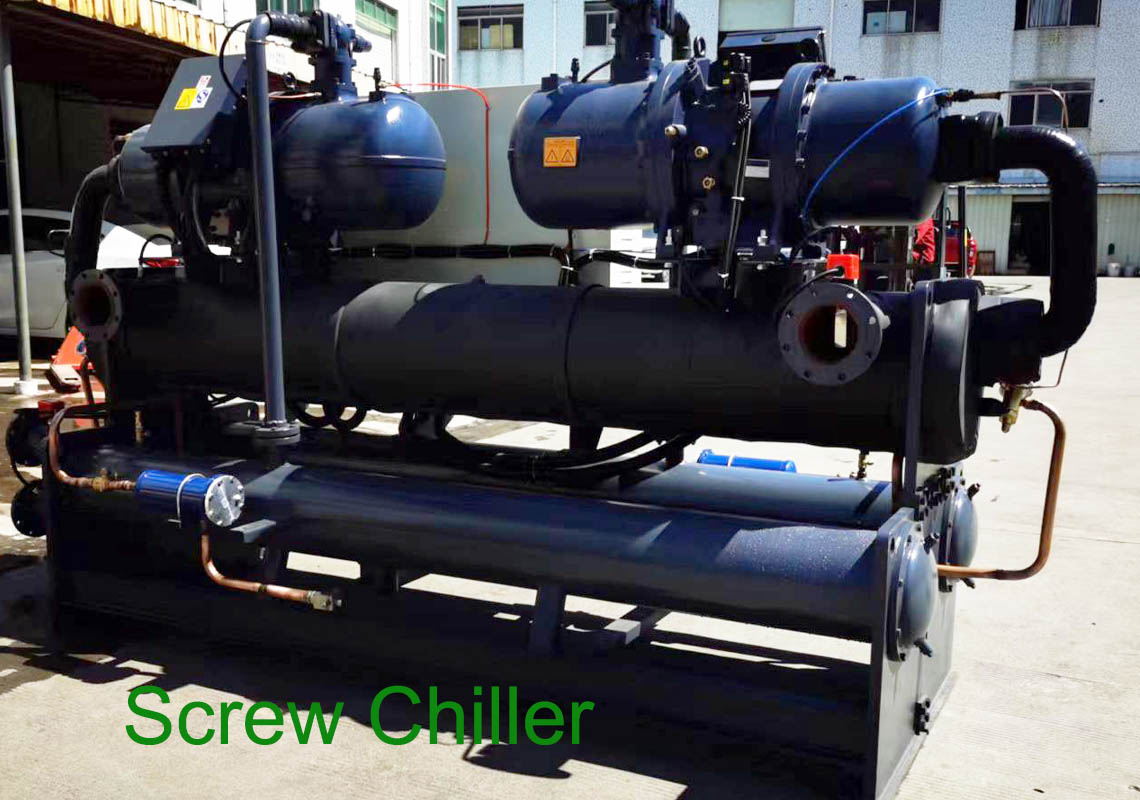
What is a screw chiller?
The compressor adopts a screw type, hence the name screw chiller. The refrigerant coming out of the evaporator of the unit is a gas; after adiabatic compression by the compressor, it becomes a high-temperature and high-pressure state.
The compressed gas refrigerant is isobarically cooled and condensed in the condenser. After condensation, it changes into liquid refrigerant, and then expands to low pressure through the throttle valve and becomes a gas-liquid mixture.
The liquid refrigerant under low temperature and low pressure absorbs the heat of the cooled material in the evaporator and becomes a gaseous refrigerant again. The gaseous refrigerant re-enters the compressor through the pipeline and starts a new cycle. These are the four processes of the freezing cycle. It is also the main working principle of screw chiller.
2. What is a centrifugal chiller?
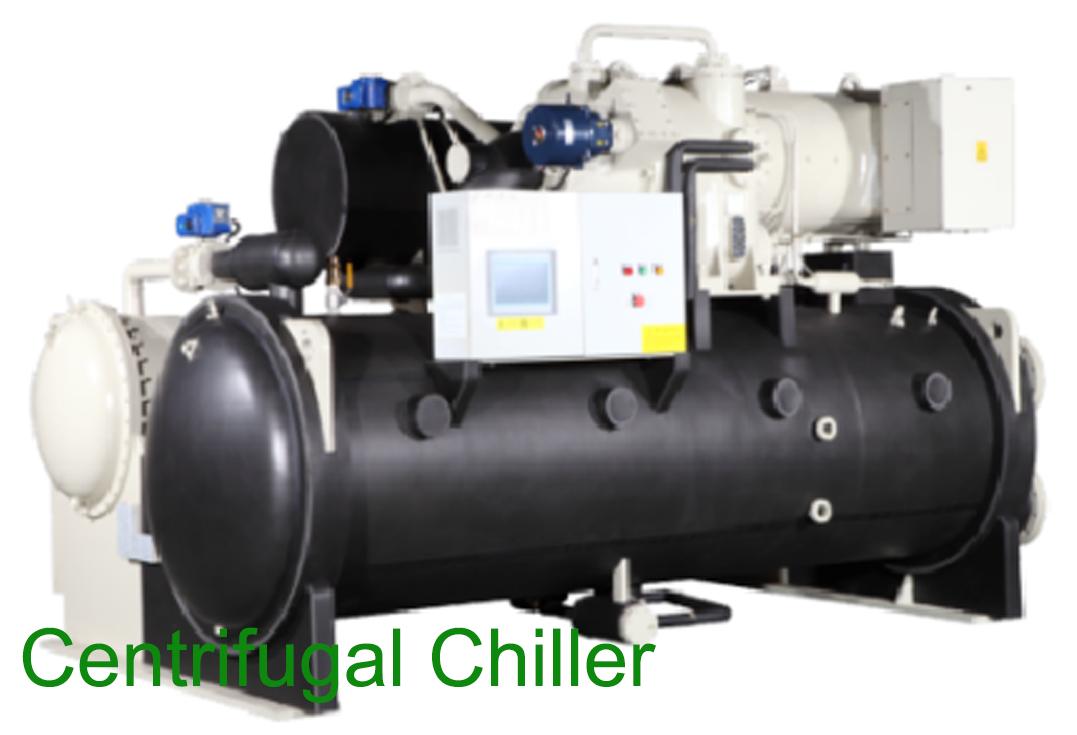
The biggest difference from the screw chiller is that it uses a centrifugal compressor.
It is a cooling system that uses the principle of centrifugal force to remove heat from the inside of the fluid. It is composed of centrifugal refrigeration compressor, evaporator, condenser, main motor, air extraction recovery device, lubrication system, control cabinet and starting cabinet. Some of these components are assembled in a decentralized manner, but most are "assembled" units in which each component is put together. The units are divided into fully enclosed, semi-enclosed and open types.
Both centrifugal and screw chillers are types of refrigeration systems commonly used for cooling in various applications. While they serve a similar purpose, there are some key differences between the two different chillers:
Working Principle:
Centrifugal Chiller: Centrifugal chillers use a rotating impeller and centrifugal force to compress and cool the refrigerant.
Screw Chiller: Screw chillers use two rotating screws (male and female) to compress and cool the refrigerant.
Capacity:
Centrifugal Chiller: Centrifugal chillers are typically available in larger capacities, ranging from several hundred tons to several thousand tons of refrigeration.
Screw Chiller: Screw chillers are available in a wide range of capacities, but they are generally suitable for smaller to medium-sized applications.
Energy Efficiency:
Centrifugal Chiller: Centrifugal chillers are known for their high energy efficiency, especially at full load conditions. They are designed to provide efficient cooling for large-scale applications.
Screw Chiller: Screw chillers also offer good energy efficiency, but their efficiency may vary based on operating conditions and load levels.
Operating Characteristics:
Centrifugal Chiller: Centrifugal chillers are often used in applications with varying loads and where precise temperature control is required. They can handle load variations effectively and provide good part-load performance.
Screw Chiller: Screw chillers are suitable for applications with relatively constant loads, as they are generally more efficient at full load conditions. They are commonly used in commercial and industrial settings.
Maintenance and Service:
Centrifugal Chiller: Centrifugal chillers typically require specialized maintenance and service due to their complex design and construction.
Screw Chiller: Screw chillers are relatively easier to maintain and service compared to centrifugal chillers, primarily due to their simpler design and fewer moving parts.
It's important to note that the selection between centrifugal and screw chillers depends on various factors such as cooling requirements, capacity, energy efficiency goals, load characteristics, and budget considerations. Consulting with a professional HVAC engineer or chiller manufacturer can help determine the most suitable chiller type for specific applications.
What is the 140 HP Water Cooled Screw Chiller?
The 140 HP Water Cooled Screw Chiller is an industrial cooling device that utilizes a screw compressor and a water cooling system to achieve highly efficient cooling. With its powerful cooling capacity and reliable stability, it is ideal for large-scale facilities and commercial buildings that demand precise temperature control, such as factories, hospitals, and data centers. This chiller offers continuous, stable cooling output while optimizing energy efficiency, making it a key solution for enhancing operational performance.
How Does the 140 HP Water Cooled Screw Chiller Work?
This chiller operates by using a screw compressor to compress refrigerant, followed by cooling processes through condensers and water-cooling units. The water cooling system uses chilled water as the cooling medium, providing superior heat dissipation compared to air-cooled systems, making it suitable for long-term operation. An intelligent control system adjusts the operation according to varying load conditions, ensuring maximum efficiency and reliable performance.
Main Applications of the 140 HP Water Cooled Screw Chiller
Industrial Manufacturing: Industries such as large-scale injection molding, electronics manufacturing, and food processing use chillers to maintain consistent equipment temperature, ensuring production quality.
Building HVAC Systems: Screw chillers are a critical part of central air conditioning systems for office buildings, shopping malls, and hotels.
Data Centers: Precise temperature control is vital in data centers, and the 140 HP water-cooled screw chiller effectively prevents overheating, ensuring seamless operation of equipment.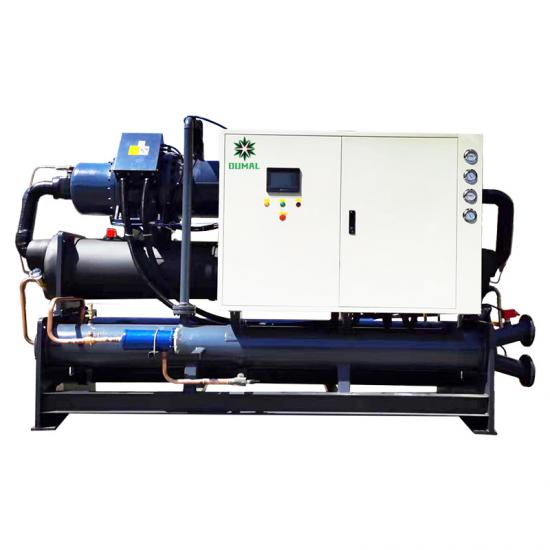
Advantages of the 140 HP Water Cooled Screw Chiller
Energy Efficiency: Compared to traditional compressors, screw compressors consume less energy, and the water-cooled heat dissipation system further reduces energy consumption, making it an ideal choice for businesses focused on reducing their carbon footprint.
Reliable Stability: The chiller’s compact design, low operational noise, and suitability for continuous operation contribute to its long lifespan and reliable performance.
Intelligent Control: Featuring an advanced PLC control system, the chiller automatically adjusts its operation based on the load, offering multiple safety protection mechanisms such as overload protection and high/low pressure protection to ensure safe operation.
Low Maintenance Costs: The water-cooling system provides enhanced heat dissipation, reducing wear and tear on components. This results in less frequent maintenance and lower operational costs.
How to Choose the Right Chiller?
Choosing the right chiller depends on your facility’s specific cooling needs. Oumal’s 140 HP water-cooled screw chiller is ideal for medium to large facilities where precise temperature control is crucial. If energy efficiency and operational stability are priorities, Oumal’s solution offers significant advantages over other cooling systems.
What maintenance is required for an air-cooled chiller?
Maintenance of an air-cooled chiller is essential to ensure efficient operation, longevity, and to prevent unexpected breakdowns. The following are key maintenance tasks required for an air-cooled chiller:
1. Regular Cleaning of Condenser Coils
Frequency: Monthly or as needed
Task: Clean the condenser coils to remove dirt, debris, and buildup that can reduce heat transfer efficiency.
Method: Use compressed air, a soft brush, or a commercial coil cleaner.
2. Checking Refrigerant Levels
Frequency: Monthly
Task: Ensure refrigerant levels are within the manufacturer’s recommended range.
Method: Use gauges and other diagnostic tools to measure refrigerant pressures.
3. Inspecting Electrical Components
Frequency: Quarterly
Task: Inspect electrical connections, contactors, and wiring for signs of wear, corrosion, or damage.
Method: Tighten loose connections, replace damaged wires, and check for proper voltage and amperage.
4. Monitoring and Testing Controls
Frequency: Monthly
Task: Check the functionality of control systems, thermostats, and sensors.
Method: Verify that setpoints are accurate and that the system responds correctly to changes in temperature and load.
5. Lubricating Moving Parts
Frequency: Annually or as recommended by the manufacturer
Task: Lubricate bearings, motors, and other moving parts to reduce friction and wear.
Method: Use manufacturer-recommended lubricants and follow specified procedures.
6. Inspecting and Cleaning Air Filters
Frequency: Monthly
Task: Inspect air filters for dirt and replace or clean them as necessary.
Method: Follow the manufacturer’s recommendations for filter maintenance.
7. Checking for Refrigerant Leaks
Frequency: Quarterly
Task: Inspect the system for signs of refrigerant leaks.
Method: Use leak detection tools and repair any leaks promptly to maintain system efficiency.
8. Evaluating Compressor Performance
Frequency: Annually
Task: Check the compressor for unusual noises, vibrations, or signs of wear.
Method: Perform diagnostic tests and replace or repair components as needed.
9. Inspecting and Maintaining Fans and Blades
Frequency: Quarterly
Task: Check fan blades for damage and clean them to ensure proper airflow.
Method: Tighten loose bolts and replace damaged blades.
10. Monitoring Water Quality (if applicable)
Frequency: Monthly
Task: For systems with water-cooled components, monitor and maintain water quality to prevent scale and corrosion.
Method: Use water treatment chemicals and regularly test water quality.
11. Verifying System Pressures and Temperatures
Frequency: Monthly
Task: Check system pressures and temperatures to ensure they are within normal operating ranges.
Method: Use gauges and sensors to monitor and adjust as necessary.
12. Reviewing System Performance
Frequency: Annually
Task: Conduct a comprehensive performance review to identify inefficiencies or areas for improvement.
Method: Analyze operational data, inspect all components, and perform a full system audit.
13. Updating Maintenance Records
Frequency: Ongoing
Task: Keep detailed records of all maintenance activities, including dates, findings, and actions taken.
Method: Use a logbook or digital maintenance management system.
OUMAL REFRIGERATION MACHINERY CO.,LTD.: We have been focusing on air-cooled chiller manufacturing for many years. We are a professional air-cooled chiller supplier, providing you with high-quality air-cooled chiller products with diversified products, such as 30 tons ~ 100 tons air-cooled chiller, 400 kW air-cooled chiller, 20HP air-cooled chiller, etc. Welcome to consult!
What maintenance practices ensure the longevity of industrial air cooled chiller?
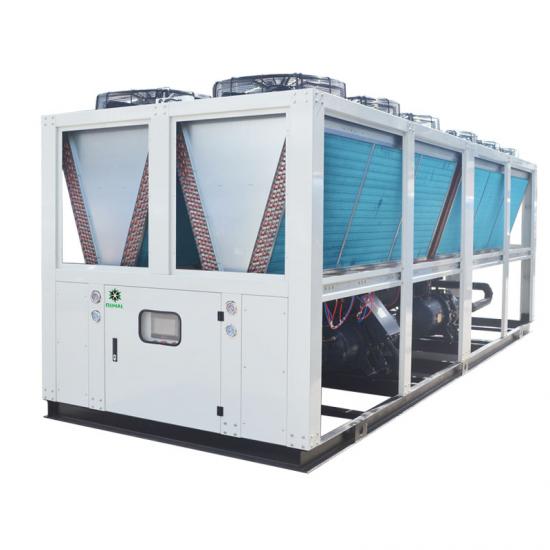
Ensuring the longevity of an industrial air cooled chiller involves a series of diligent maintenance practices designed to maintain optimal performance and prevent premature wear. Regular inspections and upkeep are critical for the efficient operation of these systems. For an air cooled screw chiller, frequent checks of key components such as the compressor, condenser coils, and evaporator are essential. The compressor should be monitored for any signs of wear or inefficiency, like unusual noises or vibrations, which could indicate potential issues. Keeping the condenser coils clean is equally important, as dirt and debris can obstruct airflow and reduce the system’s efficiency.
Maintaining proper refrigerant levels is another crucial aspect of prolonging the life of an industrial air cooled chiller. Low refrigerant levels can cause the system to overheat, potentially damaging the compressor and other components. Regular monitoring and replenishment of refrigerant help maintain the system’s efficiency and prevent breakdowns. Additionally, inspecting and replacing worn-out seals and gaskets can prevent leaks and ensure the system operates smoothly. This practice is particularly important in maintaining the effectiveness of the water chiller cooling system, which relies on precise refrigerant levels for optimal performance.
Lubrication of moving parts is vital for the longevity of an air cooled screw chiller. Regularly checking and replacing lubricants as specified by the manufacturer reduces friction and wear, thereby extending the life of components such as the compressor and fans. Ensuring all moving parts are well-lubricated prevents overheating and excessive wear, which can lead to costly repairs and downtime. Regular maintenance should also include checking the electrical connections and control systems to ensure they are functioning correctly, as faulty electrical connections can lead to system malfunctions or even complete failures.
Maintaining optimal airflow around the chiller unit is crucial. Ensuring there are no obstructions around the air intake and exhaust areas helps maintain proper airflow, essential for efficient cooling. Regularly inspecting and cleaning the air filters also ensures that the system operates at peak efficiency. This practice is particularly important for an industrial air cooled chiller, where maintaining consistent airflow directly impacts the cooling performance and energy efficiency of the system.
Water quality is another important factor in maintaining the water chiller cooling system. Regularly checking and treating the water to prevent scale build-up and corrosion can prolong the life of the chiller. Ensuring that the water treatment systems are functioning properly and that the water is free of contaminants helps to prevent damage to internal components. This maintenance practice is essential for avoiding costly repairs and ensuring the efficient operation of the chiller system.
Implementing a proactive maintenance schedule is key to ensuring the longevity of an industrial air cooled chiller. Keeping detailed records of all maintenance activities and scheduling regular service checks by qualified technicians helps identify potential issues early and address them before they escalate into major problems. By adhering to these maintenance practices, operators can significantly enhance the longevity and performance of their chillers, minimizing downtime and maximizing the return on their investment.
OUMAL Chiller is a cooling tower and chiller system manufacturer integrating R&D,manufacturing and customization.Provide professional solutions.15+ years of work experience. If you have any questions about the chiller, you can send an email to answer them for you!
Which is better screw or scroll chiller?
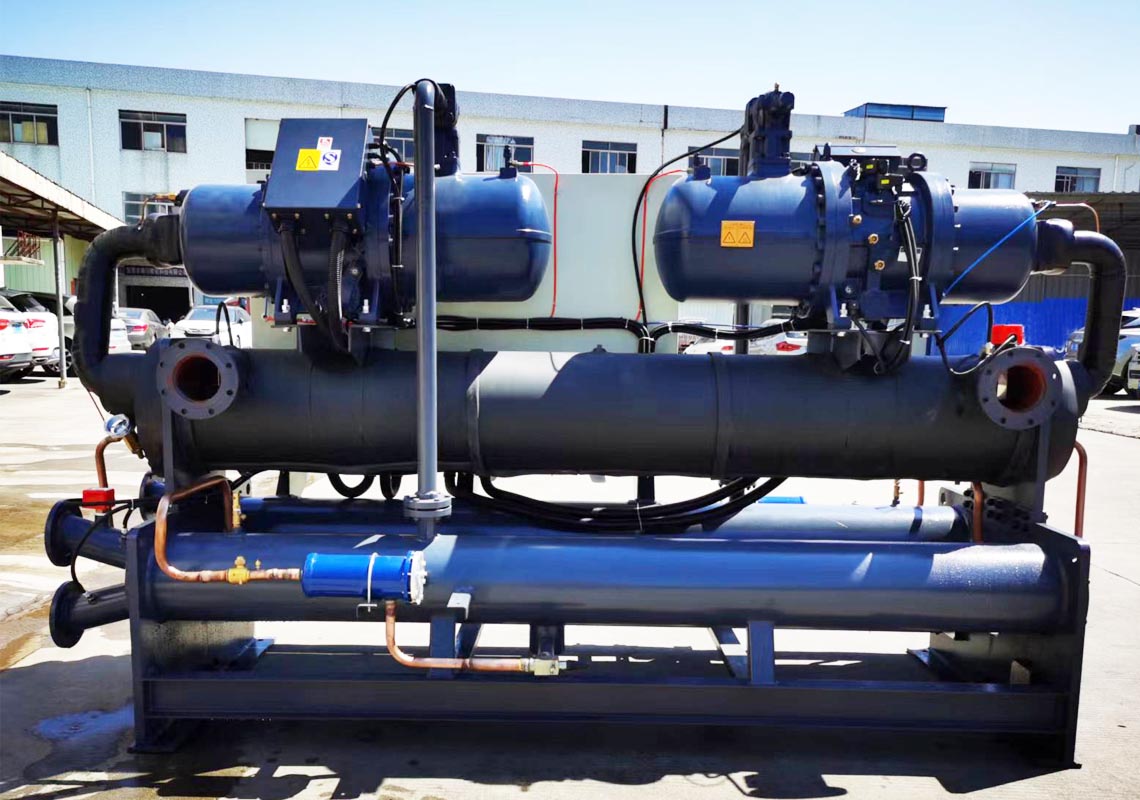
What is screw chiller?
A Screw chiller is an industrial chiller using a semi-hermetic screw type compressor. Including air cooled screw chiller and water cooled screw chiller. Screw chiller models generally range from 30HP to 300HP or even larger. Screw chiller usually use single compressor or double or four compressors. Our Screw chillers mainly use the following brands: Hanbell, Bitzer, or Refcomp.
What is scroll chiller ?
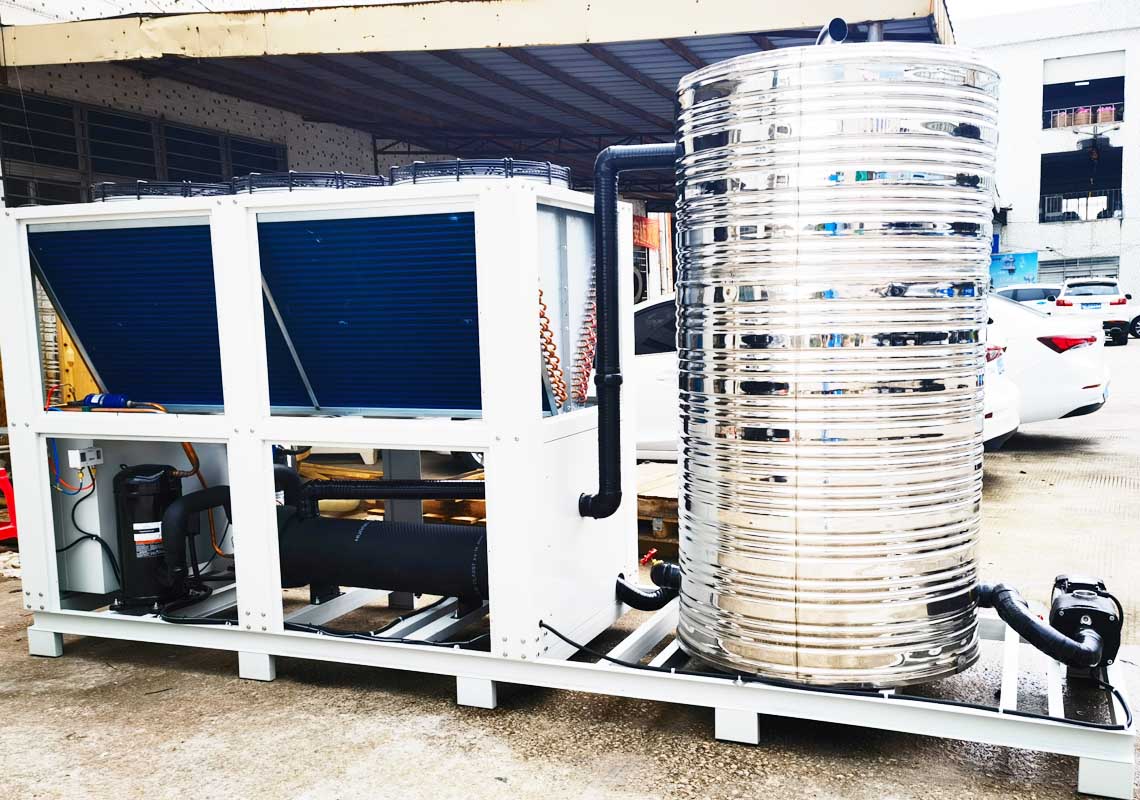
A scroll chiller is an industrial chiller using hermetic scroll type compressor. Also the sroll chillers including air cooled scroll chillers and water cooled scroll chillers. Scroll chiller models usually range from 3HP to 100HP. The Scroll types compressors brands we use are: Copeland, Danfoss, Daikin, Panasonic. Compressors qty optional.
Both screw and scroll chillers have their advantages are suitable for different applications. Here are some key differences between the two:
Design: A screw chiller uses a rotary screw compressor, while a scroll chiller uses scroll compressors. The screw compressor is typically more robust and suitable for larger capacity applications, while the scroll compressor is more compact and suitable for smaller to medium-sized applications.
Efficiency: Screw chillers generally have higher efficiency compared to scroll chillers, especially at higher loads. They can provide better part-load performance and energy savings.
Noise: Scroll chillers are known for their low noise operation, making them suitable for noise-sensitive environments. Screw chillers may produce higher noise levels, although noise reduction measures can be implemented.
Capacity: Screw chillers are available in larger capacity ranges, making them suitable for industrial applications with higher cooling demands. Scroll chillers are generally used for smaller to medium-sized applications.
Reliability: Both screw and scroll chillers are reliable, but the simplicity of scroll chiller design often results in fewer moving parts and potentially higher reliability.
So when you don’t know how to chose a right chiller for your water cooling system.It is important to consider the specific requirements of your application, such as cooling capacity, efficiency, noise level, and cost, when choosing between screw and scroll chillers. Consulting with a qualified HVAC professional can help determine the most suitable option for your specific needs. You can contact us for further information and we will offer you best solution for your industrial chiller systems. Email: oumal@oumal.com. Whatsapp: 0086 15112554736.
Why Choose a 100 Ton Air Cooled Chiller?
A 100 ton air cooled chiller is an ideal solution for medium to large-scale industrial applications. Unlike water-cooled chillers, air-cooled models are easier to install and maintain, as they don’t require an extensive water supply or additional cooling towers. This makes them a cost-effective and convenient option for facilities looking to streamline their operations.
One of the key advantages of a 100 ton air cooled chiller is its ability to operate efficiently in environments where water availability is limited or where the installation of a water-cooled system would be impractical. These chillers use ambient air to dissipate heat, which reduces the need for complex plumbing and additional maintenance.
Key Features and Benefits
High Cooling Capacity: With a cooling capacity of 100 tons, this chiller can handle the demands of large-scale industrial processes, ensuring that your equipment stays within the desired temperature range.
Energy Efficiency: Modern 100 ton air cooled chillers are designed with energy efficiency in mind, helping to reduce operational costs while maintaining high performance.
Reliability: Built to withstand harsh industrial environments, these chillers are durable and require minimal maintenance, ensuring reliable operation over the long term.
Flexibility: Air cooled chillers can be installed in various locations within your facility, offering flexibility in placement and installation. They are also less dependent on environmental factors like water quality and availability.
Investing in a 100 ton air cooled chiller is a smart choice for any industrial facility looking to enhance its cooling capabilities. With its robust design, energy efficiency, and ease of installation, this type of chiller offers a practical solution for a wide range of applications, from plastics manufacturing to chemical processing. By selecting the right industrial chiller machine, you can ensure that your operations run smoothly and efficiently, ultimately leading to higher productivity and better quality products.
At OUMAL, we specialize in providing top-of-the-line industrial chiller solutions tailored to meet the unique needs of your business. Our 100 ton air cooled chillers are designed to deliver exceptional performance and reliability, helping you achieve your operational goals. Visit OUMAL today to learn more about our products and how we can support your cooling needs. Let us help you take your business to the next level with our innovative and efficient cooling solutions!
Working Principle and Advantages of Screw Chillers
Like all chiller systems, a water cooled screw chiller consists of an evaporator, expansion valve, refrigerant, internal piping and controls. The main difference between screw chillers is their compressor. Screw chillers use two helical rotors to drive and compress the refrigerant gas. This type of chiller has nearly constant flow performance and is powered by an electric motor, steam or gas turbine. They are available in capacities ranging from 25 to 800 tons and are very effective when used with liquids with high evaporative temperatures.
Screw or helical compressors in screw chillers consist of two matched helical groove rotors: convex baffle and groove. They are mounted in a fixed housing and move simultaneously. As they rotate, the refrigerant gas is compressed and converted to vapor by the direct volume reduction between the two rotors.
These compressors are equipped with sliders that adjust the length of the compression path. Intake, compression and discharge take place in a linear direction. An oil lubricant on the rotor also acts as a sealant. The motor is cooled as the refrigerant flows through the holes in the screw, which acts as a liquid separator. It is important that the screw chillers are properly sized.
When they are too large, they have a long reverse cycle time and will shut down if cooling is not needed. This can also happen if the motor is running at unnecessarily high speeds or if it is driven in an open circuit. However, when properly configured, motorized chillers are reliable, efficient liquid chillers for the entire range of industrial and air conditioning applications.
This series of water cooled screw compressor chiller adopts European high-efficiency screw compressors, which have their own advantages: high energy efficiency, low noise, high reliability, small footprint, easy installation, simple operation and high flexibility. They are widely used in surface engineering, medicine, chemical, metallurgy, leather, laser, electronics, injection molding, printing and other industries. There are too many models of this series of chiller. It can realize the perfect match for industrial applications.

Common faults of industrial chillers
1. The cooling water temperature is too high, and the condensation effect is poor:
The rated working condition of the cooling water required by the chiller is 30~35°C. The high water temperature and poor heat dissipation will inevitably lead to high condensation pressure. This phenomenon often occurs in high temperature seasons. The reason for the high water temperature may be: cooling tower failure, such as the fan is not turned on or even reversed, and the water distributor does not turn, which means that the temperature of the cooling water is high and rises rapidly; the external temperature is high, the waterway is short, and the amount of circulating water In this case, the cooling water temperature is generally maintained at a relatively high level, which can be solved by increasing the water storage tank.
2. The cooling water flow is insufficient and cannot reach the rated water flow:
The main performance is that the pressure difference between the inlet and outlet of the unit becomes smaller (compared with the pressure difference at the beginning of the system's operation), and the temperature difference becomes larger. The cause of insufficient water flow is the lack of water or air in the system. The solution is to install an exhaust valve at a high place in the pipeline to exhaust; the pipeline filter is clogged or too fine, and the water permeability is limited. Regularly clean the filter screen; the water pump is selected to be small and does not match the system.
3. Condenser scaling or blockage:
Condensed water is generally tap water, which is easy to scale when the temperature is above 30°C, and because the cooling tower is open and directly exposed to the air, dust and foreign matter can easily enter the cooling water system, causing the condenser to be dirty and blocked, and the heat exchange area is small , the efficiency is low, and it also affects the water flow. The performance is that the water pressure difference between the inlet and outlet of the unit and the temperature difference become larger, the temperature of the upper and lower parts of the condenser is very high when touched by hand, and the copper tube of the condenser liquid outlet is hot. The unit should be backwashed regularly, and if necessary, chemical cleaning and descaling should be carried out.
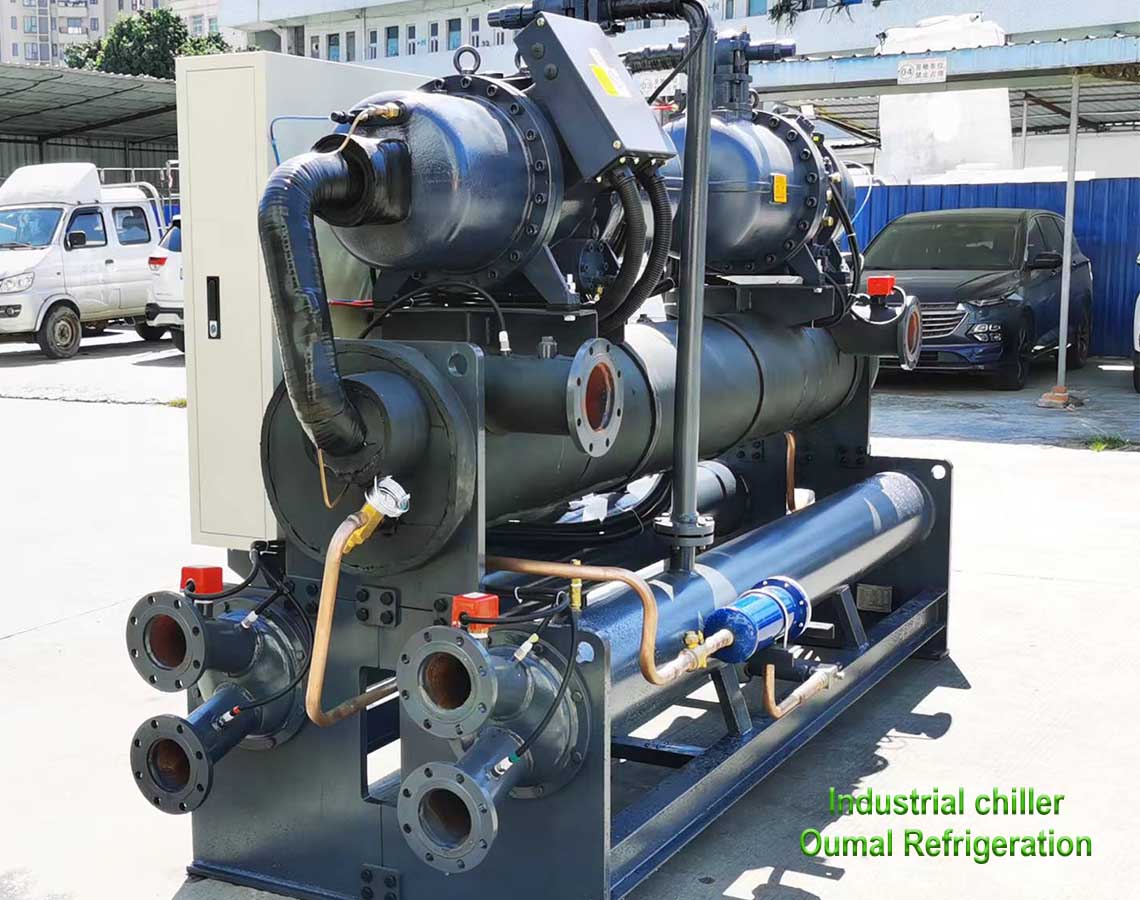
4. Too much refrigerant charge:
This kind of situation generally occurs after maintenance, and the performance is that the suction and discharge pressure and the balance pressure are high, and the operating current of the compressor is also high. Under the rated working condition, the air should be released according to the suction and exhaust pressure, balance pressure and operating current until it is normal.
5. The refrigerant is mixed with air, nitrogen and other non-condensable gases:
This kind of situation usually occurs after maintenance and the vacuuming is not complete. It can only be drained, re-evacuated, and re-charged with refrigerant.
6. False alarms caused by electrical failures:
Because the high-voltage protection relay is damp, poor contact or damaged, the electronic board of the unit is damp or damaged, and the communication failure causes false alarms. For this kind of false fault, the high-voltage fault indicator light on the electronic board is often off or dimly lit, the manual reset of the high-voltage protection relay is invalid, and the operating current of the measured compressor is normal, and the suction and discharge pressure are also normal.
7. The evaporation pressure is too low:
It may be that the evaporation pressure of the water-cooled chiller is too low due to insufficient refrigerant. Common reasons: Insufficient cooling water; less cooling load; throttle orifice failure (only makes the evaporation pressure low); the heat transfer tube of the evaporator is deteriorated due to scale and other pollution (only makes the evaporation pressure too low); Insufficient (only makes the evaporating pressure too low).
8. The oil pressure difference is too low:
If the compressor oil pressure is too low, the compressor will stop running. The common reasons are: the oil filter is clogged; too much refrigerant is mixed in the lubricating oil.
9. Oil temperature is too high:
If the oil temperature of the refrigeration compressor is too high, long-term operation will reduce the quality of the refrigeration oil and even carbonize the refrigeration oil. Common causes: the cooling capacity of the oil cooler is reduced; the supply of refrigerant for cooling the oil cooler is insufficient due to the blockage of the refrigerant filter.
10. Main motor overload:
Unbalanced power supply phase voltage; large power line voltage drop;
The introduction of various industrial chillers and common fault handling are relatively complicated. Generally, specific analysis is made according to the specific problems of the situation. It is recommended to judge according to the actual situation or contact the industrial chiller manufacturer to solve the problem.