Why does the chiller evaporator freeze?

During the use of the chiller, sometimes freezing occurs, and the chilled water malfunctions and alarms. The evaporator is one of the four core components of the chiller, and its importance is self-evident. Once it fails, the chiller will also go on strike. Today we will talk about the more common evaporator failures, namely Icing, to analyze the cause and find a solution. Why does the chiller freeze? How to eliminate the icing failure of the evaporator?


1. Look at the type of chiller, whether it is a low-temperature Chiller machine or a room temperature chiller machine.


low temperature chiller


For low-temperature chillers, use antifreeze instead of water. Such as Glycol.

A normal temperature chiller uses water for circulation. The temperature of this chiller is generally set at 5 degrees. The factory has set it before leaving the factory. Of course, you can set it yourself. If the temperature is too low, it will freeze. If the temperature of the medium and high temperature chiller is lower than 5 degrees without adding antifreeze, it is easy to cause the evaporator to freeze and cause the chilled water failure alarm.


2. See if the chiller is installed with a temperature sensor

The temperature probe will work in coordination with the control board. When the temperature is too low, the temperature probe will tell the main board that the main board will sound an alarm and stop automatically, so there will be no icing.


3. Insufficient refrigerant

During the use of the chiller, refrigerant leakage or blockage will occur. After the refrigerant is reduced, the evaporation pressure will be too low, causing the evaporator to freeze. The location of the icing is sometimes in the evaporator. If the refrigerant leaks, The method of elimination is to deal with the leaking part first, add enough refrigerant, and the fault will be eliminated. If the expansion valve is blocked, replace the expansion valve with a new one.


OUMAL CHILLER Supply all kinds of chillers, such as low temperature chiller, industrial chiller, Brine chiller, screw chiller, glycol chiller……If you are looking for a cooling water system, contact us. Will provide you the best chiller solution with good price.


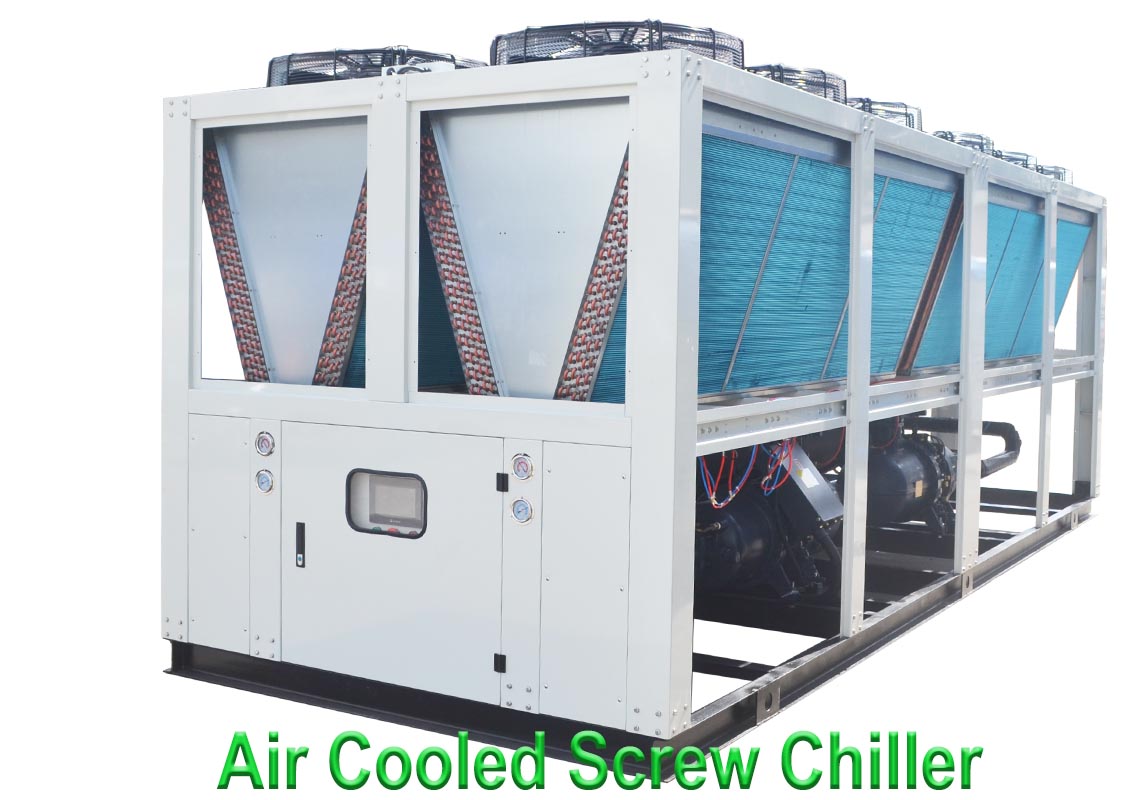
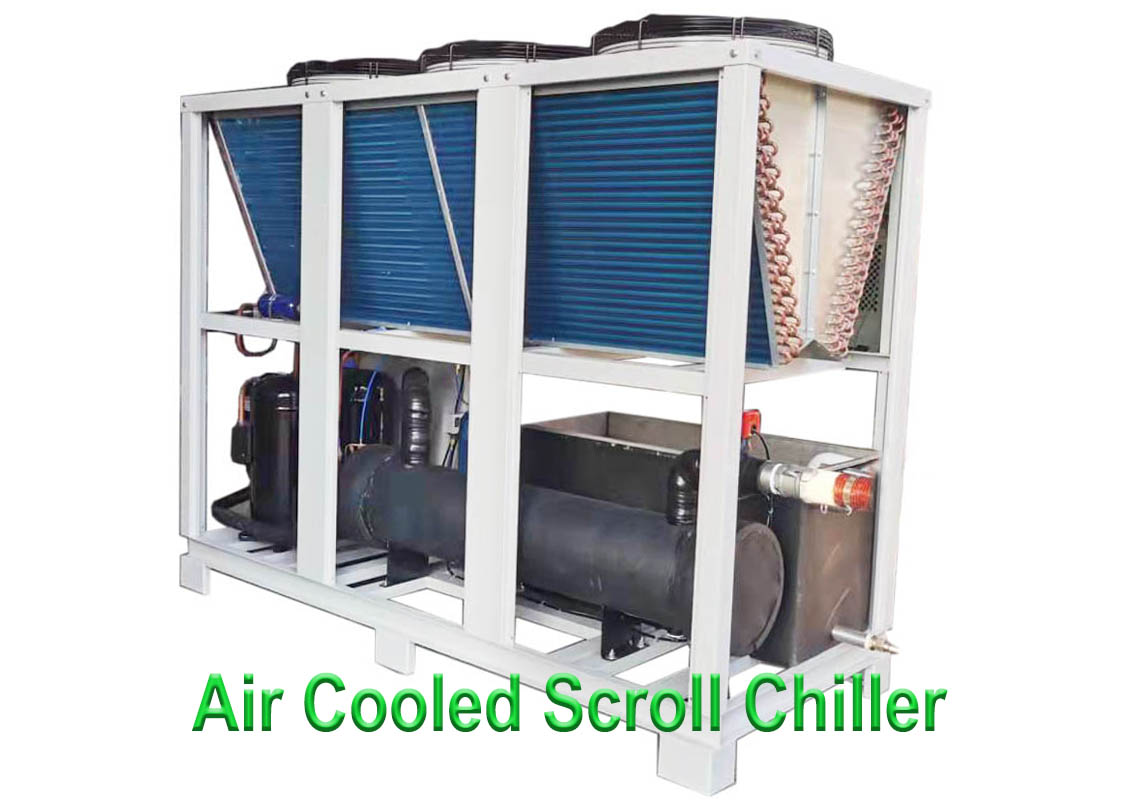
Analysis of the advantages and disadvantages of air-cooled screw chillers and air-cooled scroll chillers

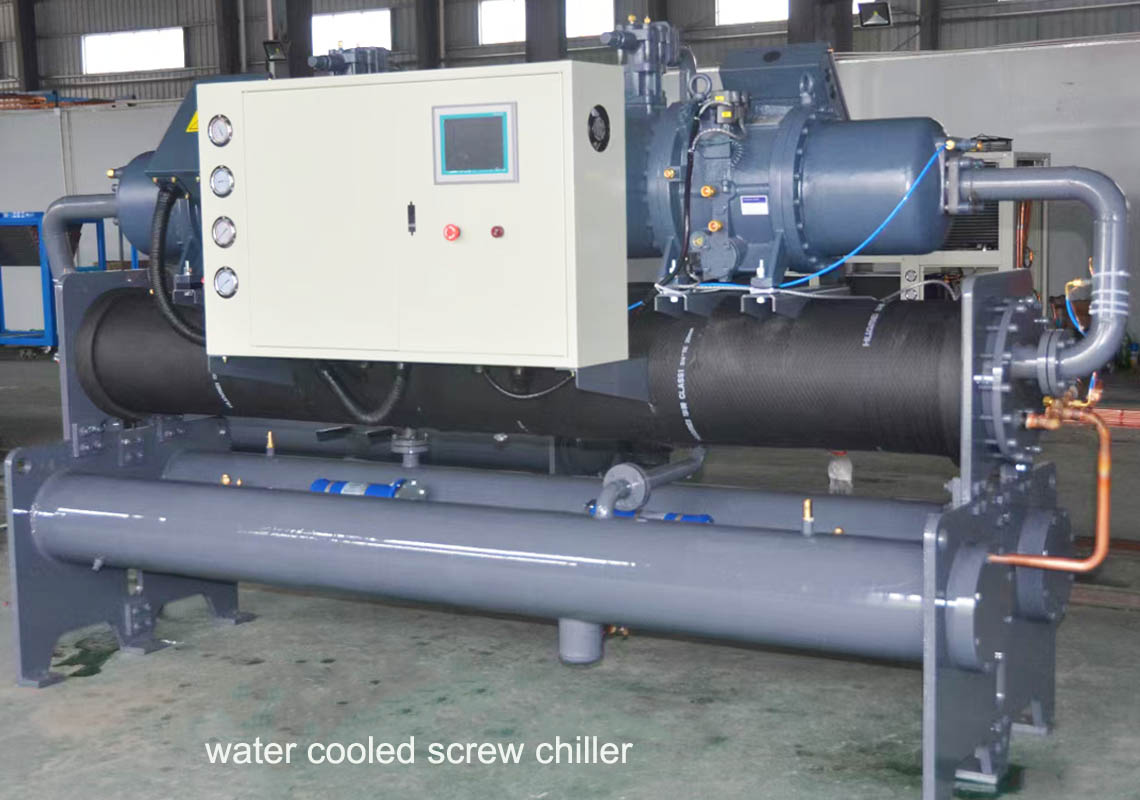
Both air-cooled screw chillers and air-cooled scroll chillers are air-cooled chillers. Air-cooled chillers use air cooling, eliminating the need for cooling towers, cooling water pumps and piping systems that are essential for cooling water systems. Areas with poor water quality cause condenser fouling and water pipe blockage, and also save water resources. It is the most economical and simple model for maintenance and repair of cold water air-conditioning equipment.


Advantage:

Functionally: The air-cooled screw chiller and the scroll chiller have the same refrigeration function. Refrigeration, heating, heating, and energy are all electric energy.

Application industry: Du Shi is mainly used in industries such as industry, medicine, food, coal, and shopping malls.


Comparison of unit characteristics:

The air-cooled screw chiller is named air-cooled screw chiller because of its key component-the compressor adopts a screw type. The state of the unit from the evaporator is a gas refrigerant; after adiabatic compression by the compressor, it becomes a high temperature and high pressure state. The compressed gas refrigerant is cooled and condensed at equal pressure in the condenser, and then changes into a liquid refrigerant after condensation, and then expands to a low pressure through a throttle valve and becomes a gas-liquid mixture. Among them, the liquid refrigerant under low temperature and low pressure absorbs the heat of the substance to be cooled in the evaporator and becomes a gaseous refrigerant again. The gaseous refrigerant re-enters the compressor through the pipeline to start a new cycle. These are the four processes of the refrigeration cycle. It is also the main working principle of the screw chiller.


The air-cooled screw chiller adopts the international brand screw compressor, and is equipped with high-quality and high-efficiency copper pipes to make the condenser, evaporator and world-famous control components, so that the unit has small size, low noise, large energy, long life, and easy operation And other advantages, its beautiful and exquisite shape design and reliable and stable high-performance quality are outstanding among similar products!


Features of air-cooled screw chiller:

1. Semi-hermetic screw-type high-efficiency compressor, with single-machine system and dual-machine system options, compact unit structure. Easy to maintain; adopt a new 5:6 screw rotor design, stable operation, high efficiency and energy saving.

2. Advanced intelligent defrosting method, microcomputer control analyzes the temperature of each point at any time, optimizes the defrost cycle time, and ensures that the defrosting in time does not affect the normal operation of the equipment.

3. Professional motor cooling device. Meet the harsh operating conditions.

4. Using a new generation of high-efficiency heat exchange tubes, the heat transfer coefficient can be increased by 5%. The double groove tube sheet design and advanced tube expansion technology make the structure more sealed and reliable, and completely avoid the possibility of mutual penetration.

5. Generally, no water pump is installed in the unit, and there is no water tank, so an external water tank is needed for circulation.


The air-cooled scroll chiller is called an air-cooled scroll chiller because its compressor uses a fully enclosed scroll compressor, and the condenser uses a finned fan. The scroll air-cooled chiller has a cooling capacity from 27.8kW to 284.5kW and a heating capacity from 29kW to 303.5kW, which can meet the different load requirements of various occasions. The unit has a compact structure, small floor space, simple pipeline design, only requires an external water pipe, and is easy to install and maintain. The machine components are integrated and modular. The modular unit is assembled from 2 to 8 modules and has the characteristics of large cooling capacity, mutual standby, and gap operation.


Features of air-cooled scroll chillers

1. The unit has a compact structure, small floor space, simple piping design, only requires an external water pipe, and easy installation and maintenance.

2. Intelligent control, the unit can automatically adjust the output of the compressor input according to the load change, so that the unit can maintain the best coordination with the highest efficiency at any time.

3. Use imported fully enclosed scroll refrigeration compressor. It has the advantages of high efficiency, low noise, low vibration, reliable operation and long life.

4. The microcomputer control system is adopted, which has powerful functions of safety protection, communication, fault judgment, automatic adaptation, etc.; it can automatically monitor various parameters and operating conditions of the unit during operation.

5. The machine components are integrated and modular. The modular unit is assembled from 2 to 8 modules and has the characteristics of large cooling capacity, mutual standby, and gap operation.

6. Provides multiple protection functions such as high and low pressure protection, freezing water anti-freezing protection, power phase sequence protection, lack of phase protection, insufficient water flow protection, compressor motor overheating, etc.

7. The box structure of the whole machine shell is beautiful in appearance and compact in structure. The operation of the unit can be checked at any time; the unit can have its own water tank and circulating water pump according to the cooling capacity, without cooling tower and cooling water pump, installation and maintenance are simple and convenient;

Chiller installation and maintenance instructions

Chiller installation and maintenance instructions


1. Installation instructions

1. Machine installation, it is required to lay flat and not tilt;

2. There should be a maintenance space of about one meter on both sides of the machine;

3. Connect the cooling water inlet and outlet specifications of this machine to your cooling system;

4. The ice water pipe must be replaced with a loop to allow the ice water to circulate;

5. The ice water pipeline must be insulated;

6. When connecting the power supply, please make sure that the power supply is sufficient to bear the maximum load of the chiller’

7. The power supply of the unit must be controlled separately;

8. Must be grounded to ensure safety.


2. Troubleshooting

When the unit fails, observe the abnormal indication, then turn off the main power switch, and check according to the following steps;

1. When it shows abnormal cooling, it should be checked;

a. Whether the ice water source is sufficient;

b. Whether the water pipe valve is open;

c. Whether the ice water pump is operating normally;

d. Whether the water pipeline is disconnected.

After confirming that it is correct, press the reset button to reset, and then turn it on after 5 minutes’

2. When the refrigerant is insufficient, check the unit pipeline for leakage and blockage, reset it after troubleshooting, and restart it after 5 minutes;

3. When the display is too low, check whether the ice water pipe valve is open and whether the ice water circulates normally, and restart it after 5 minutes;

4. When the oil pressure is too low, you should look through the window to see if the oil is sufficient, and add it if it is insufficient;

5. When the compressor is overloaded, it should be checked;

a. Electromagnetic switch, whether there is aging, open circuit, poor contact, etc.;

b. Check whether the insulation resistance of the compressor is normal with a resistance meter;

c. Use a universal meter to check whether the coil resistance of the compressor is balanced. If there is any abnormality, the compressor must be replaced (note: in this case, the compressor cannot be turned on blindly without finding the cause of the failure);

When the pump is overloaded, the inspection method is the same as 5.


Three, maintenance

1. For example, in the injection molding industry: to reduce the production of "pouring sweat" from the mold, before stopping the plastic machine, turn off the cold water valve of the attached mold, or turn off the cold water, which will increase the water temperature in the mold cavity. Prevent the mold from rusting.


2. The chiller has been used for more than six months, and the high/low pressure often fails, or the cooling capacity is reduced. Please arrange for staff to clean the radiator, (if the chiller is equipped with a pressure gauge, pay attention to whether the pressure is higher than 21KG/cm2, such as If it exceeds, clean the radiator, or check whether the water pipe has been turned off). If you follow the above instructions for repairs several times, the chiller fault alarm will sound for a long time, please notify the factory to contact for repair.


3. The chiller will not be used for a period of time. Due to the solidification of water and dirt, the water pump rotor must be rotated before starting to avoid the pump blades not rotating, which may cause protection of the pump.


Water chiller cleaning method (it is necessary to find professionals to operate)

1. Clean the condenser: first remove the dust on the condenser, and then clean it with a special washing liquid. The washing liquid should be used carefully and the concentration of the washing liquid should be adjusted. Do not touch, touch the skin and eyes, if you accidentally touch it, please Rinse immediately with plenty of water and send to the hospital for treatment if necessary.


2. Cleaning the evaporator: first remove the dirt on the evaporator, clean it with clean water, do not damage the evaporator, and drain the sewage.


Four, matters needing attention

The company’s product warranty period is 15 months, and the warranty will not be provided for the following situations:


1. Those who disassemble the crew by themselves


2. Self-adjusting the pressure controller, temperature controller and control panel data, and self-adding refrigerating oil and refrigerant to cause damage to the unit;


3. The equipment and accessories of the unit are damaged by the customer's own transportation or improper installation;


4. The thermal load of the user exceeds the load of the unit, causing damage to the unit.


Warning: When not in use in winter, please drain all the water to avoid damage to the machine due to icing. Remember!

Common failures in chiller maintenance

Common failures in chiller maintenance

During the maintenance of the chiller, in some environments with many dust layers, after the chiller has been used for a period of time, we will find that the chiller is noisy, and there are many dust layers on the accessories. This is a common phenomenon in the use of the chiller. At this time, the chiller is We need to serve it.

First of all, the chiller is a device that provides cold to the outside world, in other words it takes away the heat, so the ventilation environment required by the chiller is very important. The water cycle of the chiller is a simple process, but we must pay attention to the details of the simple process. If the front hood of the chiller is filled with dust, it will affect the heat dissipation of our chiller. Once the heat dissipation is affected The impact will directly cause the cooling effect of the chiller to drop sharply. If we do not remove the ash layer from time to time, on the one hand, it will affect the cooling effect, on the other hand, it will cause the internal components to burn out. After many chillers have been used for a period of time, the poor cooling effect is basically caused by this aspect.


Secondly, the temperature of about 20 degrees Celsius is just suitable for the strong growth of our microorganisms. When we use the chiller, sometimes its temperature is controlled at about 20 degrees Celsius. A large number of microorganisms accompany our water cycle, and some microorganisms are attached to our filter. Above the board, the waterway is not smooth, causing the chiller to produce a lot of noise. Even some microorganisms are attached to the heat exchanger of the chiller, causing the chiller's cooling effect to be poor.


Combining the above two points, I must maintain the chiller regularly and clean up the dust and debris in the chiller in time, so that the functions of our chiller can be guaranteed in all aspects, and it can maintain normal operation. The following are common faults in the maintenance of chillers.


1. Power failure. If a power failure occurs during the use of the chiller, it may cause the fuse to blow, the phase sequence protector to burn, phase loss, or instability. The solution is simple, that is, to replace the corresponding protector, Or fuse to ensure no phase loss and power supply stability.


2. Water pump failure. If there is a water pump failure, it may be caused by the overload protection action on the AC contactor of the water pump, the capacitor burned out, or the water pump itself; it is necessary to deal with the overload problem, replace the capacitor, or the water pump identity problem.


3. Water pump failure. If the compressor fails, it may be because the compressor capacitor is burned out and the compressor coil winding is abnormal. At this time, replace the capacitor or unwind the winding to restore it to normal.


4. Pressure switch failure, if it is a high and low pressure switch failure, it may be that the filter is blocked, the system is insufficient in winter, the circulating cooling water is stopped, the heat exchange cooling fan stops working, etc., it is necessary to replace the appropriate filter and add refrigerant to the cooling system ; At the same time, check whether the sweat cooling water circulating pump is normal; check whether the fan is working normally, if it is abnormal, repair it as soon as possible.


1. Reverse alarm:

1. The three-phase wiring of the power supply is wrong (pay attention to the auxiliary control line), check the wiring problem, turn on the power switch and the water pump switch to burn the fuse, and the circuit is short-circuited. Check the control wire and the main power line. The water pump rotor is stuck. Loosen the motor rotor;


2. If the fuse is not installed, install an appropriate fuse.


3. The power indicator is damaged, replace the electronic board.


2. Compressor failure


1. Compressor coil is short and open circuit, replace the matched compressor


2. Compressor overload protector automatically trips, adjust the current limit of the protector appropriately within the allowable range and press the reset button


Three, water pump failure


1. The water pump motor coil is short, open circuit, repair the motor coil or replace the motor


3. The overload protector of the water pump automatically trips, and the current limit of the protector is appropriately increased within the allowable range. Press the reset button halfway.


Fourth, the compressor is frosting


1. If the circulating water is flowing or the valve is not opened, check the water valve and all pipelines to ensure unobstructed flow, and install short-circuit pipelines.


2. The circulating water pipe configuration is too small, increase the diameter of the circulating water pipe to ensure the normal water circulation.


Troubleshooting of chiller maintenance

1. The temperature sensing wire and temperature measuring body are dirty, wipe the temperature measuring body clean

2. The temperature control meter is damaged, repair or replace the temperature control meter

3. Poor contact of the temperature sensing wire, repair or replace the temperature sensing wire

4. There is no circulating water in the water tank, and a circulating water path is short-circuited between the chilled water outlet and the inlet

5. The temperature control meter is out of control. Replace the temperature control meter. High pressure failure. Poor heat dissipation, dirty radiator, bad air to clean the radiator, improve ventilation conditions, and the cooling fan does not work. Check whether the fan motor is burned out or short circuit. Repair or replace the motor. Damaged, replace the high pressure

Common sense problems that should be paid attention to in the use of industrial chillers

In many industries, industrial chillers are required. The industrial chiller mainly achieves the refrigeration effect through absorption cycle vapor compression or vapor compression. These liquids can flow through the heat exchanger to cool the air or equipment. When we use industrial chillers, in order to ensure safety, we should master the following precautions for safe operation of industrial chillers.

1. Check whether the chiller is damaged before installation.

2. In order to facilitate future use and maintenance, the place where the industrial chiller is installed must be a flat ground.

3. The chiller should be placed in a ventilated, constant temperature machine room. In winter, if the temperature is too low, it needs to be filled with antifreeze.

4. Choose the water pipe with the appropriate pipe diameter, the cooling system and the cold water system when the chiller is running at the maximum power, and connect them correctly.

5. For ordinary applications, the water flow speed through the evaporator and condenser is about 1-8m/s.

6. Under any load conditions, the water flow should remain stable.

7. After the leak test is completed, all the nozzles of the chiller must be treated with rust prevention.


How to ensure the safe operation of industrial chillers: The safety of the operating environment determines the service life of the specific industrial chillers. In order to maintain the stability of the industrial chillers, in the actual installation process, the power supply of the industrial chillers must first be ensured. It is recommended Consult the chiller supplier during the installation of the industrial chiller. The chiller requires the installation of an independent power supply for the industrial chiller, and safely and effectively controls the voltage and current to meet the normal operation of the industrial chiller. At the same time, the power supply is separated to avoid various overloads and affect the normal operation of the industrial chiller. It can also be achieved when running for a long time. N state, there will be no security problems.


Maintain a clean and hygienic operating environment: The installation environment of industrial chillers can achieve the purpose of extending the service life of industrial chillers. If the industrial chillers are in a relatively harsh environment, they will have a great impact on the life of key parts, especially for large amounts of water cooling. Industrial chillers have high requirements for the environment, but not high requirements for the environment. He uses a clean environment to reduce the dirt under the industrial chiller, which plays a vital role.


Freon cooling requires careful maintenance: Many industrial cooling water equipment is made of Freon to achieve the purpose of lowering the ambient temperature. Therefore, in actual use, users can improve the cooling effect by entering high-quality refrigerants. Domestic refrigeration plants must meet the overall needs of the market. , With the popular high quality of feet. The refrigerant is used to reduce the temperature of the medium and achieve the purpose of improving the efficiency of the entire industrial chiller, which plays a vital role in meeting many special low-temperature environments. Industrial chillers have higher requirements for the operating environment. In daily use, mastering the common sense of industrial chillers can achieve the purpose of improving the operating efficiency of industrial chillers. At the same time, by extending the service life of industrial chillers, the daily maintenance funds required by enterprises can be reduced.


Four methods for judging the flow of chilled water in a chiller

Generally speaking, when buying a chiller, you will have questions. I don't know how to judge the chilled water flow rate of the chiller? From what aspects should the chiller water flow be considered? Here is a brief talk.


The detection of the return water temperature and the outlet water temperature of the chiller should be carried out in the normal state of the unit:


After 30 minutes of starting up, check the system or the chilled water system inlet and outlet thermometers through the unit's control system parameters, and the inlet and outlet water temperatures of the unit can be read when the unit is running. The difference must be about 4-6 degrees. If the temperature difference between the inlet and outlet water is too large, it means that the water flow of the water system through the plate is too small, which may cause the unit to fail to operate normally or be damaged.


Water pressure detection of the inlet and outlet pipes of the unit

Through the detection of the return water pressure and the outlet water pressure value, check the water flow rate of the chiller under the pressure difference between the inlet and outlet water pressures in the random manual of the unit. By referring to the water flow corresponding table or diagram of the unit in the manual, So as to judge whether the water system is normal; and through this difference to judge which section of the water pipeline has a large resistance value, and make corresponding rectification plans and actions.


Compressor copper pipe suction temperature detection only needs to be carried out during refrigeration operation

If it is detected that the suction temperature of the compressor is lower than 0 degrees after the refrigeration chiller is turned on for 30 minutes, it means that the water flow in the water-side heat exchanger is not enough, which causes the evaporation temperature and the evaporation pressure to drop, and causes the Freon to flow in the evaporator. The suction pipe of the compressor is still evaporating and absorbing heat, which will cause the suction temperature of the compressor to be lower than 0 degrees; in addition, it is necessary to exclude the drop in evaporating pressure and evaporating temperature caused by the too low water temperature set point; The low water temperature unit can be considered normal as long as the compressor has a suction superheat of 6~8℃. Therefore, under normal water flow, the suction temperature of the compressor will generally be greater than 0°C, and water system problems should be eliminated if it is lower than this value.


The current needs to be detected when the pump is running

By detecting the running current of the chiller water pump and comparing it with the rated current, it can be judged whether the actual water flow is larger or smaller than the rated water flow of the pump. A comprehensive judgment can be made with the previous parameters to obtain an accurate water system detection analysis and judgment. Report.


The water selection pump is generally centrifugal, so it is a problem to determine its flow and head.

Determination of pump flow:

We can calculate the energy balance of the chiller as a system. The heat entering the system includes: the cooling capacity plus the motor power, the heat removed from the system, the heat carried by the cooling water and the heat dissipated in the environment, and the heat transferred to the environment is omitted. According to the process requirements (inlet water temperature and outlet water temperature), the flow of circulating water can be obtained. For example, the total maximum cooling capacity of a centrifugal refrigerator and a screw refrigerator is 2637+1231=3947kw, The motor power is: 467+256=723kw, and the total heat (cold) generated by 4670kw needs to be removed. If the cooling water passes through the cooling tower to change from 37°C to 32°C according to the design requirements, the amount of heat it brings out is The water volume should be: 4670÷1.163×1000÷(37-32)=803.1m3/h

, (1.163 is the conversion coefficient between kilowatts and kcal), so that the flow rate of the pump should be determined, generally consider two pumps operation, one pump standby mode, in order to facilitate operation in the high temperature period.

The second is the pump head. It should calculate the resistance loss based on the flow rate of the water in the pipeline (determined by the size of the pipeline), the length of the pipeline, the local resistance (the condenser in the chiller (can be found in the manual), and the control parts. Cooling water is a circulating system, you don’t need to consider the height difference, just add the height difference of the cooling tower. The pipe flow rate is generally about 1m/s, you can press: (pressure drop per meter of pipe mpa/m) i= Calculate with the formula 0.0000107×v×v÷d^1.3, where v is the average flow velocity (m/s), so the pump head is also determined.

Glycol chiller VS water chiller-why chiller use glycol?

The global demand for industrial process cooling system remains steadily rising. Reliability and minimal downtime are the keys to achieving consistent and profitable industrial and commercial processes. This article will consider the best way to achieve the optimal temperature required for production processes in the metal finishing, medical, brewing, and agricultural industries.


Glycol chiller VS water chiller


1: How does the chiller work?


So, how does the chiller work? The process circulates, but we will start from where the cooling medium is connected to your process equipment.


The coolant in the system absorbs the heat energy in the process, which usually causes a phase change to a gas. The gaseous refrigerant is then circulated to the condenser, which discharges heat through evaporative condensation or cooling towers. This heat exchange condenses the cooling medium into a colder liquid, which is sent back to the process heating source to start the cycle again.


What type of coolant is used in the chiller?


The type of coolant used in the chiller depends on the process requirements and cost considerations. The most popular coolant is water or a mixture of water and another substance with appropriate thermal conductivity (such as a glycol compound).


Water: Using water as a coolant is an economical method because in most cases, water can be easily obtained at the lowest cost. Alternatively, pure water (deionized water, reverse osmosis) can be used in a water-based chiller to achieve higher cooling efficiency.


Glycol: glycol-based coolants consist of ethylene glycol or propylene glycol. Although the two variants have similar physical properties, do not mix them. The main advantage of glycol coolant is to improve corrosion resistance and antifreeze performance.


2: Why use ethylene glycol for cooling


Compared with using ordinary water as the cooling liquid, the use of glycol-water mixture as the cooling liquid has many advantages. These advantages are due to its unique physical properties, including a lower freezing point than water.


Heat transfer between water and glycol

For water without impurities, its freezing point is 0°C, which is much higher than when pure ethylene glycol becomes solid at -13°C. When the mixture of ethylene glycol and water is changed, the freezing point of the coolant will also change. As an example, 10% ethylene glycol will freeze at -3.5°C, while a 60% ethylene glycol solution will freeze at -52°C.


It can be clearly seen from the above analysis that the refrigerant characteristics of ethylene glycol are more suitable for refrigerators that are expected to operate in a low temperature environment. Under these hot conditions, the cooling water can freeze and hinder the circulation of the chiller, while reducing overall efficiency.


In contrast, using a glycol-based chiller will take advantage of its antifreeze properties to ensure that the coolant maintains the desired fluid state.


3: glycol chiller VS water chiller


Both glycol chillers and chillers can be used to satisfactorily dissipate the heat generated during the production process. The fundamental difference between the two types of chillers is the change in their freezing point and thermal conductivity.


The freezing point of pure ethylene glycol or a mixture of ethylene glycol and water is much lower than that of pure water. This means that glycol-based chillers are more suitable for low-temperature environments. On the contrary, compared with glycol mixtures, water has a better ability to retain and conduct heat in related processes. As a result, the heat transfer efficiency for water chillers will be higher than glycol chillers.


In general, the operator needs to consider the ambient temperature of the location environment before choosing the type of chiller.


1. How does the glycol chiller system work?


Glycol chiller equipment consists of refrigeration components and pipes containing glycol-water mixture as coolant. The cooling fluid from the refrigeration unit is guided through pipes associated with the heat exchanger surrounding the heating process. After absorbing heat from the related process, the warmed coolant returns to the refrigeration unit for cooling, and then the process is repeated.


Glycol content in chilled water system


For many types of chillers, ethylene glycol is mixed with water in a 60/40 ratio. A higher percentage of ethylene glycol will greatly enhance the antifreeze performance of the mixture. This is useful in situations where rapid cooling is required. In these cases, the process can be cooled to very low temperatures without freezing the coolant in the pipeline.


How does the chiller system work?


Conventional water chillers work according to the principle of heat transfer between fluid and solid media. These cooling systems work by endothermic or vapor compression. The basic components of the water chiller system include a refrigeration unit and a piping system for circulating cooling coolant.


In the past ten years, oumal chillers have been manufacturing high-quality industrial chillers. With impressive water-cooled and air-cooled chillers, your industrial refrigeration needs will surely be met.

How to choose a chiller system in the electroplating industry

The Industrial Cooling Systems Chillers has a wide range of applications, including the plastics industry, electronics industry, food industry, chemical industry, electroplating industry, pharmaceutical industry...... The following takes the electroplating industry as an example. Oumal Refrigeration Machinery teaches you how to choose a suitable electroplating chiller.


We know that in electroplating production, the electroplating solution continuously generates heat in the electroplating reaction, so that the temperature of the electroplating solution gradually rises. When the temperature of the electroplating solution is higher than the process requirements, the firmness of the surface coating of the produced electroplated products is affected. Uniformity, flatness and surface finish have a greater impact. Choosing the chilled water provided by the chiller to cool and maintain the constant temperature of the electroplating solution will greatly improve the electroplating production process and production efficiency.


The electroplating industry uses the electroplating chiller to produce the effect: The electroplating solution cools, so that the metal and non-metal molecules are stabilized, and the chiller makes the metal molecules quickly adhere to the surface of the plated part with a stable current, increasing the density and smoothness of the plated part, and shortening The electroplating cycle improves the quality and can effectively recover all kinds of expensive chemical substances. The same applies to industrial refrigeration equipment in the vacuum coating industry. When choosing an electroplating chiller, we must first consider whether to use direct cooling or indirect cooling.


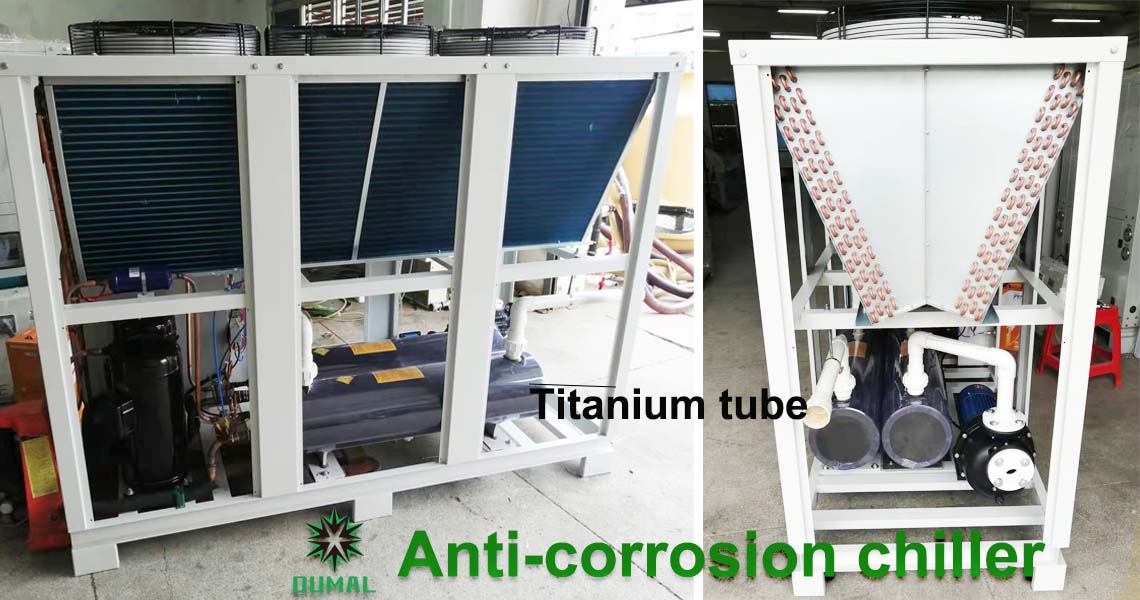
Direct cooling means that the electroplating solution directly enters the evaporator of the chiller through the filter or filter screen to cool down, and then returns to the oxidation tank. The advantage of the direct cooling method is that the cooling time is short and the effect is good. The disadvantage is that the evaporator needs anti-corrosion treatment (usually titanium alloy). It is easy to scale in the evaporator and needs to be cleaned regularly, otherwise it will affect the cooling effect and machine operation.


Another indirect cooling method is to lay titanium pipes in the oxidation tank. The chilled water takes away the heat of the electroplating solution through the titanium pipes to achieve the purpose of cooling. If it is inconvenient to lay the titanium pipes, you can add a heat exchanger (a titanium alloy is required). Cheng) While walking the frozen water, while walking the electroplating solution.


For the selection of electroplating chillers, we generally need to consider the following points: rectifier current (ampere), voltage (volt), number, electroplating tank length*width*height*80%, time, temperature difference. The electroplating liquid enters the chiller, and the evaporator, water pipe and pipeline are selected according to the degree of corrosiveness of the liquid. If the electroplating liquid does not enter the chiller, you need to know the material and area of the plate required in the tank. The heat comes from the rectifier or there are other places.


Calculation method for selection of chillers in electroplating industry:

Calorie calculation formula

Q=I*V*F*N

Q: Cooling capacity W

I: Rectifier current (Ampere)

V: Rectifier voltage (Volt)

N: Number of rectifiers

1KVA is about 0.75KW


Temperature difference method:

Q =1000*V*P*C*DT/S

Q: Cooling capacity (KW)

qv: volume of cooling medium (m3)

P: The density of the cooling medium (g/cm3 or Kg/L) water is 1g/cm3 or 1Kg/L

C: The constant pressure specific heat capacity of the cooling medium (J/Kg ℃) Water is 4186.8 J/Kg ℃)

DT: Temperature difference between inlet and outlet of cooling medium (℃) T2-T1

S: cooling time (S)


Supplementary note:

The cooling capacity of the chiller varies with the ambient temperature and the temperature of the outlet water

The actual heat generation of the equipment will also change due to different workpieces, molds, parameters, etc.

After the chiller is used, the temperature drops, and the surface temperature of the connecting pipeline, water tank, fuel tank, mold, spindle, and equipment will be lower than the ambient temperature, so it will absorb heat and increase the load.

In the actual application of industrial cooling, many situations cannot be accurately calculated by the above methods. At this time, it can only be estimated by empirical data and analogy of similar equipment.


Features of Oumal electroplating chiller:

1. Mainly use Panasonic, Copeland, and other famous brand fully enclosed scroll compressors, single or double, with high energy efficiency.

2. Brand refrigeration accessories, high-efficiency evaporator condenser, good refrigeration effect, reliable operation

3. Brand water pump, high pressure, high stability, durable

4. Microcomputer control panel, simple operation, high precision, wide range of use, can accurately control the water temperature

5. Complete electrical protection system, with phase loss, phase error protection, current overload protection, high and low voltage protection, etc. to ensure the normal operation of the unit

6. The water-cooled and air-cooled specifications are complete and can be customized according to customer needs.


Oumal specializes in producing all kinds of chillers, air-cooled chillers, water-cooled chillers, screw chillers, low-temperature chillers, glycol chillers, etc. Welcome to consult.

How to clean a water chiller?

How to clean a water chiller?

As a fixed asset of an enterprise, the chiller is a must for enterprise personnel to maintain it and maximize its usefulness. Because the long-term operation of the chiller will cause thick scale on the surface of the condenser, which will interfere with the normal operation of the chiller. For example, to make its work efficiency low or easy to damage, etc., the necessary cleaning of the chiller is absolutely indispensable.


How to clean the chiller? We have to distinguish between water-cooled and air-cooled. The water-cooled chiller is mainly used to remove the scale of the chiller. The removal cycle depends on the water quality. If the water quality is poor, it is cleaned at least once every 12 months; if the water quality is good, it can be cleaned once every 2 years on average.


Air-cooled chillers use air as the cooling medium. Because there is often dust in the air, some of the dust will stick to the outer surface of the condenser fins. After a period of time, the cooling effect of the condenser of the chiller will gradually deteriorate. The local environment is relatively harsh, and it is easier to age quickly. Therefore, the maintenance and cleaning of the chiller should be carried out at regular intervals.


The cleaning method of air-cooled chillers is: there are more dirt in the maintenance and cleaning of chillers, and non-corrosive cleaning agents should be used to clean the radiating pipes and fins to achieve the purpose of improving the heat dissipation effect.

So let's briefly talk about the main steps of cleaning the chiller.


First, remove the parts

If you want to clean the chiller, you must first disassemble it, because the parts you want to clean are not easy to see inside the collective. The various parts of the chiller cross each other, and the lines are complicated and it is really difficult to dismantle. This is to understand the overall chiller structure.


Second, the connection between the cleaning equipment and the condenser

After the disassembly in the previous step, find the direction of the condenser water inlet and connect it to the water inlet or outlet of the water pump, and then use tools to heat the pipe.


Third, dosing and cleaning

After making sure that each step is done and the pipes are connected, first add clean water for cleaning for about twenty times, and then drain the sewage and repeat it 3 times. After the cleaning is completed, the most important dosing cleaning is done. Of course, its pH value must be guaranteed between 4-5 and maintained for 2-3 hours. Finally, the medicine is discharged, and then the residual medicine is flushed to keep the pH at 6.5.


Fourth, install back to the original state

After cleaning, the installation is completed as it was.


The above are the main steps for cleaning the chiller. Is it easy, but I think it’s better to ask professionals to clean it. After all, disassembling the machine can easily cause damage to the parts. If the chiller is broken to clean the machine, it can It's really not worth the gain.

How to size a chiller - chiller cooling capacity caculation

The calculation method of chiller cooling capacity and the calculation summary of chiller selection


(1) How to choose the most suitable industrial chiller and screw chiller? In fact, there is a simple selection formula:

Cooling capacity = chilled water flow * 4.187 * temperature difference * coefficient

1. The flow rate of chilled water refers to the flow rate of chilled water required when the machine is working, and the unit needs to be converted into liters/second;

2. The temperature difference refers to the temperature difference between the water in and out of the machine;

3. 4.187 is quantitative (specific heat capacity of water);

4. When choosing an air-cooled chiller, multiply the coefficient by 1.3, and when choosing a water-cooled chiller, multiply it by 1.1;

5. Select the corresponding machine model according to the calculated cooling capacity.

It is generally customary to use HP to calculate how much the chiller needs to be equipped, but the most important thing is to know the rated cooling capacity. Generally, the air-cooled cooling capacity is 9.07KW and the 3HP chiller is selected, and so on. Therefore, the most important thing in the selection of industrial chillers is to obtain the rated cooling capacity.

(2) The calculation method of the cooling capacity of the chiller

How to calculate the cooling capacity of the chiller

1. Volume (liter) X number of temperature rise / heating time (minute) X 60 / 0.86 (coefficient) = (W)

2. Volume (tons or cubic meters) X number of temperature rise / heating time / 0.86 (coefficient) = (KW)

(3) Selection method of chiller

Energy conservation law Q=W in-W out

Q: Heat load (KW) W in: Input power (KW) example: 8KW, W out: Output power (KW) example: 3W

Example: Q=W in-W out=8-3=5 (KW)

Time heating method Q=Cp.r.V.ΔT/H

Q: Heat load (KW) Cp: Specific heat at constant pressure (KJ/kg.℃)……4.1868 KJ/kg. ℃,

r: Specific weight (Kg/m3)………1000 Kg/m3 V: Total water volume (m3) Example: 0.5m3

ΔT: water temperature difference (℃)…… ΔT= T2-T1 example: 5℃ H: time (h) example 1h

Example: Q=Cp.r.V.ΔT/H=4.1868*1000*0.5*5/3600=2.908 (KW)

Temperature difference flow method Q=Cp.r.Vs.ΔT

Q: Heat load (KW) Cp: Cp: Specific heat at constant pressure (KJ/kg.℃)……4.1868 KJ/kg. ℃,

r: Specific weight (Kg/m3)…….1000 Kg/m3 Vs: Water flow rate (m3/h) Example: 1.5m3/h

ΔT: water temperature difference (℃)…… ΔT= T2 (outlet water temperature)-T1 (inlet water temperature) Example: 10°C

Example: Q=Cp.r.Vs.ΔT=4.1868 * 1000 * 1.5* 10/3600 = 17.445 (kw)

Common plastic method: Q=W* C*ΔT * S

Q=the required frozen water energy kcal/h W=the weight of plastic raw materials KG/H Example: W=31.3KG/H

C=Specific heat of plastic raw materials Kcal/KG ℃ Example: Polyethylene PE C=0.55 Kcal/KG℃

ΔT= is the temperature difference between the melting temperature and the product film, ℃ generally (200℃)

S = safety factor (take 1.35-2.0) Generally take 2.0

Example: Q= W* C*ΔT * S=31.3 * 0.55 * 200 * 2.0 = 6886 (kcal/h)


When you need a chiller, Here is the Necessary info to quote.

1.What is your cooling capacity?_____    Kcal/hr  or   _____KW or _____RT?
2. What's your power supply? For example: 380V-50Hz-3N (N=Phase )
3.What refrigerant type do you require? R22 or R134a or R407c?
4. What's your ambient temperature?

And what is your chiller inlet and outlet water temperature?
5. Which industry do you use the chiller in?