Important parts of low-temperature chiller assembly matters and refrigeration methods

Commonly used auxiliary accessories for low temperature chillers, including water flow switch, pressure controller, pressure difference controller, temperature controller and solenoid valve, as well as a brief introduction of three cooling methods, liquid vaporization refrigeration, gas expansion refrigeration and thermoelectric refrigeration.


Common auxiliary accessories for low-temperature chillers

1, water flow switch

The water flow switch is used as the control or cut-off protection of the fluid flow in the pipeline. When the fluid flow reaches the set value, the switch automatically cuts off (or connects) the circuit.

2, pressure controller

The pressure controller is used for pressure control and pressure protection. The chiller has low and high pressure controllers to control the working range of the system pressure. When the system pressure reaches the set value, the switch automatically cuts off (or connects) the circuit.

3, differential pressure controller

The pressure difference controller is used to control the pressure difference. When the pressure difference reaches the set value, the switch automatically cuts off (or turns on) the circuit.

4, temperature controller

The temperature controller is used for the control or protection of the unit. When the temperature reaches the set value, the switch automatically cuts off (or turns on) the circuit. In our products, temperature control is often used, and the temperature of the water tank is used to control the startup and shutdown of the unit. There are also temperature controllers that need to be used for antifreeze.

5, solenoid valve

Cut off the system circuit when the compressor is stopped to avoid liquid shock when the compressor is started next time. It is generally used in a larger refrigeration system.

Three cooling methods

1. Liquid vaporization refrigeration:

1) Compression: The normal temperature gas state becomes a high pressure and high temperature gas state.

2) Condensation: High pressure and high temperature gas becomes high pressure liquid

3) Evaporation: High-pressure liquid turns into low-pressure gas, absorbing heat and realizing refrigeration.


2, gas expansion refrigeration:

Gas expansion refrigeration uses the adiabatic expansion of high-pressure gas to reach low temperature, and uses the reheating process of the expanded gas at low pressure to refrigerate. Due to the different equipment for gas adiabatic expansion, there are generally two ways: one is to increase the high pressure The gas is expanded by the expander and has external power output, so the temperature drop of the gas is large, and the cooling capacity is also large during reheating. However, the expander structure is more complicated. Another way is to make the gas expand through the throttle valve without external power output. The temperature drop is small and the cooling capacity is small, but the structure of the throttle valve is relatively simple, which is convenient for the adjustment of the gas flow.


3. Thermoelectric cooling

When the DC power supply is turned on, the current direction of the upper connector is N-P, the temperature decreases, and absorbs heat, forming a cold end; the current direction of the lower connector is p-n, the temperature rises, and heat is released, forming a hot end. Several pairs of thermocouples are connected to form a commonly used thermopile. With the help of various heat transfer devices, the hot end of the thermopile continuously dissipates heat and maintains a certain temperature, and the cold end of the thermopile is placed in the working environment to absorb Heat, produce low temperature, this is the working principle of semiconductor refrigeration. The solar semiconductor refrigeration system uses the thermoelectric cooling effect of semiconductors to directly supply the required DC power by solar cells to achieve the effect of cooling and heating.


If you need to know more about low-temperature chillers, glycol chillers, screw chillers, chillers, ice water chillers, scroll chillers, piston chillers and refrigerators and other refrigeration products, please contact our OUMAL refrigeration manufacturer, and we will try our best to solve the failure of the chiller for customers. Such as chiller does not refrigerate and other issues, wholeheartedly recommend customers to choose the right chiller products, so that everyone can buy the right machine and solve your industrial cooling water system issue. Welcome to consult us at any time. The oumal industrial chiller water unit adopts original imported configuration, fully automatic computer controller, which can precisely control the temperature of the coating machine. According to customer requirements, different methods of use are developed to produce refrigeration equipment that meets customer requirements to ensure the high quality of plating parts. .

Requirements for adding refrigerant to industrial chiller system

After the industrial chiller system has passed the vacuum test, the vacuum state in the system can be used to charge the refrigerant.


1. Refrigerant charging

For newly installed systems, refrigerant can be added to the high-pressure end, and the operation method is as follows:

1) Turn on the cooling water system for the condenser, and keep the valve in the system as it was during the vacuum test

2) Connect the steel cylinder containing the refrigerant with the West 14mm×2mm seamless steel pipe (use a red copper pipe when filling with Freon). The mouth of the bottle is inclined downward, and the cylinder is at an angle of 30° with the ground, or the end of the cylinder is raised about 200-300mm.

3) Open the filling valve. When the system reaches a certain pressure (0.1~0.2 MPa for ammonia system; 0.2~0.3 MPa for Freon system), stop charging the refrigerant, and then check the sealing condition of the system at each connection and welding place. If there is no leakage, Can continue to charge refrigerant.

4) Close the outlet valve on the liquid reservoir and continue to charge the refrigerant. When the cylinder pressure and the pressure in the liquid reservoir reach equilibrium, the outlet valve on the liquid reservoir should be opened.

5) Start the refrigerating machine, make the refrigerating device enter the running state, and continue to charge the refrigerant at the same time. When white frost appears on the lower part of the cylinder, it means that the liquid refrigerant in the cylinder is almost completely filled. At this time, the cylinder valve and charging valve can be closed, and the bottle can be changed to continue charging.

6) Unless the outside temperature is very low, it is generally not necessary to pour hot water on the cylinder to increase the pressure in the cylinder when charging the refrigerant, because it is not safe to do so. If you need to speed up the filling speed, the hot water temperature must not exceed 50°C and other methods to heat the cylinder are strictly prohibited.

7) When filling freon, a filter drier must be installed on the special nozzle to reduce the possibility of water entering the system. When charging with high pressure section, never start the compressor, and pay attention to the exhaust valve not to leak, otherwise liquid hammer will occur.

8) When the refrigerant is charged up to 90% of the charging amount, the charging can be temporarily stopped, and the system can be tested to check whether the system dosage has met the operation requirements and avoid unnecessary trouble caused by excessive charging. For the old refrigeration system, when the refrigerant needs to be supplemented, it should be charged from the low pressure side.


2. Leak detection after filling

(1) Leak detection method with test paper Generally, phenolphthalein test paper is used to test the system's welds, flanges, and threaded connections for leaks. Wet the test paper and approach the inspected place. If it turns red, it means that there is ammonia leakage (note that the test paper should not be in contact with the soapy water on the pipe to create an illusion). Litmus paper that turns blue when exposed to ammonia can also be used.

(2) Halogen blowtorch leak detection method Halogen blowtorch is a common tool for leak detection in Freon refrigeration systems. The domestic halogen blowtorch is shown in the figure below, and the method of use is as follows:

1. Add alcohol: first unscrew the base 1 and add anhydrous alcohol with a purity of not less than 99.5% to the inside of the barrel, but the amount of injection should not be too much, just fill 1/2 to 3/4 of the volume of the lamp tube That's it, then the base should be fastened tightly.

2. Light a fire: turn the hand wheel 2 to the right, close the valve core, fill the wine glass, and then light it to heat the lamp tube and the upper part of the blowtorch. After heating a little, check whether the blowtorch is leaking.

3. Fire: When the alcohol in the beaker is nearly finished, turn the hand wheel 2 to the left and ignite the volatilized alcohol in the nozzle in the flame ring 4. At this time, the suction hose 6 of the halogen lamp emits With the sound of gas inhalation, you can start leak detection with a lamp.

4. Use: When testing, move the nozzle of the suction hose 6 close to the inspected place, and move slowly. If there is Freon gas leakage, it will decompose when it meets the flame. At this time, the orange-red flame will turn into green and the color of the flame. The change varies with the amount of Freon leakage, and the darker the color, the more serious the leakage of Freon.


Solutions to failures of air-cooled screw chillers

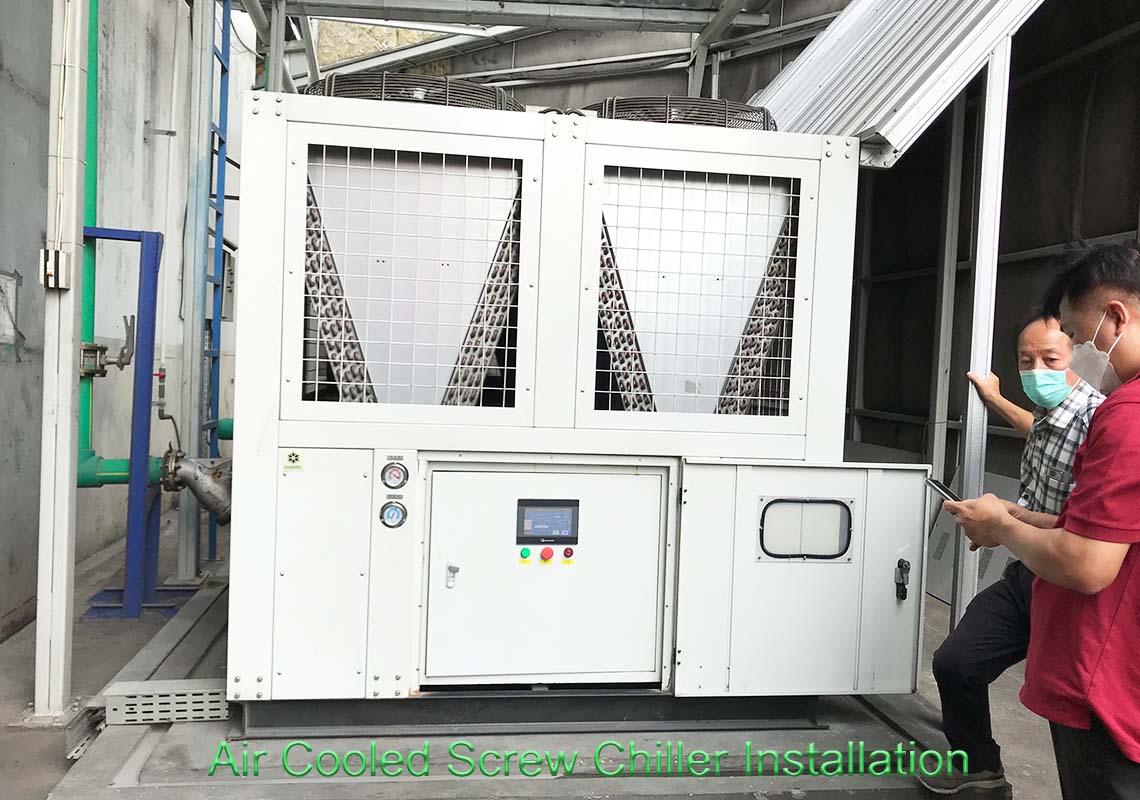
The air-cooled screw chiller is a screw chiller that uses fans to dissipate heat. The installation environment it needs must be open and easy to circulate, so that this operation will not affect the cooling effect of the air-cooled screw chiller .


Therefore, we should understand some common faults of air-cooled screw chillers and some troubleshooting methods:


1. The fan noise of the air-cooled screw chiller is too loud


Bearing component wear/excessive clearance: If it is worn, it should be replaced in time, and if the clearance is too large, it can be directly adjusted to a suitable position;


The speed is too high: it can be improved by reducing the speed, if it is not solved, replace the fan;


2. The temperature rise of the motor of the air-cooled screw chiller fan is too high


The flow exceeds the rated value: the valve needs to be closed at this time;


Motor or power supply problems: find out the reasons for the motor and power supply;


3. The bearing temperature of the air-cooled screw chiller fan increases


The fan shaft and the motor shaft are different: they need to be adjusted to be concentric;


Bearing damage: need to replace a new bearing, or directly contact the chiller manufacturer to replace it.


Insufficient lubricating oil (grease) or poor quality: If the lubricating oil is not enough, the company should fill it up to the required part; if there is a quality problem, it is necessary to clean the bearing or replace the more qualified lubricating oil (grease);


4. The air output of the air-cooled screw chiller fan is too small:


Blockage of air inlet, outlet and pipe: check and remove the blockage;


Insufficient valve opening, speed, and belt slack: you can check the bearing by adjusting the valve opening to a proper opening, tightening and replacing the belt, and checking the voltage.


Check that the connection between the impeller and the shaft is loose, which can be eliminated by direct prohibition; if the gap between the impeller and the air inlet is too large, it should be adjusted to a suitable gap.


The fan of the air-cooled screw chiller is equivalent to the cooling tower cooling system of the water-cooled chiller. If the heat dissipation effect is not good, the cooling capacity of the air-cooled screw chiller is absolutely insufficient, which directly affects the company’s refrigeration Water demand. Therefore, we need to maintain and maintain our chillers in a timely manner.

What caused poor refrigerating efficiency ?

What caused poor refrigerating efficiency?

Sometimes when we use a chiller, but the temperature could not be lower, or After cooling down to a certain temperature, it won’t go down anymore. Let's talk What caused the poor refrigerating efficiency ?


1. Refrigerant leakage

[fault analysis] After the refrigerant leak in the system, the cooling capacity is insufficient, the suction and exhaust pressure are low, and the expansion valve can hear much larger intermittent “squeak” air flow than usual.The evaporator is not frosted or with a small amount of frosting. If the expansion valve hole is enlarged, the suction pressure remains unchanged.After the shutdown, the equilibrium pressure in the system is generally lower than the saturation pressure corresponding to the same ambient temperature.


2. Too much refrigerant is filled after maintenance
[fault analysis] When the refrigerating dose filled in the refrigeration system after maintenance exceeds the capacity of the system, the refrigerant will occupy a certain volume of the condenser, reduce the heat dissipation area, and reduce its refrigeration efficiency. Generally, the suction and exhaust pressure are higher than the normal pressure value, the evaporator is not frosted, and the temperature in the warehouse is slow.


3. Air in the refrigeration system

[fault analysis] The air will reduce the refrigeration efficiency in the refrigeration system. The prominent phenomenon is the increase of suction and exhaust pressure (but the exhaust pressure has not exceeded the specified value). The temperature of the compressor at the inlet of the condenser is significantly increased.


4. Low compressor efficiency

[fault analysis] The low efficiency of refrigerating compressor refers to the reduction in the response of refrigerating volume due to the decrease of the actual exhaust volume under the condition that the working condition remains unchanged.This phenomenon usually occurs on compressors that have been used for a long period of time, with large wear and tear, large clearance of all components, and decreased sealing performance of air valves, which results in the decrease of actual air discharge.


5. The surface of evaporator is frosted too thick
[fault analysis] Long-term use of cold storage evaporator should be regularly defrosted. If the frost is not defrosted, the frost layer on the evaporator tube becomes thicker and thicker. When the whole pipeline is encased in transparent ice, the heat transfer will be seriously affected, causing the temperature in the reservoir to fall below the required range.


6. There is frozen oil in the evaporator pipeline
[fault analysis] During the refrigeration cycle, some frozen oil remains in the evaporator pipeline. After a long period of use, a large amount of oil remains in the evaporator, which will seriously affect its heat transfer effect and lead to poor refrigeration.


7. The refrigeration system is not smooth
[fault analysis] Because the refrigeration system is not clean, after several hours of use, the dirt is gradually silted up in the filter and some mesh holes are blocked, resulting in the reduction of refrigerant flow and affecting the refrigeration effect.
In the system the expansion valve, the compressor suction nozzle at the filter screen also has a small plug phenomenon.


8. The filter is blocked
[fault analysis] When the desiccant is used for a long time, it becomes paste to seal the filter, or the dirt gradually accumulates in the filter, causing blockage.


9. Leakage of refrigerant in the expansion valve sensible temperature package
[fault analysis] After the leakage of the temperature sensor in the expansion valve’s temperature sensor package, two forces under the diaphragm push the diaphragm upward. It is the valve hole closed.


10. Cold air cooling condenser has poor cooling effect in the cold storage
[fault analysis]
⑴The fan is not on.
⑵Parliamentary fan motor damaged.
⑶Torque fan reverse.
⑷high ambient temperatures (40 ℃ above).
⑸Flow of condenser cooling fins blocked by oil and dust.


11. The cooling effect of water-cooled condenser is poor
[fault analysis]
⑴The cooling water valve is not opened or opened too small, and the inlet pressure is too low
⑵Potassium water regulating valve fails.
⑶The scale on the wall of the condenser pipe is thicker.


12. Too much refrigerant is added into the system
[fault analysis] Too many refrigerants lead to a significant increase in the exhaust pressure, exceeding the normal value.


13. Residual air in the system
[fault analysis] The air circulation in the system will lead to excessive exhaust pressure, high exhaust temperature, hot exhaust pipe, poor refrigeration effect, the compressor will operate soon, and the exhaust pressure will exceed the normal value.


14. Stop when the suction pressure is too low
[fault analysis] When the suction pressure in the system is lower than the set value of the pressure relay, its contact action will cut off the power supply.


15. The temperature controller is out of control
[fault analysis] The thermostat fails to adjust or the temperature sensor package is improperly installed.


16. Sudden stop caused by other reasons
[fault analysis] In the process of use and maintenance, it is often necessary to open, close the exhaust, inhale, and store the liquid, etc.


What is a industrial chiller ?

Industrial chillers are one type of chillers, and chillers can be divided into air-cooled chillers and water-cooled chillers.


Water chiller is a kind of water cooling equipment, which can provide constant temperature, constant current and constant pressure cooling equipment. The principle of the chiller is to inject a certain amount of water into the internal water tank of the machine, and the water is cooled by the chiller refrigeration system, and then a water pump inside the machine injects low-temperature frozen water into the equipment that needs to be cooled, and the chilled water will heat the internal heat of the machine. Take it away and return the high-temperature hot water to the water tank to cool down again. In this way, it is circulated and exchanged and cooled to achieve the effect of cooling the equipment.


In industrial applications, chilled water or other liquid cooling pumps are passed through processes or laboratory equipment. Industrial chillers are used in various industries to control the cooling of products, mechanisms and factory machinery. They are commonly used in injection and blow molding in the plastics industry, metal processing cutting oils, welding equipment, die-casting and machining, chemical processing, pharmaceutical formulation, food and beverage processing, papermaking, cement processing, vacuum systems, X-ray diffraction, electric power Supply and power stations, analytical equipment, semiconductors, compressed air and gas cooling. They are also used to cool high heat energy, such as MRI machines and laser specialized engineering projects, and in hospitals, hotels and campuses. The chillers for industrial applications can be centralized, and each chiller can meet multiple needs for cooling, or be dispersed in each application or device with its own chiller. Each method has its advantages. It may also have a combination of central and decentralized chillers, especially when the cooling requirements are the same for certain applications or use points, but not all.


Distributed chillers have a small area (cooling capacity) usually from 0.2 tons to 10 tons. Central chillers generally have a capacity ranging from 10 tons to hundreds or thousands of tons.

Chilled water is used to cool and dehumidify the air in large-scale commercial, industrial and institutional alliance (CII) facilities. The chiller can be water-cooled, air-cooled, cooled or evaporatively. The use of water-cooled chillers is incorporated into cooling towers, which improves the cooling' thermodynamic efficiency compared to air-cooled chillers. This is due to the high temperature or the wet bulb temperature of the nearby air, rather than repelling the high, sometimes much higher, dry bulb temperature. Evaporatively chillers provide better efficiency than air cooling, but lower than cold water.


Several aspects of the chiller should be paid attention to:


1. Selection of model size of chiller for injection molding machine

When used as a mold cooling of an injection molding machine, it can be calculated according to the injection volume of the injection molding machine. Generally, a 1HP chiller is used for every 6 ounces of injection volume. For example, the customer’s factory is 100T (5.5OZS)×3; 150T(12OZS)×4 units; 200T(23OZS)×3 units; the required chiller size is (5.5×3+12×4+23×3)/6=22.25, that is, a 25HP chiller. When used for cooling of other equipment, it depends on the specific flow rate of the cooling water circulation.


2. Selection of the insulation water tank and water pump of the chiller

Sometimes according to the actual situation of the customer's factory, the box-type chiller may also require an external pump. At this time, the additional pump model must have the same power as the pump that comes with the chiller. If the 10HP box-type chiller comes with a pump power of 2HP, when the pump is added, it must also be 2HP.


3. The temperature of the return water of the chiller should not be higher than 40 degrees. The higher the return water temperature, the greater the damage to the compressor.


Scope of application


Plastic industry: Accurately control the mold temperature of various plastic processing, shorten the plastic molding cycle, and ensure the stability of product quality.

Electronics industry: Stabilize the molecular structure of electronic components on the production line, improve the qualification rate of electronic components, and apply to the ultrasonic cleaning industry to effectively prevent the volatilization of expensive cleaning agents and the damage caused by volatilization.

Electroplating industry: control the electroplating temperature, increase the density and smoothness of the plated parts, shorten the electroplating cycle, increase production efficiency, and improve product quality.

Machinery industry: Control the oil temperature of the oil pressure system, stabilize the oil temperature and oil pressure, extend the oil quality use time, improve the efficiency of mechanical lubrication, and reduce wear.

Construction industry: supply chilled water for concrete, make the molecular structure of concrete suitable for construction purposes, and effectively enhance the hardness and toughness of concrete.


Vacuum coating: control the temperature of the vacuum coating machine to ensure the high quality of the coated parts.

Food industry: used for high-speed cooling after food processing to adapt to packaging requirements. In addition, there are control of the temperature of fermented food and so on.

Pharmaceutical industry: In the pharmaceutical industry, it is mainly used to control the temperature control of fermented drugs. Pharmaceutical companies should make full use of chiller equipment, continue to strengthen technological innovation based on their advantages, and enhance the cost-effectiveness of chillers, so as to better serve the pharmaceutical sector.


Working Principle of the water chiller

Chillers are divided into air-cooled chillers and water-cooled chillers. The working principle diagram of air-cooled chillers is as follows

working principle of air-cooled chiller


Working Principle of air-cooled chiller

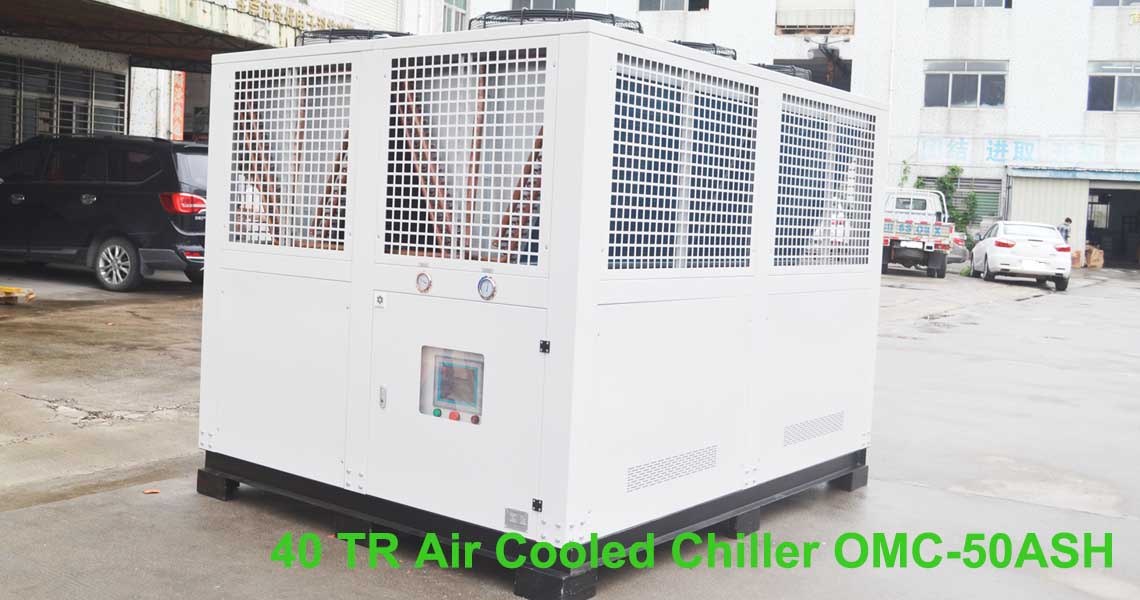
The air-cooled chiller uses a shell and tube evaporator (or tank with coil) to exchange heat between water and refrigerant. The refrigerant system absorbs the heat load from the water and cools the water to produce cold water. The heat is brought to the finned condenser through the action of the compressor. Then it is lost to the outside air by the cooling fan (wind cooling)


Features of air-cooled chillers

1The air-cooled chiller does not need to be installed with a cooling water tower and is suitable for environments with poor impurities. (It is easy to mix impurities in the cold water tower, and the dust will block the cooling water circulation loop, causing the cooling capacity to drop).

2Air-cooled chillers are most suitable for areas with poor water quality, and can save other accessories for chillers.

3With a large-capacity condenser, it can be easily operated even in heat.

4Minimize floor space and easy installation

5The air-cooled chiller adopts a top-out air design.

The working principle diagram of the water-cooled chiller is as follows:

water-cooled chiller working principle

Schematic diagram of the principle and flow of water-cooled chillers

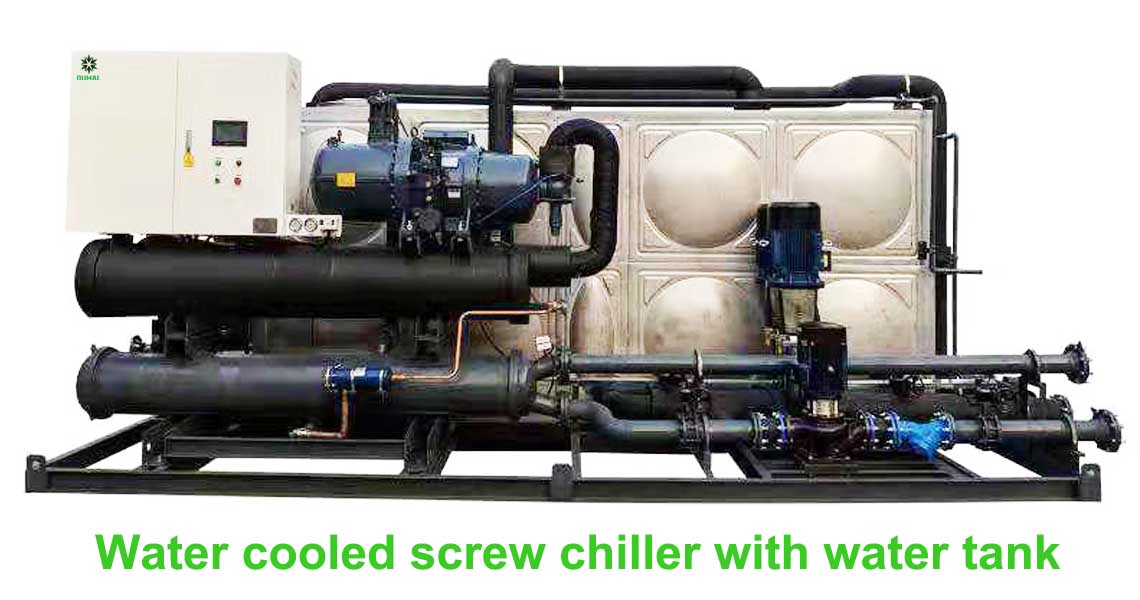
The water-cooled chiller uses a shell and tube ( or tank with coil ) evaporator to exchange heat between water and refrigerant. The refrigerant system absorbs the heat load of the water and cools the water to produce cold water. The heat is brought to the shell and tube condenser through the action of the compressor. The refrigerant exchanges heat with the water, so that the water absorbs the heat and then takes the heat out of the cooling tower through the water pipe to dissipate (water cooling)


Features of water-cooled chillers:

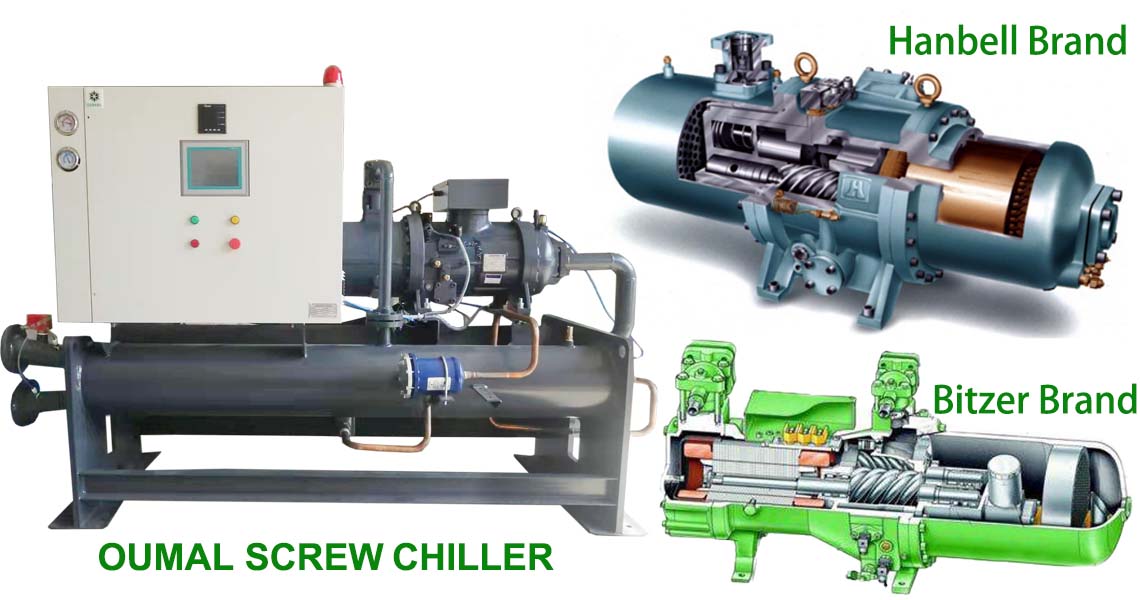
1. High-quality compressors are the heart of industrial chillers (brand-new original compressors from Europe, America and Japan, with built-in safety protection, low noise, power saving and durability).

2. The box-type evaporator has a built-in automatic water replenishment device, which saves the need for the expansion water tank in the engineering installation to facilitate installation and maintenance, and is suitable for special occasions such as large temperature difference and small flow.

3. The water-cooled condenser is made of the latest high-efficiency externally threaded copper pipe, with large heat dissipation and small size. Using the latest CAD/CAM processing technology, with CNC machining center to complete the production, compact structure, high reliability, beautiful appearance, high efficiency and energy saving.

4. Industrial chiller unit configuration: equipped with a single-chip control system, built-in compressor dryer filter and expansion valve, maintenance hand valve interface and other devices, to ensure the reliable and safe operation of the machine to facilitate maintenance and repair.

5. The multi functional operation panel of the industrial water chiller is equipped with ammeter, control system insurance, compressor switch button, water pump switch button, electronic temperature controller, various safety protection fault lights, unit start-up and operation indicator, simple operation and convenient use . Industrial chiller unit configuration: equipped with a single-chip control system, built-in compressor drying and expansion valve, maintenance hand valve interface and other devices, to ensure the reliable and safe operation of the machine, and facilitate maintenance and repair.

Selecting the Right Chiller for Your Process – What We’ve Learned at OUMAL

In industrial production, stable process cooling isn’t just a support function — it’s often the difference between smooth operation and costly downtime. At OUMAL Refrigeration Machinery Co., Ltd, we’ve worked with customers across injection molding, extrusion, thermoforming, and more. Over time, one thing has become clear: choosing the right chiller matters.

Not All Cooling Needs Are Created Equal
Different industries — even different machines — have very different cooling requirements. For example, a customer running a small injection molding line may only need a compact 8 ton chiller to maintain mold temperatures within a tight range. These chillers are space-efficient and offer precise control, making them a practical choice for localized cooling tasks.

On the other hand, when the scale increases or when multiple machines share a cooling circuit, something like a 15 TR chiller tends to be a better fit. We’ve seen these used successfully in mid-sized production lines where reliability and steady performance are non-negotiable.

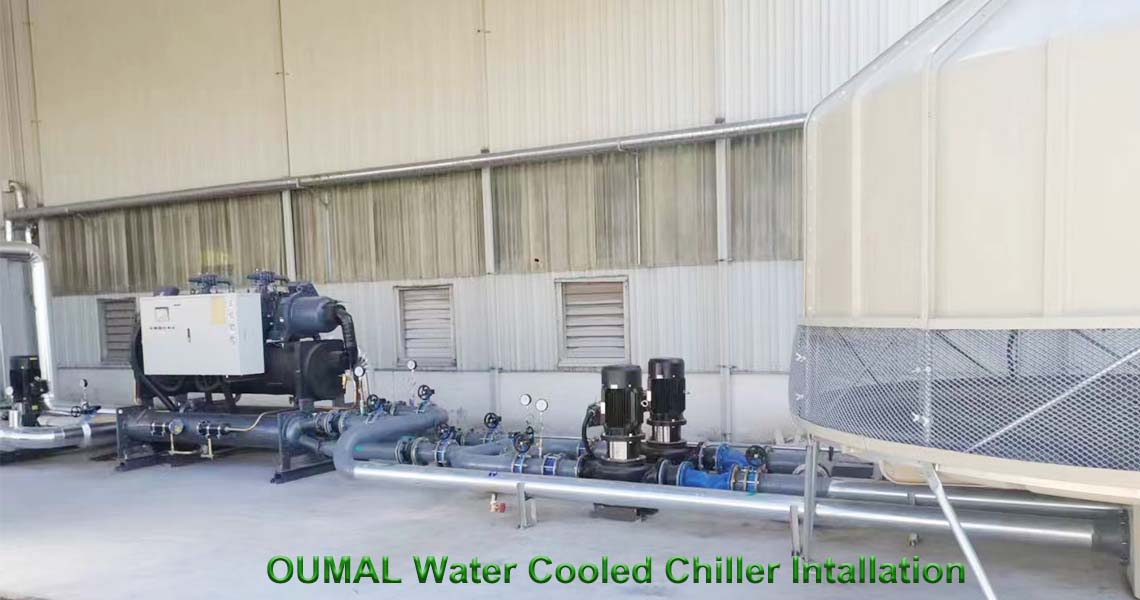
For large plants, especially those operating around the clock, a 100 ton water cooled chiller can provide both capacity and energy efficiency. Water-cooled systems require more infrastructure — including cooling towers and proper piping — but in return, they offer stable performance in high ambient environments and over long production runs.

Built for Industry, Backed by Experience
What sets OUMAL apart is not just the equipment itself, but the way we build around customer needs. Our manufacturing team can handle a wide range of options and customizations, which means the chiller you receive isn’t off-the-shelf — it’s made to work the way you do.

We’ve served customers in over 20 countries, including the US, Australia, Saudi Arabia, Vietnam, and Brazil. The variety of applications we’ve supported — from blown film to compound mixing — gives us the insight to ask the right questions before making a recommendation. Our goal is always to match cooling performance with process demand, rather than over- or under-sizing.

Long-Term Value Comes from the Right Start
One thing we often remind our partners: a properly selected chiller does more than control temperature. It protects your equipment, shortens your cycle times, and helps maintain product consistency. That’s especially important in processes where a few degrees can mean the difference between a good batch and scrap.


Whether you’re starting with a single machine or upgrading an entire line, OUMAL is ready to help you choose wisely — whether that’s an 8 ton, 15 TR, or 100 ton water cooled chiller.


China chiller manufacturer

What Is an Air Cooled Chiller – A Practical Explanation from the Factory Floor

When someone new joins our engineering team, one of the first questions they usually ask is: “So what’s the difference between air cooled and water cooled chillers—and which one’s better?”


It’s a good question. And after installing, maintaining, and even troubleshooting both systems in dozens of customer factories, here’s how we usually explain it.


Let’s Start with the Basics

An air cooled chiller is essentially a cooling unit that uses ambient air to remove heat from a circulating liquid—usually water or a water-glycol mix. It's often used to keep production equipment or buildings at a stable temperature.

There’s no need for a cooling tower or a complex water pipeline. It uses built-in fans to get the job done.

This setup is widely chosen in:

  • Injection molding plants

  • Food packaging lines

  • Laser processing workshops

  • HVAC systems for commercial buildings

If you’ve got space outside and want to avoid dealing with water quality issues, air cooled is probably the better call.

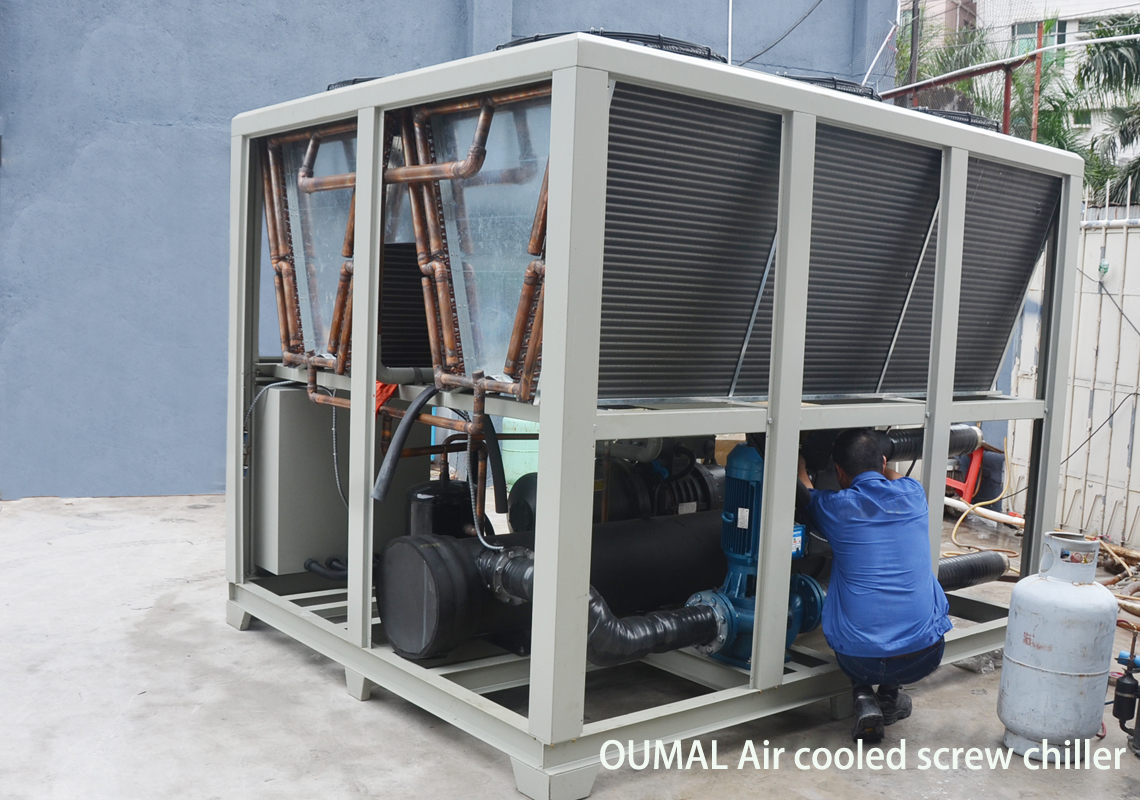
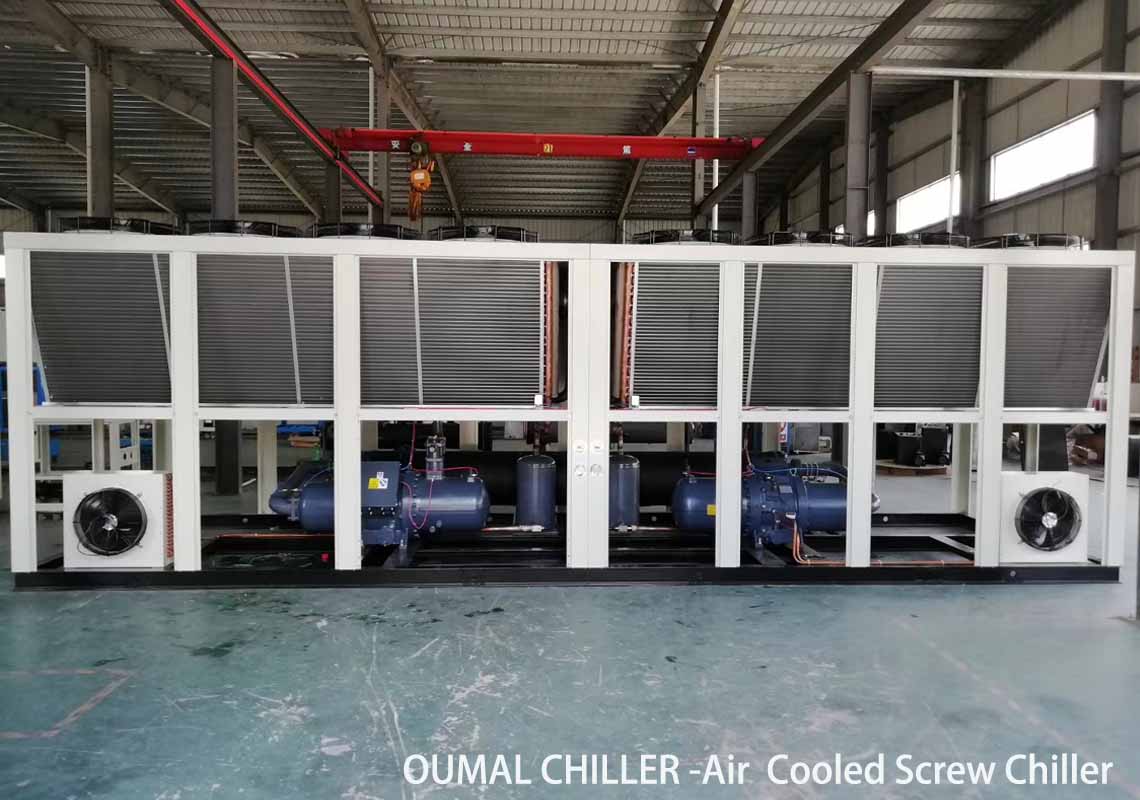
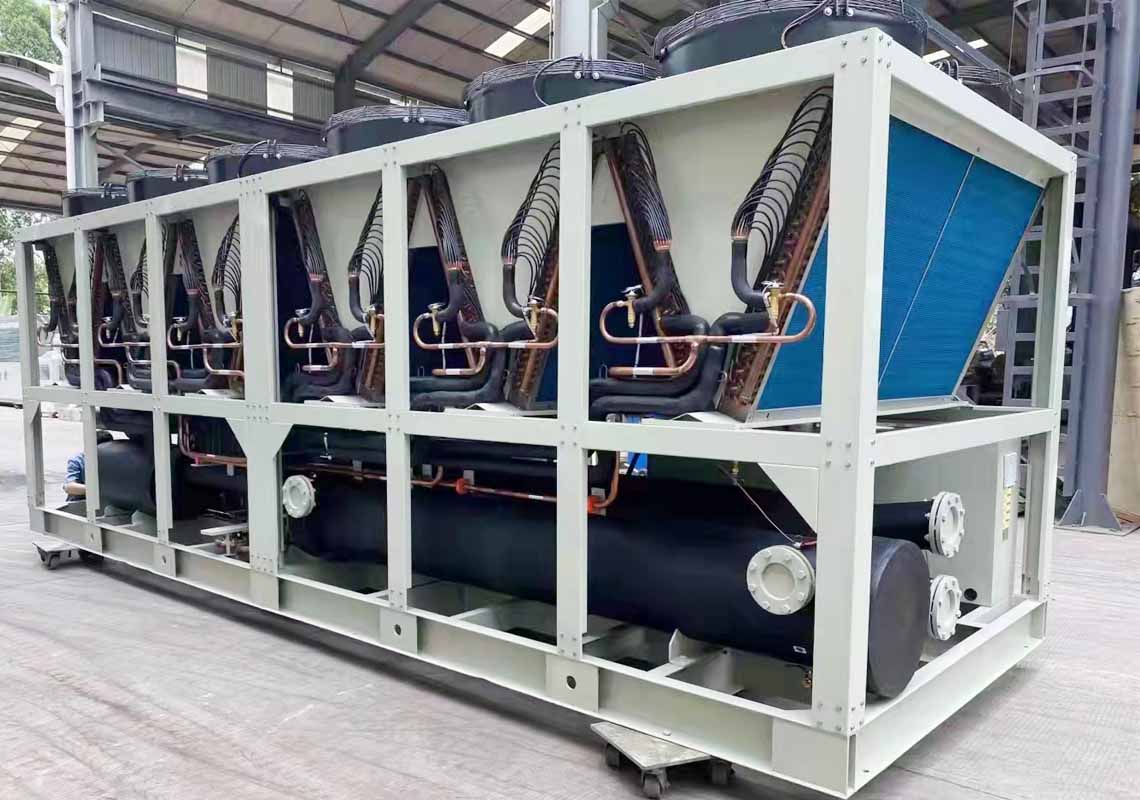
air cooled screw chiller

What’s Inside the Unit?

Rather than listing textbook components, here’s what we see under the cover of atypical air cooled water chiller we ship:

  • A compressor that acts like the system’s engine

  • An evaporator that draws heat out of your process water

  • A condenser with aluminum fins, cooled by strong fans

  • An expansion valve to adjust refrigerant pressure

  • A control panel—the brain of the system

Some models include water pumps and tanks. Others are modular—you can connect them to existing infrastructure.


Here’s How It Works (Simplified)

Let’s say you’re using a CNC machine that heats up during operation. Here’s how the air cooled chiller steps in:

  1. The warm water comes back from the CNC.

  2. It enters the evaporator inside the chiller.

  3. The refrigerant in the evaporator absorbs that heat and turns into a gas.

  4. The gas gets compressed—its temperature and pressure rise sharply.

  5. That hot gas goes through the condenser. Fans blow outside air across coils, removing the heat.

  6. The refrigerant turns back into a liquid, and the cycle repeats.

Your machine keeps running cool—and you don’t need a water tower or much operator attention.


Why Do Customers Choose Air Cooled Units from Us?

Some of our long-term clients choose air cooled chiller systems for one reason: they just work.
Even without an in-house technician, these systems are straightforward to install, easy to control, and rarely break down when used correctly.

Clients also appreciate that we offer:

  • Tailored sizing based on actual load

  • Remote monitoring options

  • Short lead times, even for custom orders

  • Reliable after-sales support (yes, even overseas)


As a practical air cooled chiller supplier, we’re not here to sell what’s biggest or most expensive—we help customers find what runs stably for years.

Application of hot melt adhesive automatic scraper

In modern manufacturing, hot melt adhesive is widely used in various industries, including packaging, woodworking, electronics, and automobiles. However, the traditional manual scraping gun method has some inconveniences in large-scale production, such as low production efficiency and high labor costs. In order to overcome these challenges, engineers have developed hot melt adhesive automatic scraping gun technology, providing companies with a tool to improve efficiency and reduce costs.


Limitations of traditional manual scraper guns

In traditional hot melt adhesive applications, workers need to manually bring the hot melt adhesive gun close to the target surface and manually control the spraying and scraping process of the hot melt adhesive. This method has several disadvantages. First, the manual scraper gun needs to be repeatedly positioned and controlled, and the errors caused by this are difficult to avoid, resulting in uneven coating and unstable quality. Second, long-term use of manual scrapers can easily cause worker fatigue and reduce worker work efficiency. In addition, manual scrapers also cause waste of hot melt adhesive because operators often find it difficult to accurately control the amount of hot melt adhesive used.


Advantages of hot melt adhesive automatic scraper

In order to solve the problems of traditional manual scraper, automation technology is gradually applied to the hot melt adhesive field. The hot melt adhesive automatic scraper system consists of a coater, a sensor and a control system. The coater can spray the hot melt adhesive evenly onto the target surface through precise control. At the same time, the sensor can monitor the shape and state of the target surface and automatically adjust the height and speed of the scraper to ensure the consistency and accuracy of the coating. The control system can realize the automated hot melt adhesive scraper process according to the preset parameters and process requirements.


Application fields of hot melt adhesive automatic scraper

Hot melt adhesive automatic scraper technology has been widely used in many industries. In the packaging field, it is used in carton sealing, bag sealing, tape bonding and other links to improve production speed and quality stability. In the woodworking industry, hot melt adhesive automatic scraper can be used in furniture manufacturing, board bonding and other processes to improve production efficiency and product quality. In the electronics industry, automatic scrapers can be used in circuit board assembly, component packaging and other processes to improve work efficiency and reliability. In the automotive manufacturing field, hot melt adhesive automatic scraper can be used in body sealing, interior bonding and other processes to improve bonding effect and product reliability.


The application of hot melt adhesive automatic scraper technology has brought great benefits to all walks of life. It can improve production efficiency, reduce labor costs, ensure the consistency of coating quality, and reduce the waste of hot melt adhesive. With the continuous development of automation technology, hot melt adhesive automatic scraper will be used in a wider range of fields and continue to create greater economic benefits and development opportunities for enterprises.

hot glue gun nozzle


glue spray gun

slot die coating die

glue module dispenser

hot melt coating machine

Carbonization problem in the use of hot melt adhesive machine effective prevention and treatment methods

As an efficient and convenient bonding equipment, hot melt adhesive machine is widely used in packaging, textile, automobile manufacturing and other fields. However, in actual use, hot melt adhesive machine often encounters a thorny problem - carbonization. The generation of carbonization not only affects the normal operation of the equipment, but may also lead to product quality degradation or even equipment damage. Therefore, understanding how to effectively prevent carbonization, the impact of carbonization on use, and the correct treatment method after carbonization is crucial to ensure the stability of the hot melt adhesive machine and extend its service life.


Carbonization is mainly caused by the following factors:

· Too high temperature: Hot melt adhesive needs to melt at a certain temperature, but if the temperature is set too high or the equipment is in a high temperature state for a long time, it will cause the colloid to decompose.

· Too long residence time: The hot melt adhesive stays in the heating system for too long and fails to be discharged in time, which is prone to oxidation and decomposition.

· Air ingress: If the equipment is not well sealed, oxygen in the air enters the adhesive tank or pipe, which will accelerate the oxidation reaction of the colloid.

· Material problem: Some types of hot melt adhesives are sensitive to high temperatures and are more prone to carbonization.

· Equipment aging: Hot melt adhesive machines that have been used for a long time may have problems such as aging of heating elements and failure of temperature control systems, which may lead to abnormal temperature increases.


In order to reduce the occurrence of carbonization of hot melt adhesive machines, the following are some practical preventive measures:

1. Reasonable temperature control

· Set the appropriate heating temperature according to the type of hot melt adhesive used. It is generally recommended to control the temperature at the lower limit of the recommended range to reduce the risk of colloid decomposition.

· Regularly check whether the temperature control system is accurate to avoid abnormal temperature rise due to equipment failure.


2. Shorten the residence time of colloid

· During the production process, minimize the residence time of hot melt adhesive in the heating system. The production process can be optimized to speed up the flow rate of colloid and reduce the time the colloid is exposed to high temperature.

· If the equipment is out of use for a long time, the residual colloid in the glue tank and pipeline should be cleaned in time to avoid carbonization due to long-term standing.


3. Maintain the tightness of the equipment

· Ensure that the hot melt adhesive machine's adhesive tank, pipes, nozzles and other parts are well sealed to prevent air from entering and contacting the adhesive.

· For open-design equipment, consider installing a dust cover or using an inert gas (such as nitrogen) for protection to reduce the occurrence of oxidation reactions.


4. Regularly maintain the equipment

· Regularly check the heating elements, temperature control system and pipe connections of the hot melt adhesive machine to ensure that the equipment is operating normally.

· When cleaning the adhesive tank and pipes, the residual colloid should be thoroughly removed to avoid excessive accumulation and carbonization.


5. Choose high-quality hot melt adhesive

· Different types of hot melt adhesives have different tolerance to high temperatures. It is recommended to choose products with good stability and anti-aging properties.

· When changing the brand or model of hot melt adhesive, be sure to test it first to ensure that it is compatible with the existing equipment.


6. Pay attention to the frequency of adding glue

·During the production process, hot melt glue should be added in an appropriate amount according to actual needs to avoid adding too much glue at one time, which will cause some glue to be carbonized due to long-term non-use.


Once carbonization is found in the hot melt adhesive machine, the following steps should be taken in time to deal with it:

1. Stop the equipment immediately

·When carbonization is detected, the hot melt adhesive machine should be turned off immediately and the heating operation should be stopped to prevent further carbonization.

·Cut off the power supply and wait for the equipment to cool down completely before proceeding with the subsequent operation


2. Clean carbides

· Use special tools or chemical cleaning agents to remove carbides on the adhesive tank, pipes and nozzles.

Common cleaning methods include:

o Mechanical cleaning: Use scrapers, brushes and other tools to manually remove carbides, which is suitable for mild carbonization. o Chemical cleaning: Select a cleaning agent suitable for hot melt adhesive materials (such as professional adhesive remover), inject it into the equipment and soak it for a period of time, and rinse it with clean water after the carbides soften.

o High temperature burning: For stubborn carbides, high temperature burning can be used for cleaning, but it is necessary to control the temperature to avoid damaging equipment components.


3. Check the equipment condition

· After cleaning, carefully check whether there is wear or damage to the glue tank, pipes and nozzles. If necessary, replace damaged parts in time to ensure the normal operation of the equipment.

· Check the performance of the heating elements and temperature control system to ensure that they are working properly.


4. Recalibrate the temperature setting

· Before restarting the equipment, recalibrate the temperature setting to ensure that it meets the requirements for the use of hot melt adhesive.

· Perform a trial run to observe whether the equipment is operating normally and whether the glue flows out evenly.


5. Strengthen daily maintenance

· Analyze the causes of carbonization problems that have occurred and formulate improvement measures to avoid similar situations from happening again.

· Strengthen the daily maintenance of equipment, clean the rubber tank and pipelines regularly, and ensure that the equipment is always in good condition.