HDPE and PP Separation with NIR Sorting technology

High-density polyethylene (HDPE) is a widely used and recyclable plastic. Nonetheless, the presence of polypropylene (PP) contamination poses a significant issue in recycled HDPE streams.

NIR sorting for HDPE and PP separation

Plastic Mixture


Can PP and HDPE be recycled together?
PP and HDPE are distinct types of plastic with different chemical compositions and properties. When they are mixed together in the recycling stream, it can result in various issues:

Reduced quality: Mixing PP with HDPE can lead to lower-quality recycled HDPE material. The properties of the resulting plastic may not meet the required standards for certain applications.

Compatibility issues: PP and HDPE have different melting points and processing requirements. Combining them can make it difficult to maintain the consistency and quality of the recycled material during the melting and molding stages.

Material weakness: The combination of PP and HDPE can result in a recycled material that has reduced strength, durability, and performance. This can be problematic, especially in applications where HDPE's mechanical properties are critical.

Identification and Separation of polymers in the industry
One of the biggest challenges facing the plastics recycling industry today is separating all of the various polymers entering the recycling stream. Separating PP from HDPE during the recycling process can be challenging due to their similar appearance. This can result in contamination if they are not adequately separated at recycling facilities.

To mitigate contamination issues, recycling facilities often employ advanced sorting and separation technologies to ensure that PP and HDPE are properly separated. This involves using optical sorters, air classifiers, and other equipment to identify and separate different types of plastics.

Near Infrared (NIR) Sorting Technology

Among them, the NIR-based sorting machines are widely used in the recycling industry to identify and separate various types of plastics based on their unique spectral signatures in the near-infrared range. These machines can accurately differentiate between different polymer types, such as PET, HDPE, PP, PVC, and more, facilitating the efficient recycling of plastics and reducing contamination in the recycling stream.


PP & HDPE Flakes Separation


AMD's plastic color sorting machines are known for the high accuracy and reliability. We contribute to efficient recycling operations by reducing contamination in the recycling stream and ensuring the production of clean, high-quality recycled materials.


Silica Sand Production Processing and Equipment Needed

What is high grade silica sand used for?

Silica sand is a new type of hard, wear-resistant and stable composite stone with silica as the main component, also called silica, mostly presented as transparent or translucent colourless, with a hardness level of 7 and a relative density of 2.65, with high refractory properties. Silica sand is formed after crushing and sand making, and is a very important industrial raw material.

Due to its chemical stability, good piezoelectricity, high melting point and hardness, High quality silica sand is widely used in glass, chemicals, casting, metallurgy and ceramics after processing.


How is silica sand processed? What kinds of equipment are needed?


METHOD 1: Dry Silica Sand Beneficiation Technology

Raw silica ore is coarsely crushed by jaw crusher → sorted by AMD large ore particle optical sorter → medium and fine crushing by cone crusher → screening by vibrating screen - sorted by AMD dry ore particle optical sorter → sand making by impact sand making machine → acid washing → drying → magnetic separation → sorted by AMD ore powder optical sorter → high purity silica sand is obtained.


METHOD 2: Wet Silica Sand Beneficiation Technology

The wet quartz powder manufacturing process is similar to the dry quartz powder manufacturing process, mainly with restrictions on water source and water quantity requirements, suitable for use in working conditions where environmental requirements are very strict and sufficient water sources are available. The processing flow is as follows.

Raw quartzite is coarsely crushed by jaw crusher → sorted by AMD large ore particle optical sorter → medium and fine crushing by cone crusher → screening-cleaning by vibrating screen → sorted by AMD wet ore particle sorter → sand making by impact sand making machine → acid washing → drying → magnetic separation → sorted by AMD ore powder sorter → get high purity quartz sand.


Optical Sorting Technology For Silica Sand Mining Process

Focusing on cutting-edge intelligent sorting technology, Zhongke Optic-electronic is the largest supplier of ore sorting equipment in China. With strong technical strength and professional service team, Zhongke provides one-stop sorting solutions for ore processing enterprises. The AMD® brand ore sorter under Zhongke widely covers the sorting scenes of large, medium and small particles of metallic and non-metallic minerals. Interested? Check out our ore sorting solutions.


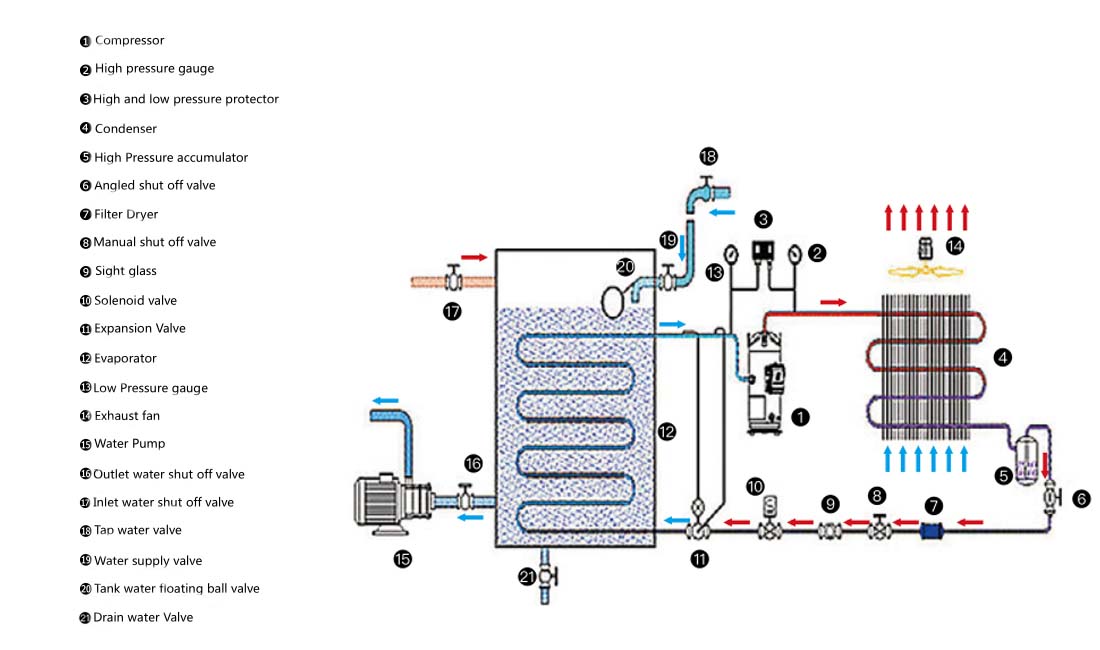
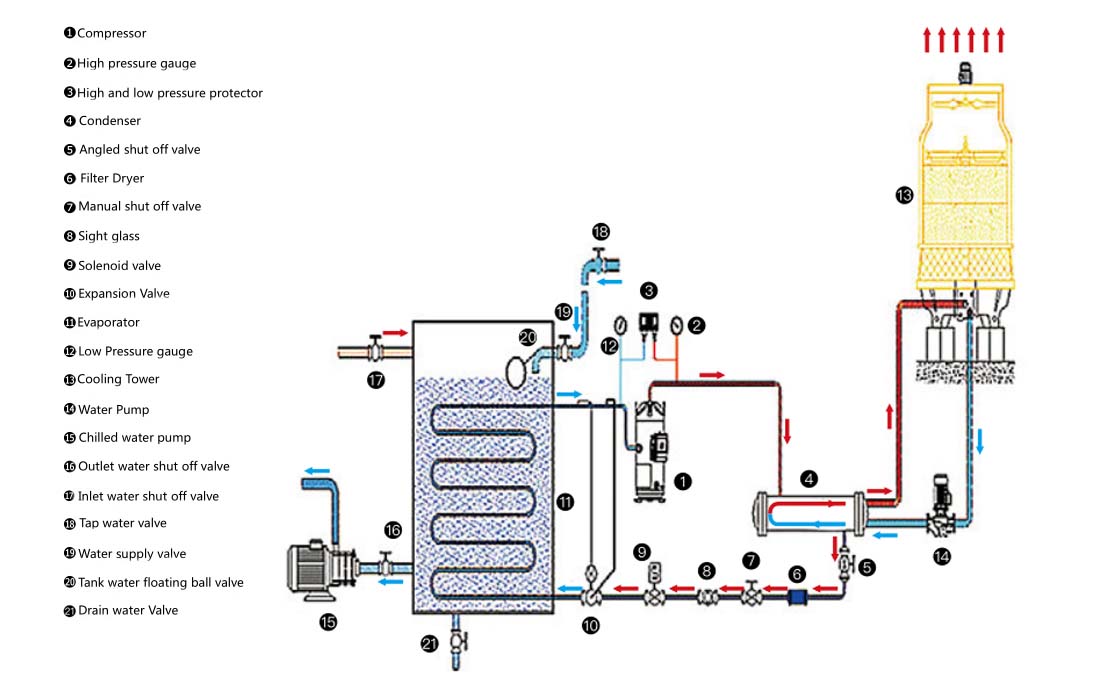
How to maintain a water-cooled screw chiller?

Water-cooled screw chillers are widely used in industrial cooling water systems and commercial central air conditioning refrigeration. Its normal operation and regular maintenance are essential to ensure the cooling effect of the chiller, extend the life of the water-cooled screw chiller, and avoid unexpected shutdown of the chiller. Next, Oumal Refrigeration will introduce the maintenance points of water-cooled screw chillers in detail to help users better maintain the equipment and ensure its stable operation.


1. Regular inspection: Perform routine inspections to check for leaks, loose connections, or any signs of wear. Check electrical components, refrigerant levels, and water flow.


2. Regular cleaning

External cleaning: Regularly remove dust and dirt from the outside of the unit, keep the surface clean to ensure heat dissipation, use a soft cloth or vacuum cleaner for cleaning, and avoid using water or chemical cleaners.

Internal cleaning: Regularly check the inside of the condenser and evaporator to remove any dirt or impurities that may have accumulated. Professional cleaning agents and tools can be used to ensure internal cleanliness and prevent blockage.


3. Check the cooling system

Cooling water: Check the quality and concentration of cooling water regularly to ensure that it is within the recommended range. If the cooling water is contaminated or the concentration is too high, it may cause scaling or corrosion in the system.

Water pumps and pipes: Check the operating status of the water pump to ensure that it is operating normally. Check the pipes for leaks or blockages and repair them in time.


4. Check the filter: Clean or better the filter regularly to prevent blockage, which reduces airflow and cooling efficiency. Check the lubrication level and ensure that the bearings and moving parts are fully lubricated as recommended by the manufacturer. Check the control settings, sensors and safety devices regularly to ensure their normal operation.


5. Check the refrigeration system

Refrigerant: Check the amount and pressure of refrigerant regularly to ensure that it is within the normal range. If a refrigerant leak is found, contact a professional immediately for repair.

Compressor: Check the operating status of the compressor, pay attention to whether there is any abnormal noise or vibration, and lubricate and maintain the compressor regularly to ensure its normal operation.


6. Electrical system inspection

Wires and cables, check the integrity of wires and cables to ensure that there is no damage or aging, and check whether the wiring is firm to avoid looseness and poor contact.

Control system: Check the operating status of the control system to ensure it is normal, and regularly calibrate and maintain the control system to ensure its accuracy and stability.


7. Record keeping: Keep detailed records of maintenance activities, repairs and maintenance plans. This information helps track the long-term performance of the chiller and helps troubleshoot potential problems.


China water cooled screw chiller


The following is the recommended maintenance schedule for screw water-cooled chillers by Oumal chiller.

Check the compressor lubricating oil level

monthly

Check the water flow of the circulating water system

monthly

Check voltage and power supply

monthly

Check the tightness of wire connections and electrical insulation

Every 3 months

Check and adjust the temperature setting

Every 3 months

Check the filter drier

Every 3 months

Cleaning the heat exchanger and water tower

Every 3 months

Replace the compressor oil filter

40000 Hours


The maintenance of water-cooled screw chillers is the key to ensuring the normal operation of the equipment and extending its service life. By regularly cleaning, checking the cooling system, refrigeration system and electrical system, and paying attention to other matters, users can effectively maintain the equipment and reduce the failure rate. It is recommended that users cooperate with professional maintenance personnel to perform regular professional maintenance to ensure the popular operating status of the equipment.


Lithium-Ion Battery Capacity Degradation Mechanisms

A lithium-ion battery is primarily composed of a cathode, anode, electrolyte, and separator. During charging, lithium ions de-intercalate from the cathode material, migrate through the electrolyte, and intercalate into the anode material. During discharging, lithium ions move in the reverse direction, de-intercalating from the anode and returning to the cathode through the electrolyte. This repeated intercalation and de-intercalation of lithium ions between the cathode and anode enables the battery’s charge-discharge function, providing electrical energy to devices.

Capacity degradation in lithium-ion batteries is categorized into reversible capacity loss and irreversible capacity loss. Reversible capacity loss is relatively "mild" and can be partially recovered by adjusting charge-discharge protocols (e.g., optimizing charging current, voltage limits) and improving usage conditions (e.g., temperature/humidity control). In contrast, irreversible capacity loss arises from irreversible changes within the battery, leading to permanent capacity reduction. According to GB/T 31484-2015 standards for cycle life testing: "During standard cycle life testing, the discharge capacity shall not fall below 90% of the initial capacity after 500 cycles, or 80% after 1,000 cycles." If the battery exhibits rapid capacity decline within these standard cycle ranges, it is classified as capacity fade failure, typically involving irreversible degradation mechanisms.

lithium-ion battery

I. Material-Related Factors

1. Cathode Material Structural Degradation

Cathode materials undergo complex physical and chemical changes during charge-discharge cycles. Taking spinel-structured LiMn₂O₄ as an example, its structure distorts due to the Jahn-Teller effect during cycling. This distortion accumulates with repeated cycles and may eventually cause cathode particle fracture. Fractured particles degrade electrical contact between particles, hindering electron transport and reducing capacity. Additionally, irreversible phase transitions and structural disordering occur in some cathode materials. For instance, under high voltage, certain cathode materials transition from stable crystal structures to phases unfavorable for lithium-ion intercalation/de-intercalation, impeding lithium-ion mobility and accelerating capacity loss.


2. Excessive SEI Growth on Anode Surfaces

For graphite anodes, interactions between the surface and electrolyte are critical. During the initial charging process, components in the electrolyte undergo reduction reactions on the graphite surface, forming a solid electrolyte interphase (SEI) layer. Normally, the SEI layer is ionically conductive but electronically insulating, protecting the anode from continuous electrolyte corrosion. However, excessive SEI growth poses significant issues. First, SEI formation consumes lithium ions, reducing the available Li⁺ for normal charge-discharge processes and causing capacity loss. Second, transition metal impurities (e.g., from cathode dissolution) deposited on the anode surface can catalyze further SEI growth, accelerating lithium depletion.
Silicon-based anodes, despite their high theoretical capacity, face severe volume expansion (>300%) during lithiation/delithiation. Repeated expansion/contraction causes structural damage, electrode pulverization, and loss of electrical contact, leading to irreversible capacity loss. Although technologies such as nanostructured silicon anodes and silicon-carbon composites mitigate volume effects, this remains a critical challenge for silicon anode commercialization.


3. Electrolyte Decomposition and Degradation

The electrolyte plays a vital role in ion transport. Common lithium salts like LiPF₆ exhibit poor chemical stability and decompose under high temperatures or voltages, reducing available Li⁺ and generating harmful byproducts (e.g., PF₅, which reacts with solvents). Trace moisture in the electrolyte reacts with LiPF₆ to produce hydrofluoric acid (HF), a corrosive agent that attacks cathode/anode materials and current collectors. Poor battery sealing allows external moisture/oxygen ingress, accelerating electrolyte oxidation. Degraded electrolytes exhibit increased viscosity, discoloration, and drastically reduced ionic conductivity, severely impairing battery performance.


4. Current Collector Corrosion

Current collectors (e.g., aluminum foil for cathodes, copper foil for anodes) collect and conduct current. Failures include corrosion and weakened adhesion. Corrosion mechanisms include:
• Chemical corrosion: HF from electrolyte side reactions reacts with collectors, forming poorly conductive compounds that increase interfacial resistance.
• Electrochemical corrosion: For copper foil anodes, dissolution occurs at low potentials. Dissolved copper ions migrate and deposit on cathodes ("copper plating"), reducing collector cross-sectional area and inducing side reactions.
• Adhesion failure: Volume changes during cycling can detach active materials from collectors if adhesion is insufficient, rendering them electrochemically inactive.


5. Trace Impurities in the Battery System

Transition metal impurities (Fe, Ni, Co) introduced via raw materials may participate in redox reactions, catalyze electrolyte decomposition, or compete with Li⁺ intercalation. These impurities also destabilize SEI layers, exacerbating anode side reactions.


II. Operational Environmental Factors

1. Temperature Effects

• High temperatures accelerate electrolyte decomposition and SEI restructuring. LiPF₆ degradation generates PF₅, which reacts with solvents, while SEI layers thicken into inorganic-dominated films with higher ionic resistance. For example, EVs operating in hot climates exhibit accelerated capacity fade.
• Low temperatures increase electrolyte viscosity and polarization, promoting lithium plating on anodes. Lithium dendrites may pierce separators, causing internal shorts.


2. Charge-Discharge Rates (C-Rates)

High C-rates during charging cause uneven lithium deposition, forming dendrites that consume Li⁺ and risk internal shorts. High-rate discharging exacerbates polarization, reducing usable energy and accelerating capacity loss. Power tools requiring frequent high-current discharge demonstrate shortened battery lifespans.


3. Overcharge/Over-Discharge

• Overcharge forces excessive delithiation of cathodes, causing structural collapse and violent electrolyte oxidation (gas generation, swelling, or thermal runaway).

• Over-discharge over-lithiates anodes, destabilizing their structure and inducing electrolyte reduction. Early smartphones without protection circuits showed rapid capacity loss under such abuse.


Consequences of Battery Failure

Severe capacity degradation manifests as insufficient runtime (e.g., short device operation after charging) or abnormal charging behavior (e.g., slow charging). In critical applications:

• Electric vehicles: Battery failure reduces driving range and may strand vehicles.

• Grid-scale energy storage: Failed batteries destabilize power supply reliability, threatening grid security.


At TOB NEW ENERGY, we are committed to being your strategic partner in advancing energy storage technologies. From high-performance battery cathode materials / battery anode materials and specialized binders to precision-engineered separators and tailored electrolytes, we provide a comprehensive suite of battery components designed to elevate your product’s reliability and efficiency. Our offerings extend to cutting-edge battery manufacturing equipment and battery tester, ensuring seamless integration across every stage of battery production. With a focus on quality, sustainability, and collaborative innovation, we deliver solutions that adapt to evolving industry demands. Whether you’re optimizing existing designs or pioneering next-generation batteries, our team is here to support your goals with technical expertise and responsive service. Let’s build the future of energy storage together. Contact us today to explore how our integrated solutions can accelerate your success.

Non-destructive Methods to Detect Lithium Plating

Lithium plating refers to the detrimental phenomenon where lithium ions fail to intercalate into the graphite anode during charging processes, instead undergoing electrochemical reduction to form metallic lithium deposits. This results in the formation of characteristic silver-gray lithium metal layers or dendritic lithium crystals on the anode surface.

Conventionally, battery disassembly has been the primary method for confirming suspected lithium plating incidents, particularly when observable capacity anomalies or visible dendritic growth are present. However, advanced non-destructive diagnostic techniques now enable accurate detection through sophisticated electrochemical analysis.

Lithium-plating-electrode-sheet

Ⅰ. Advanced Non-Destructive Detection Methodologies:

1. Voltage Profile Deconvolution Analysis

During constant-current (CC) charging cycles, lithium-ion batteries typically exhibit a monotonically increasing voltage curve proportional to state-of-charge (SOC). The emergence of premature voltage plateau depression during the constant-voltage (CV) charging phase serves as a critical indicator of lithium plating. This phenomenon occurs due to the irreversible consumption of active lithium inventory through plating reactions, resulting in diminished reversible capacity and accelerated voltage decline.


2. Differential Capacity Analysis (dV/dQ)

This analytical technique involves calculating the first derivative of voltage with respect to capacity (dV/dQ) to identify characteristic phase transition peaks in graphite anodes. Lithium plating manifests through distinct alterations in these phase transition signatures, including:

• Peak position displacement (>20mV shift indicates severe intercalation obstruction)

• Peak intensity attenuation (reduced magnitude suggests compromised lithium insertion kinetics)

• Peak shape distortion (asymmetric broadening reflects heterogeneous reaction distribution)


3. Electrochemical Impedance Spectroscopy (EIS) Diagnostics

Lithium plating induces significant changes in interfacial charge transfer dynamics:

• Formation of electrically isolated "dead lithium" deposits increases ionic transport resistance

• SEI (Solid Electrolyte Interphase) layer reconstruction alters charge transfer impedance (Rct)

• High-frequency semicircle expansion in Nyquist plots (typically 100Hz-10kHz range) correlates with interfacial impedance growth

• Mid-frequency semicircle deformation reflects lithium deposition-induced charge transfer limitations


4. Ultrasonic Time-of-Flight (TOF) Characterization

This spatially resolved acoustic technique capitalizes on lithium-ion batteries' stratified architecture:

• Baseline TOF calibration establishes reference acoustic signatures

• Lithium deposition creates acoustic impedance discontinuities (ΔZ > 15% indicates significant plating)

• Echo waveform analysis detects:

- Signal amplitude attenuation (5-15dB variation)

- Phase shift anomalies (>5° deviation)

- Time-domain reflection coefficient changes (>8% threshold)

Current technical limitations:

• Primarily applicable to pouch cell configurations (aluminum casing in prismatic cells causes 90%+ ultrasonic attenuation)

• Detection threshold requires minimum 2.8% volume fraction of metallic lithium

• Requires sophisticated signal processing algorithms (e.g., wavelet transform denoising)


. Supplementary Detection Indicators:

• Coulombic efficiency depression (ΔCE > 0.5% per cycle)

• Open-circuit voltage (OCV) relaxation abnormalities

• Differential voltage analysis (dQ/dV) hysteresis expansion

• Thermal signature anomalies during relaxation phases


. Implementation Protocols:

Establish baseline parameters through initial formation cycles

Implement multi-modal detection protocol integration

Apply machine learning algorithms for pattern recognition

Perform cross-validation with reference electrode measurements

This comprehensive approach enables early-stage lithium plating detection with >92% accuracy while maintaining battery integrity, significantly enhancing safety protocols in battery management systems (BMS).


. Elevate Your Battery Safety Standards with TOB NEW ENERGY

At TOB NEW ENERGY, we are committed to being your strategic partner in advancing energy storage technologies. From high-performance cathode materials / anode materials and specialized battery binders to precision-engineered battery separators and tailored battery electrolytes, we provide a comprehensive suite of battery components designed to elevate your product’s reliability and efficiency. Our offerings extend to cutting-edge battery manufacturing equipment and battery tester, ensuring seamless integration across every stage of battery production. With a focus on quality, sustainability, and collaborative innovation, we deliver solutions that adapt to evolving industry demands. Whether you’re optimizing existing designs or pioneering next-generation batteries, our team is here to support your goals with technical expertise and responsive service.

Let’s build the future of energy storage together. Contact us today to explore how our integrated solutions can accelerate your success.

Synergistic application of gold ore sorting and HT sorter sorting technology

Gold in nature exists mostly in the form of monomers, and metal compounds such as selenium, tellurium, and antimony are occasionally seen, but non-metallic compounds are extremely rare. Gold ores are mainly divided into two categories: alluvial gold ores and rock gold ores, while rock gold ores can be subdivided into quartz vein type, fracture zone alteration rock type, fine vein dipping type, and quartz-calcite type. To address the characteristics and pain points of different types of gold ores, HT color sorter's ore sorting and AI sorting technology provide customized solutions to promote the upgrading of the beneficiation process to high efficiency and green.

First, alluvial gold mine: water conservation and efficiency, cracking the problem of resource recovery Alluvial gold ore is formed by primary gold ore through long-term water erosion, wind erosion and deposition, and according to the cause can be divided into gravity sand, flowing water sand, glacial sand and coastal (lake) sand. The beneficiation of alluvial gold is mainly re-election and enrichment. Most of the alluvial gold sands in China are flaky, or because of the long history of sand mining, the rest are flaky fine particles. Easily selectable alluvial gold ores should have more sand and less mud, with coarse sand and fine gold, otherwise they are considered difficult to select. In China, water guns and sand mining boats are commonly used for sand mining. Boundary grades are usually not required due to low cost and large scale. Generally industrial grade up to 0.1g/t (0.15g/m³) can be mined, while 0.3g/t alluvial gold ore is already rich. Alluvial gold mining cannot be done without water, and whether water can be recovered or not is the main factor affecting the cost of alluvial gold mining.

Second, rock gold mine: classification policy, overcome the bottleneck of mineral processing technology From the geological reasons, rock gold can be roughly divided into three categories: igneous rock, sedimentary rock and metamorphic rock. Among them, China is dominated by igneous and metamorphic rocks, and there are fewer gold deposits in sedimentary rocks. According to the data from previous exploration, the grade of gold in igneous rocks decreases with the acidity of the rocks. The highest grade is pure peridotite and olivine, followed by amphibolite, and basalt. The lowest grade is in granite. However, it is well known that the higher the basic properties of a rock, the more susceptible it is to oxidation and weathering. Therefore, it is often said that easy to grind and difficult to select, easy to select and difficult to grind is a certain truth. Generally speaking, rock gold ore can be divided into quartz vein type, broken zone alteration rock type, fine vein dipping type, quartz calcite type from the point of view of mineral processing.

1. Quartz vein type gold ore: digging gold from waste rock, realize double benefits quartz vein type gold ore with pyrite as the main gold-carrying minerals, gold endowed with vein fissures. Traditional flotation needs to process a large amount of quartz vein, resulting in high cost and waste of resources.  Ore color sorter using pure quartz and pyrite associated quartz ore surface characteristics of the industry, the use of photoelectric color sorter technology to sort out the pure quartz and gold-bearing pyrite, selected pure quartz ore can be directly sold as raw materials; and gold-bearing pyrite concentrate grade can be greatly improved, to a place in Henan, for example, the vein quartz gold ore, into the flotation of the amount of ore is reduced by 40%, the grade of the gold ore is increased by morhttps://www.htcolorsorter.com/e than 50%.

2. Crushing zone alteration rock type gold mine: pre-enrichment to reduce the risk of tailings Crushing zone alteration gold deposit veins are mainly quartz and silk mica, metal minerals are mainly pyrite, in the form of fine vein dipping, gold and sulfide ores are coexisting, and the peripheral rock alteration is dominated by silica, kaolinite, silk mica and carbonate. In addition to pyrite, the sulfide ore is readily associated with chalcopyrite, galena, sphalerite, etc. Deposits of this type are usually easy to select and high recoveries can be obtained by individual flotation. If the weathering is serious, the tailings can be recovered twice by whole mud cyanidation. As for the low-grade ores in this type of mines, the gold-bearing sulfide ores in the associated ores are identified through the use of AI ore sorting, and the low-grade enclosing rocks are thrown away, so as to achieve the upgrading of the gold grade to realize the recycling of the gold ore resources. 

3. Quartz-calcite-type gold ore: efficient activation of dispersed resources The vein minerals of quartz-calcite gold deposits are quartz and calcite, and the gold minerals are bubbling in the vein minerals and metal minerals, and the metal minerals range from simple to complex, and the majority of them contain poisonous sands, staghornite, magnetic pyrite, black copper ore and so on. Due to the good distribution of gold and the large influence of metal minerals on the mineral selection process, it is difficult to take into account both the efficiency and economy of the sorting process through a single process. efficiency and economy.   Pre-selection is carried out by capturing the differences in multi-dimensional characteristics of quartz, calcite and associated minerals on the surface (such as spots, color, texture, etc.), and the pre-selected concentrate is used for recovering gold through flotation, which can greatly reduce the amount of flotation scale.


Technology empowerment: from cost reduction and efficiency increase to green mine The core of HT color sorter sorting technology lies in multi-dimensional perception and resource recycling: accurate sorting: spectral recognition accuracy > 99%, can handle low-grade ore with a boundary grade of 0.3g/t; zero-waste target: quartz, calcite and other veins are turned into treasures, and the amount of tailings is reduced by 50%-70%.  HT color sorter technology not only solves the problem of high cost and low recovery rate in traditional ore dressing, but also reconstructs the economic model of mines with resourceful thinking by precisely adapting to different types of rock gold deposits. From turning waste rock into building materials for quartz vein mines to AI pre-enrichment for complex associated mines, technological innovation is driving the industry to move forward in the direction of high efficiency, greenness and sustainability.

How to improve the quality of solar cells

In today's world that relies on clean energy, the efficiency and reliability of solar cells are of vital importance. As a company specializing in providing mechanical testing equipment, we have specialized equipment for tensile testing of battery cell welding strips. This product will assist manufacturers and testing laboratories in enhancing the quality control of solar cells and ensuring their stability in harsh environments.


Understand the importance of welding strip stretching:

The welding strips of solar cells play a crucial connecting role in the battery modules. The quality of the welding tape directly affects the performance and lifespan of the battery. Therefore, solar cell manufacturers and testing laboratories need a reliable testing device to evaluate the tensile properties of the welding strips. Our solar cell welding strip tensile testing machine can provide accurate and repeatable test results, helping you determine the connection quality between the welding strip and the cell, thereby enhancing the overall reliability and performance of the product.


Outstanding functionality and innovative design:

Our solar cell welding strip tensile testing machine features a series of outstanding functions and innovative designs, making it one of the most advanced devices on the market. The following are some prominent features:

  1. Precise mechanical measurement: Our machine adopts advanced mechanical sensing technology, which can accurately measure the force and displacement of the welding strip during the stretching process. This ensures that you obtain accurate test results and helps you evaluate the material properties of the welding tape.
  2. Multi-functional test modes: Our machine features multiple test modes, including static tensile, cyclic tensile, and breaking strength tests. This means that you can conduct comprehensive tests and evaluations of the welding strips according to different needs to ensure their stability and reliability under various stress conditions.
  3. Intuitive user interface: Our machines are equipped with an intuitive user interface, making operation simple and easy to understand. You can easily set test parameters, monitor the test process, and obtain data and results in real time. This makes the testing process efficient and easy to operate.


The advantages of focusing on performance:

  1. Reliability and accuracy: Our machines have been meticulously designed and tested to ensure they possess a high level of reliability and measurement accuracy. You can trust our equipment to provide you with accurate test results.
  2. High efficiency and time-saving: Our machines feature high testing speed and rapid data processing capabilities, helping you save time and resources. You can focus more on other core businesses and improve production efficiency.
  3. Customization and Support: We offer customized solutions to meet the specific needs of different customers. In addition, we also offer comprehensive after-sales support and maintenance services to ensure that you can make full use of our equipment.


If you are a decision-maker in a solar cell manufacturer or testing laboratory, we strongly recommend that you choose our solar cell solder strip tensile testing machine. It will provide you with accurate and reliable test results and help you improve the quality and reliability of solar cells. Please contact us immediately to learn more about our products and solutions. Let's work together to jointly promote the development of clean energy technologies!

The necessity of high-flexibility cable bending equipment

From surgical robots' precise movements to EV charging piles' high-power transmission, high-flex cables act as the "lifeline" of modern equipment. Yet according to the Global Cable Reliability Report 2024bending fatigue-induced cable failures cost manufacturers over $1.7 billion annually. How to guarantee long-term reliability under complex motions? Tophung delivers the definitive solution.


Analysis of Industry Pain Points

The three fatal flaws of the current industry:

False safety certification: Laboratory one-way bending test vs. Multi-angle twisting in Real scenarios

Inefficient verification system: Traditional equipment tests only one cable at a time and it takes 20 days to complete 100,000 cycles

Hidden damage out of control: Manual detection fails to identify the initial microcracks (< 50μm), resulting in sudden fracture


Solution:

The Tophung wire and Cable 3D torsion testing machine is suitable for the testing requirements of high-flexibility cables such as TUV, VDE, and UL. The Cable 3D torsion testing machine structure is a composite torsion - bending and torsion combined synchronous test structure, simulating the operation scene of a mechanical arm to achieve multi-angle torsion tests.

  • #
  • #
  • #

Core advantage

  • Reproduction of real working conditions:

Simulate the operation scene of the mechanical arm and support custom programming for bending angles and torsion angles

  • Ultra-large-scale parallel testing:

Exclusive 3-channel design enables simultaneous testing of 3 groups of cables at a time, saving testing time

  • Extreme environment simulation:

An optional temperature control chamber with a temperature range of -40 to 100 is available to verify the performance attenuation of the cable under extremely cold or high heat conditions


Technical Specs

Bending radius range: 10mm to 75mm (adjustable)

Torsion Angle: 0° to ±120° (adjustable)

The test speed is 0 to 60 times per minute

The sample diameter ranges from Ф1.0mm to Ф16mm


Our wire and cable bending fatigue testing machine adopts leading mechanical testing technology and features high precision and reliability. It not only has standard testing functions, but also supports customized testing solutions to meet various needs. Choose our Cable 3D torsion testing machine and you will achieve the perfect combination of technological leadership, cost-effectiveness and customer satisfaction.


Correct Use of Tuck Point Saw Blades

Tuck point saw blades must be used in strict accordance with the specifications in order to make the saw blades play their best performance:

Tuck point saw blades


1. Tuck point saw blades of different specifications and uses have different design cutter head angles and base forms, and try to use them according to their corresponding occasions;

2. The size and shape and position accuracy of the main shaft and the splint of the equipment have a great influence on the use effect, and should be checked and adjusted before installing the tuck point saw blades. In particular, the factors that affect the clamping force and cause displacement and slippage on the contact surface of the splint and the saw blade must be excluded;

3. Pay attention to the working condition of the tuck point saw blades at any time. If there is any abnormality, such as vibration, noise, and material feeding on the processing surface, it must be stopped and adjusted in time, and repaired in time to maintain peak profits;

4. The tuck point saw blades must not change its original angle to avoid local sudden heating and cooling of the blade head, it is best to ask professional grinding;

5. The tuck point saw blades that is not used temporarily should be hung vertically to avoid laying flat for a long time, and should not be piled on it, and the cutter head should be protected and not allowed to collide.

How to choose the substrate of concrete cutting blade?

The material of the substrate of the concrete cutting saw blade must have a certain strength, and at the same time not be too soft. In the cutting work, the diamond saw blade will be strongly vibrated in use, because the cutter head is thicker than the base body, and there is a certain gap between the base body and the material to be cut during use. Fatigue fracture, the matrix must have a certain plastic toughness and higher fatigue limit and elastic limit, in order to play a role in mitigating impact and absorbing vibration, thereby improving the working efficiency of concrete cutting saw blades.


Due to the characteristics of the concrete cutting saw blade, the selection of the base of the concrete cutting saw blade is more stringent. The selection skills of the diamond saw blade base are nothing more than these two: First, select the grinding wheel with the larger particle size. , softer teeth can be selected. After cooling with cold water, grind again, dry grinding for 1-2 hours; second, the fine grinding degree of diamond should be calculated well and kept well under the progress of shape. Using these two skills, it is much easier to choose a diamond saw blade substrate with plastic toughness, fatigue limit, and elastic limit.


The matrix of the concrete cutting saw blade should have a certain plastic toughness and high fatigue limit and elastic limit. From the technical standard requirements, for the elastic limit, take the diamond saw blade with 65Mn as the matrix material as an example, its heat treatment There are two ways: quenching and tempering at medium temperature, but quenching is easy to deform and crack for the matrix of the diamond saw blade. Therefore, in the heat treatment process of the diamond saw blade substrate, the understanding and mastery of these two methods should be strengthened to reduce the impact on the mechanical properties of the diamond saw blade substrate.


The matrix of the concrete cutting saw blade plays the main role of bonding the cutter head, and the mechanical properties of the matrix also have a great influence on its quality and performance. Therefore, whether it is the choice of the substrate of the concrete cutting saw blade or the heat treatment process, the role of the substrate cannot be ignored.


For more details about Industry related news,Follow and contact us

WWW.SANGTOOLS.COM

INFO@SANGTOOLS.COM