When selecting an electromagnetic vibrating feeder for bulk material handling, the construction material is one of the most critical decisions you will make. The two most common options are mild steel and stainless steel, each with distinct strengths, ideal applications, and cost differences.
Choosing the wrong material can lead to premature corrosion, hygiene violations, higher maintenance costs, or unnecessary over-investment.
In this guide, we break down the differences between mild steel and stainless steel vibrating feeders to help you select the right one for your operation.
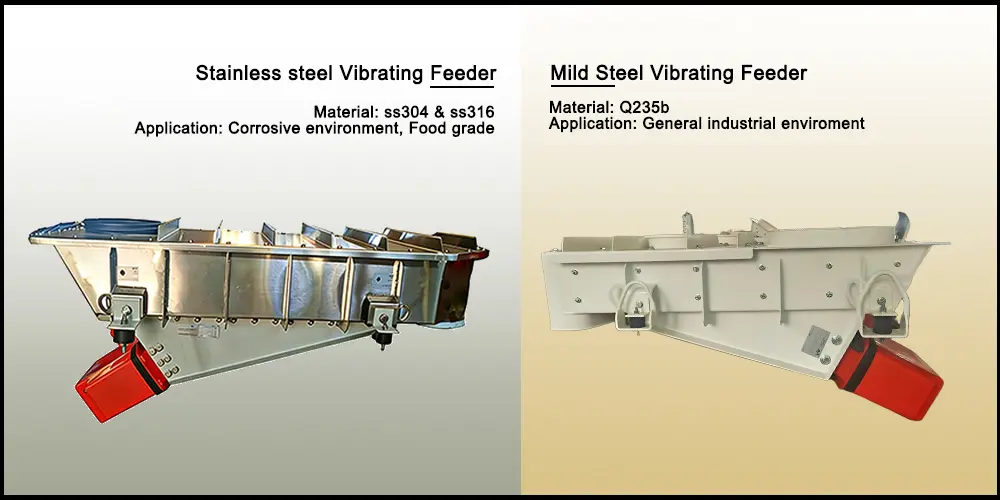
Electromagnetic Vibrating Feeder: Mild Steel (Q235b) vs Stainless Steel (304/316L) – Material and Application Comparison
What Is a Mild Steel Vibrating Feeder?
Mild steel (also called carbon steel) is the standard, economical material used in general‑purpose vibrating feeders. It offers good structural strength and is widely used in heavy industrial environments where corrosion and strict hygiene are not primary concerns.
1. Advantages
- Lower upfront cost
- High structural strength and durability
- Easy to machine, weld, and repair
- Ideal for heavy-duty loading
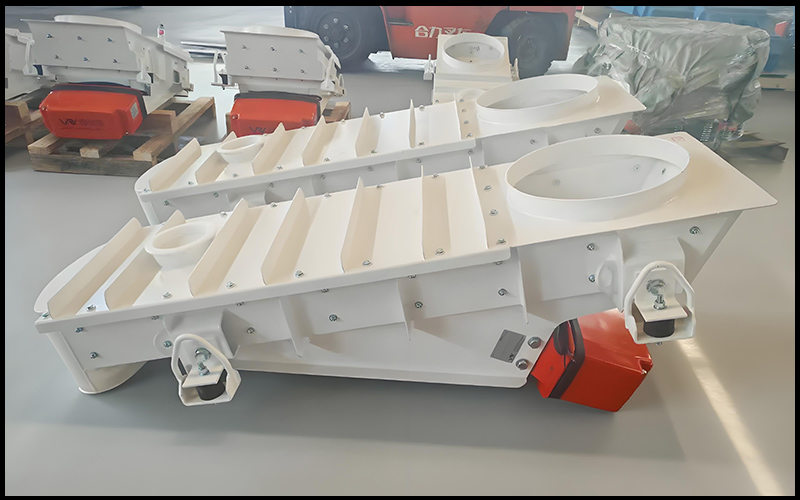
Mild Steel Electromagnetic Vibrating Feeder (Q235b) – Cost-Effective for General Industrial Use
2. Disadvantages
- Prone to rust and corrosion in humid or corrosive environments
- Not suitable for food, pharmaceutical, or clean applications- Requires painting or surface coating for basic protection
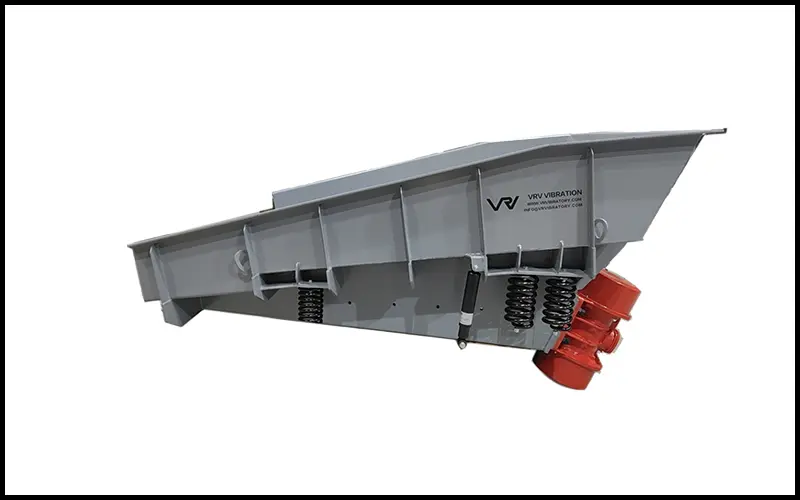
Heavy-Duty Mild Steel Electromagnetic Vibrating Feeder: For Mining & Construction Material Handling
3. Best For
Mining, quarrying, construction, sand & gravel, coal, and other non-corrosive, non-hygienic industries.
What Is a Stainless Steel Vibrating Feeder?
Stainless steel vibrating feeders are typically made from **304 stainless steel** or **316L stainless steel**. They are designed for applications that require corrosion resistance, easy cleaning, or compliance with food and pharmaceutical standards.1. Advantages
- Excellent corrosion and rust resistance - Smooth, easy-to-clean surfaces - Compliant with food-grade, hygienic, and chemical industry requirements - Long service life in harsh environments
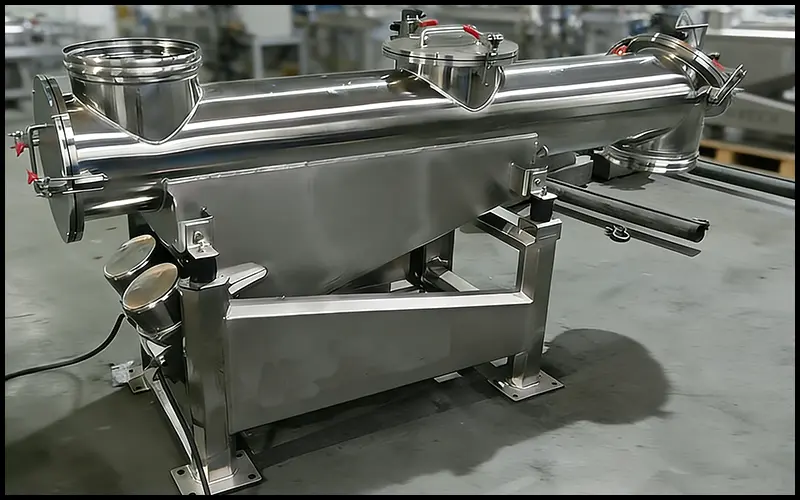
Stainless Steel Electromagnetic Vibrating Feeder: Corrosion-Resistant for Pharmaceutical & Harsh Environments
2. Disadvantages
- Higher material cost than mild steel - Heavier in some designs - More expensive to fabricate
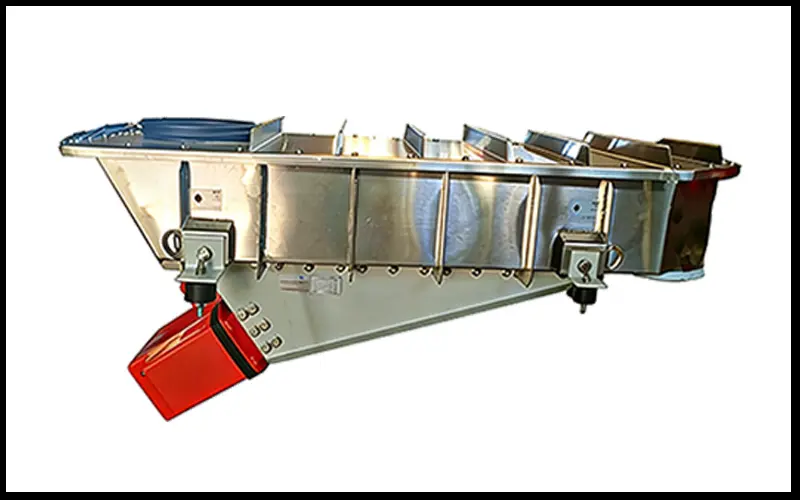
Stainless Steel Electromagnetic Vibrating Feeder (304/316L) – Ideal for Food & Chemical Processing
3. Best For
Food processing, pharmaceuticals, chemicals, fine chemicals, salt, sugar, flour, and corrosive material handling.Mild Steel vs Stainless Steel Vibrating Feeder: Key Comparison
Item
Mild Steel
Vibrating Feeder
Stainless
Steel Vibrating Feeder
Cost
Lower
Higher
Corrosion
Resistance
Poor
Excellent
Hygiene Level
Standard
Food / Pharma
Grade
Durability
High (but prone
to rust)
Very High
Surface
Treatment
Painted /
Coated
Brushed /
Polished / Mirror
Typical
Industries
Mining, quarry,
construction
Food, pharma,
chemical, marine
How to Choose: Simple Selection Guide
1. Choose Mild Steel if:
- You handle non-corrosive materials - Your environment is dry and non-humid - You need a cost-effective, heavy-duty solution - Food or pharmaceutical hygiene is not required2. Choose Stainless Steel if:
- You handle food, pharmaceuticals, or chemicals - Your facility requires regular washing or sanitizing - You work in humid, wet, or corrosive environments - You need a long-life, low-maintenance feeder3. Conclusion
Both mild steel and stainless steel vibrating feeders serve important purposes: - Mild steel is the practical, cost-effective choice for general industry. - Stainless steel delivers hygiene, corrosion resistance, and long-term reliability for sensitive applications. The best choice depends on your material type, working environment, industry standards, and budget.
As a professional vibrating feeder manufacturer in China. VRV supplies both mild steel and stainless steel vibrating feeders fully customized to your capacity, size, and industry requirements. If you need help deciding which material is right for your project, contact our engineering team for a free recommendation.