SPC and LVT flooring production lines are designed for different vinyl flooring structures, so the main difference lies in the material formulation, core flexibility, and processing requirements. An SPC flooring production line is built to process a rigid composite core made primarily from PVC resin and calcium carbonate, while an LVT flooring production line focuses on producing flexible vinyl flooring sheets with controlled thickness, surface quality, and layer bonding.
For flooring manufacturers planning a new factory or upgrading existing equipment, choosing between an SPC and LVT production line affects product positioning, manufacturing processes, equipment configuration, and production costs. SKY WIN provides dedicated flooring extrusion solutions for both product types, helping manufacturers select equipment according to their formulations, target output, and finished flooring specifications.
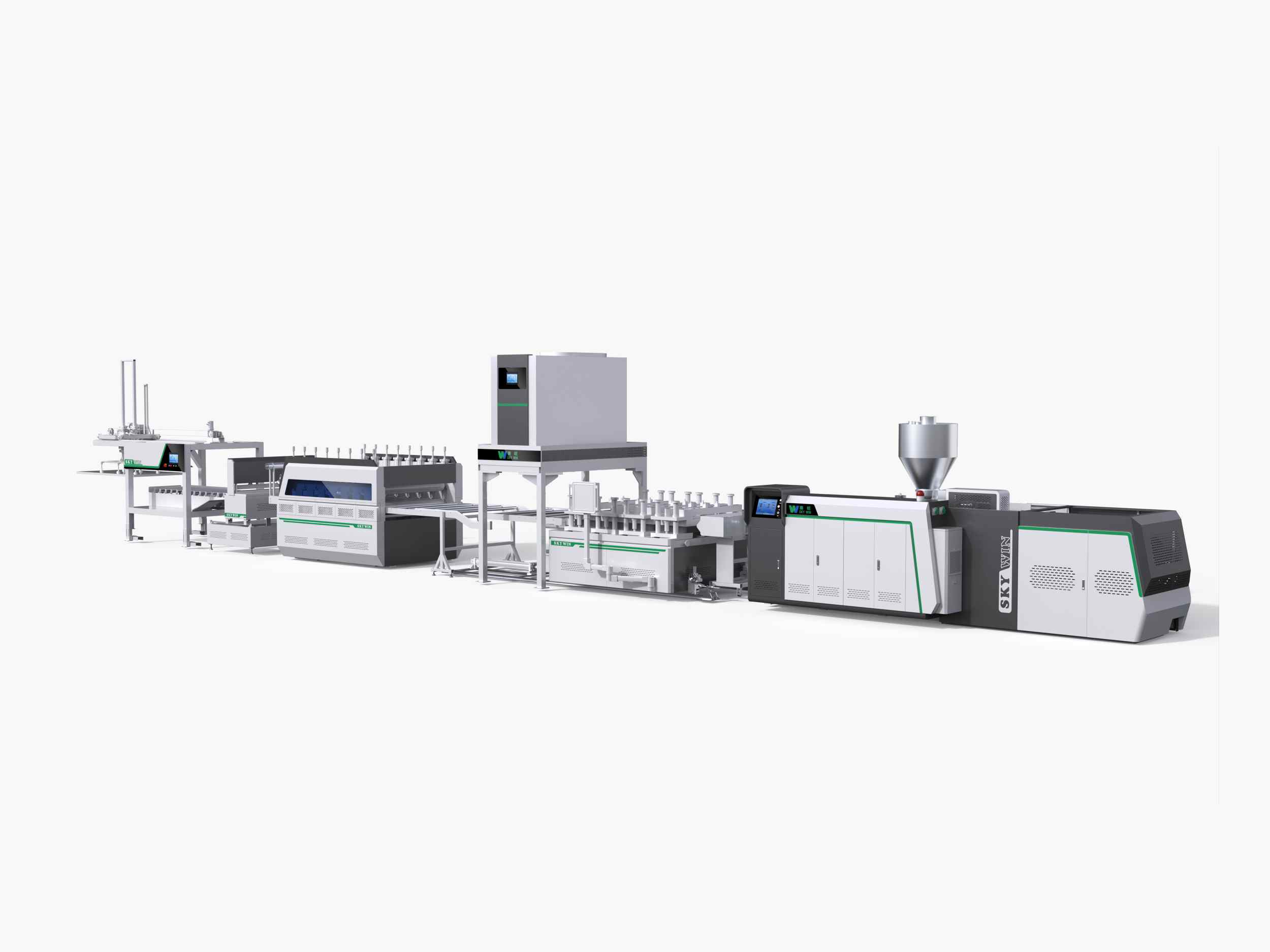
What Is the Main Difference Between SPC and LVT Flooring Production Lines?
The main difference is the flooring core being produced. SPC production requires a rigid, highly filled PVC composite, whereas conventional flexible LVT production uses a softer PVC-based formulation. Although both processes can involve extrusion, calendering, cooling, and lamination, the equipment configuration and process parameters need to match the intended flooring structure.
SPC flooring is commonly selected for rigid-core flooring products where dimensional stability and resistance to everyday wear are important. LVT flooring is often chosen for flexible vinyl tiles or planks where surface appearance, flexibility, and a comfortable feel are key considerations.
Here is a practical comparison for manufacturers evaluating an SPC flooring production line versus an LVT flooring production line.
| Comparison factor | SPC production line | LVT production line |
|---|---|---|
| Core structure | Rigid stone-plastic composite core | Flexible PVC-based vinyl structure in conventional LVT |
| Main formulation | PVC resin, calcium carbonate, stabilizers, and other additives | PVC resin, calcium carbonate, plasticizers, stabilizers, and other additives as required by the formulation |
| Processing priorities | High-filler mixing, stable extrusion, sheet calibration, and cooling | Flexible sheet handling, thickness control, calendering, and layer bonding |
| Typical equipment focus | High-torque extrusion and rigid sheet processing | Extrusion, multi-roll calendering, cooling, and lamination |
| Finished product focus | Rigid-core vinyl flooring | Flexible vinyl tiles, planks, and base sheets |
| Equipment selection priority | Filler loading, output, dimensional stability, and cooling performance | Formulation, sheet flexibility, surface finish, and lamination quality |
These differences are general guidelines rather than fixed rules for every factory. Actual configurations depend on the formulation, layer structure, product thickness, target output, and whether the line produces base sheets or finished laminated flooring.
How Does an SPC Flooring Production Line Work?
An SPC flooring production line converts a PVC-based compound with a high proportion of calcium carbonate into a rigid flooring core. The process must maintain consistent material dispersion, melt quality, sheet thickness, and cooling conditions to reduce dimensional variations and production defects.
The typical process includes the following stages:
- Material preparation: PVC resin, calcium carbonate, stabilizers, and other formulation ingredients are prepared and mixed according to the product specification.
- Extrusion: A suitable twin-screw extruder plasticizes and homogenizes the compound before pushing it through the die.
- Calendering and sheet forming: Roll systems help control sheet thickness, flatness, and surface consistency.
- Cooling: Controlled cooling helps the rigid core retain its shape and reduces the risk of warping.
- Lamination and embossing: Depending on the line configuration, decorative film and wear layers can be laminated and surface textures formed.
- Trimming and cutting: The sheet is cut to the required dimensions for subsequent flooring processing.
For this type of manufacturing, the extruder is especially important because the high mineral filler content increases the demands on mixing, screw design, and processing stability. The cooling and downstream handling systems also influence the final sheet quality.
SKY WIN's SPC/PVC Flooring Sheet Extrusion Line uses a conical twin-screw extruder and can be configured with sheet forming, lamination, cooling, trimming, and cutting equipment. The appropriate model depends on the required sheet dimensions and production capacity.
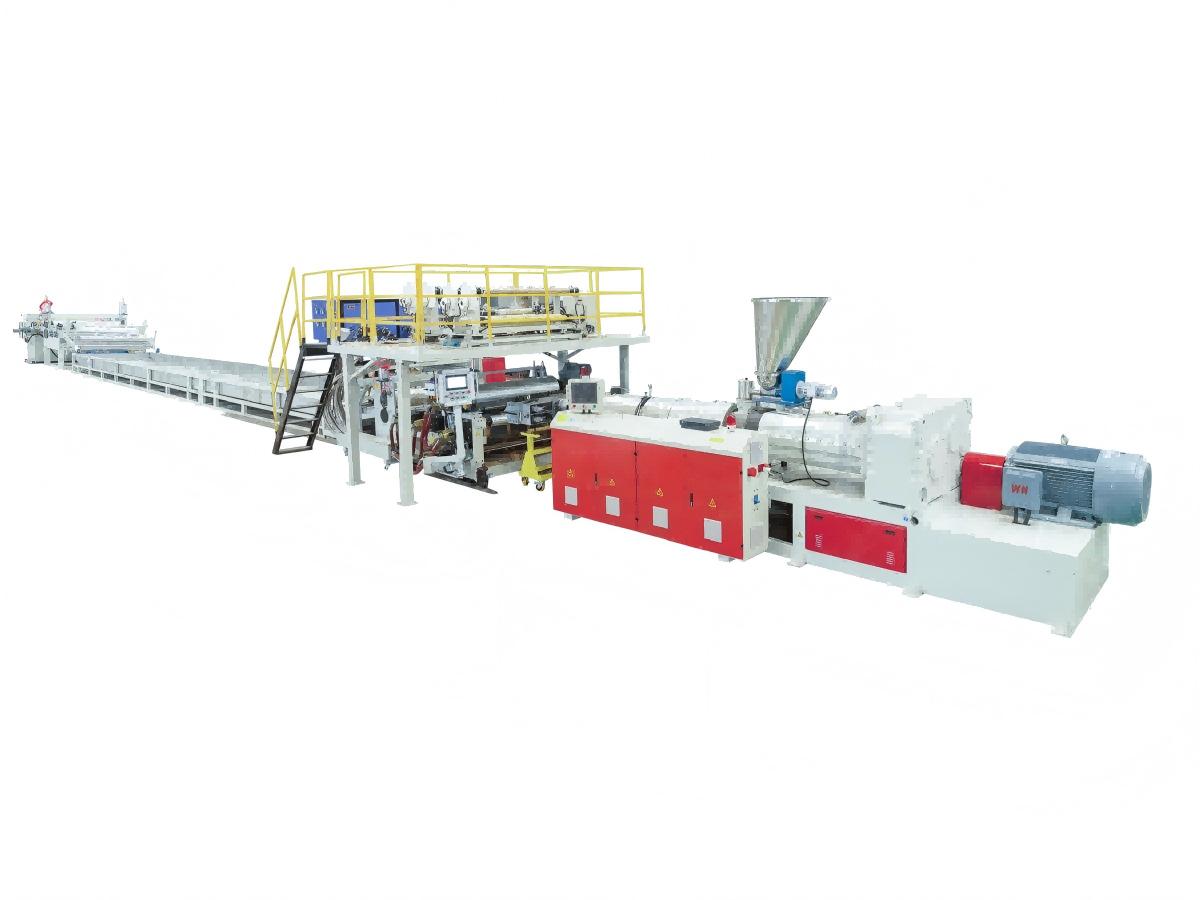
How Does an LVT Flooring Production Line Work?
An LVT flooring production line is designed to process PVC-based materials into vinyl sheets with the flexibility, thickness, and surface characteristics required by the final product. Conventional flexible LVT formulations commonly include plasticizers, unlike typical rigid SPC core formulations.
The production process generally involves material mixing, extrusion, calendering, cooling, and lamination where required. Some configurations also include embossing, online thickness monitoring, and automatic stacking or rolling.
During extrusion, stable plasticization and melt flow help produce a consistent sheet. The calendering system then controls thickness and surface quality. Cooling is important because the sheet must be handled without introducing unnecessary stress, deformation, or surface damage.
Layer bonding is another important consideration. Depending on the product design, an LVT line may need to combine a base layer, printed decorative film, and wear layer. Poor bonding or inconsistent temperature control can lead to bubbles, uneven surfaces, or delamination.
SKY WIN's LVT Flooring High-speed Extrusion Line integrates extrusion, calendering, and lamination technologies. The published SWLVT series covers sheet thicknesses of 0.8–4 mm and widths of 970–1220 mm, with model-dependent listed outputs of 300–1,200 kg/h. Actual output depends on the formulation, thickness, operating conditions, and final product requirements.
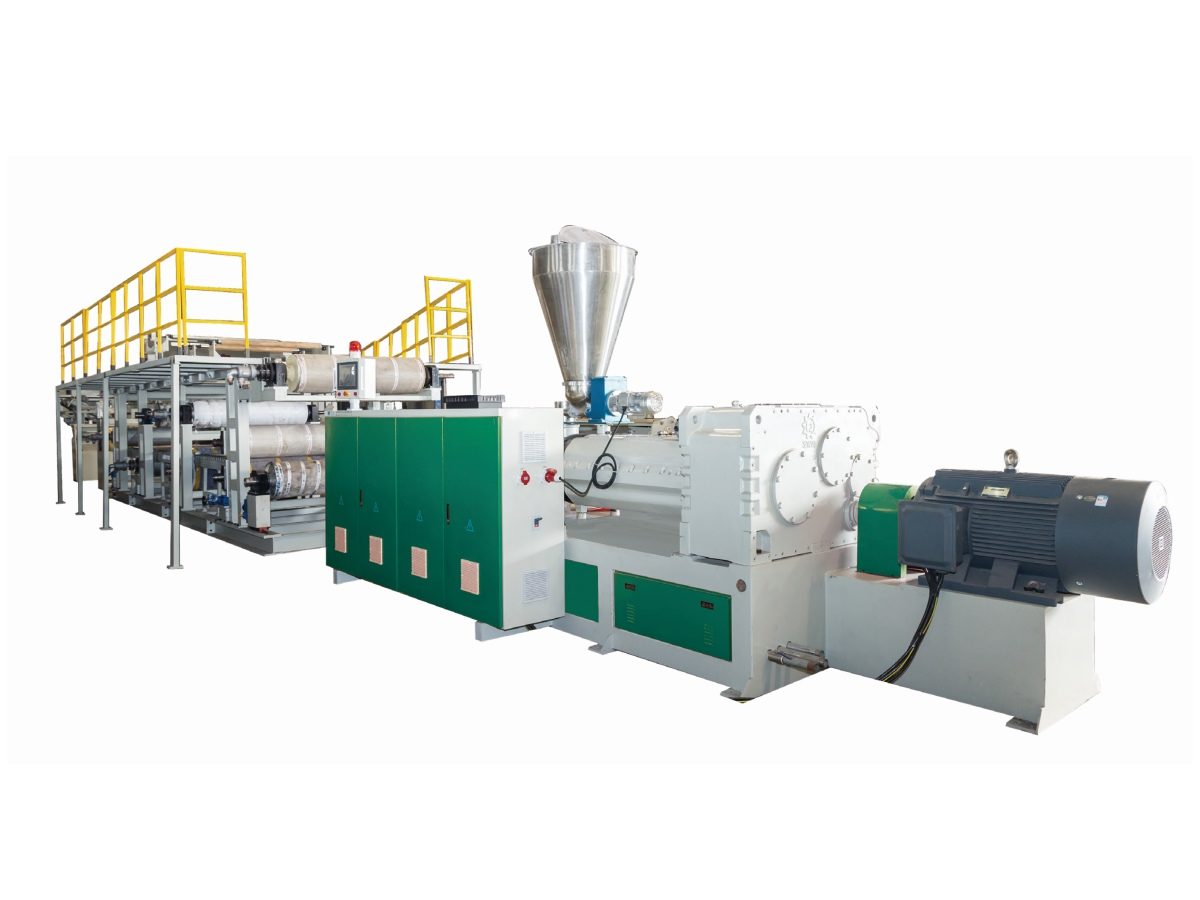
Which Extruder Is Suitable for SPC and LVT Flooring?
Both SPC and LVT flooring lines can use twin-screw extrusion technology, but the screw configuration, operating conditions, and downstream equipment must be selected for the specific material and product design. The fact that two lines use a similar extruder type does not mean they are automatically interchangeable.
For SPC flooring, the equipment must process a highly filled compound while maintaining consistent plasticization and stable sheet output. Manufacturers should assess the extruder's torque capability, wear resistance, screw design, temperature control, and compatibility with their formulation.
For flexible LVT flooring, the production system must handle the formulation and sheet structure without compromising flexibility or surface quality. The calendering arrangement, sheet conveying method, cooling system, and lamination configuration deserve particular attention.
Before purchasing equipment, manufacturers should confirm:
- The exact flooring structure and formulation to be processed.
- The required sheet thickness and width.
- The expected hourly output under the intended production conditions.
- Whether online lamination, embossing, or other downstream functions are needed.
- The availability of technical support, spare parts, installation, and operator training.
For projects that require two-layer LVT structures, SKY WIN also offers a Double-layer LVT Flooring Extrusion Line. Its co-extrusion configuration is designed for producing two-layer LVT sheets, with options depending on the required layer structure and finishing process.
SPC vs. LVT Production Line Cost: What Should Manufacturers Consider?
There is no single price difference that applies to every SPC and LVT production line. The total investment depends on the equipment configuration, production capacity, automation level, tooling, auxiliary equipment, and the degree of customization.
When comparing quotations, manufacturers should evaluate the complete production system rather than the extruder price alone. A line with a lower initial price may require additional equipment or more manual handling, while a more integrated system may reduce labor requirements or improve production consistency.
Important cost factors include:
- Extruder size and capacity: Larger output requirements may call for a different extruder, motor power, and downstream configuration.
- Calendering and lamination: The number and arrangement of rolls, online lamination, and embossing functions affect the equipment scope.
- Cooling and cutting: Cooling capacity, sheet handling, trimming, and cutting automation influence both investment and production performance.
- Energy and labor: Compare expected energy consumption, staffing requirements, material waste, and changeover time.
- Installation and support: Confirm shipping, commissioning, operator training, maintenance, and spare-parts arrangements.
To make a meaningful comparison, ask each supplier to quote against the same product specification, target output, and equipment scope. This makes it easier to compare the actual investment and expected operating requirements.
How to Choose the Right Flooring Production Line for Your Factory
The best production line is the one that matches your target flooring product and manufacturing plan. Before selecting a supplier, define the product structure, required output, finished sheet dimensions, and downstream processing requirements.
Choose an SPC-oriented configuration if your main product is rigid-core flooring made from a highly filled PVC composite. Focus on extrusion stability, filler compatibility, cooling performance, and dimensional consistency.
Choose an LVT-oriented configuration if your main products are flexible vinyl sheets or tiles. Pay close attention to formulation compatibility, calendering performance, sheet handling, surface finish, and layer bonding.
If you plan to manufacture both product types, do not assume that one line can produce both simply because the materials share PVC. Ask the equipment supplier to evaluate the formulations, tooling, process window, and changeover requirements before confirming whether a shared system is practical.
SKY WIN provides different flooring extrusion configurations to support manufacturers with different production goals. Reviewing the PVC Flooring SPC/LVT Sheet Extrusion Line alongside the dedicated SPC and LVT models can help you identify a suitable starting point for your project.
Frequently Asked Questions About SPC and LVT Flooring Production Lines
What is the main difference between an SPC and an LVT flooring production line?
An SPC line is designed primarily for rigid, highly filled PVC composite cores, while a conventional flexible LVT line is designed for softer vinyl flooring formulations. Their extrusion, cooling, sheet handling, and lamination requirements differ according to the final product structure.
Can the same flooring extrusion line produce both SPC and LVT?
Some equipment configurations may be adaptable to different PVC flooring formulations, but compatibility cannot be assumed. Manufacturers should confirm the formulation, screw design, tooling, processing temperatures, downstream equipment, and required product quality with the supplier before using one line for both materials.
What raw materials are used in SPC flooring production?
SPC flooring commonly uses PVC resin, calcium carbonate, stabilizers, and other additives. The exact formulation depends on the desired rigidity, processing behavior, and finished product properties.
What raw materials are used in LVT flooring production?
Conventional flexible LVT formulations commonly contain PVC resin, calcium carbonate, plasticizers, stabilizers, pigments, and other additives. The composition varies with the flooring structure and performance requirements.
What should I check when selecting an SPC flooring production line?
Check the formulation and filler loading, required sheet width and thickness, target output, extrusion stability, cooling capacity, lamination requirements, and the supplier's installation and technical support.
How much does an SPC or LVT flooring production line cost?
The price depends on capacity, equipment configuration, automation, auxiliary systems, and customization. Request a quotation based on the same production specifications and equipment scope to compare suppliers accurately.
Can an LVT flooring production line include online lamination?
Yes. Depending on the model and configuration, an LVT line can integrate lamination with extrusion and calendering. Confirm the required decorative film, wear layer, embossing, and sheet specifications before ordering.
How can I choose the right production capacity?
Start with your target annual output, expected operating hours, product thickness, sheet width, and product mix. Ask the supplier to confirm achievable output under your actual production conditions rather than relying only on a headline capacity figure.
If you are planning a new SPC or LVT flooring manufacturing project, share your target product structure, sheet dimensions, formulation, and expected output with SKY WIN. These details help the engineering team recommend a suitable extrusion line configuration for your production needs.