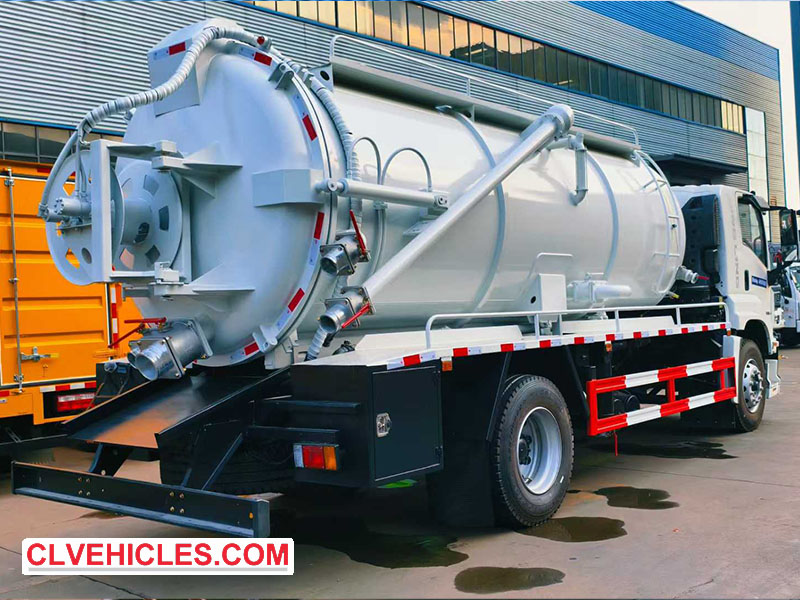
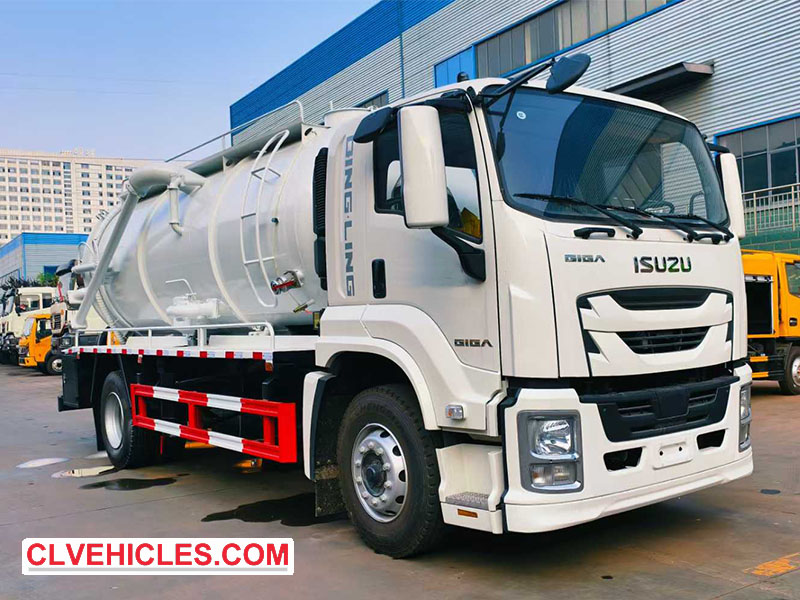
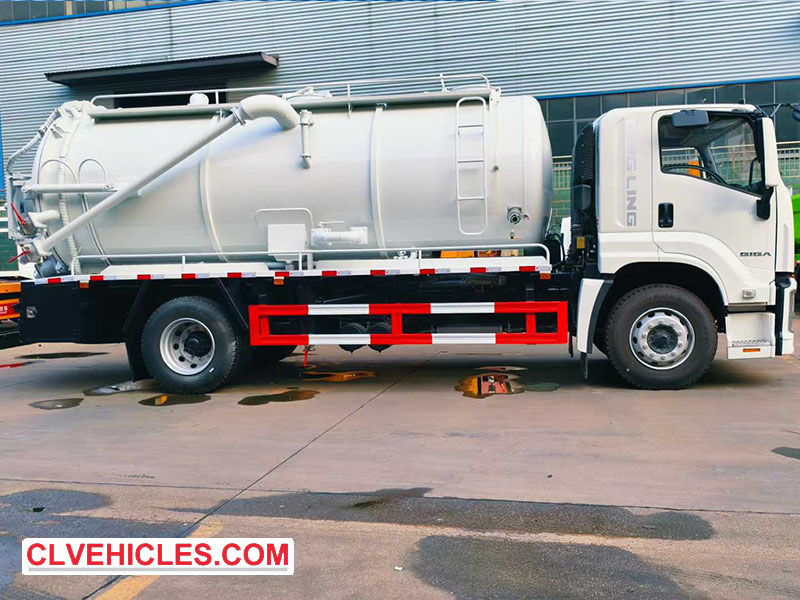
ISUZU Sewage suction trucks equipped with water circulation pumps rely on a dedicated, relatively large-capacity water tank to supply the fluid needed for pump operation. Operators often find that the water in the tank is consumed unusually quickly, leading to the question: where does all this water go? The disappearance of water is not caused by a single reason, but rather by a combination of factors, including the laws of physics, normal mechanical function, and some potential problems that need attention. One of the main and unavoidable causes of water loss is evaporation. In this system, water is the working fluid of the water circulation pump and plays a crucial role in absorbing the heat generated during the continuous operation of the pump. As the pump operates, this heat causes some water to evaporate, a natural process that requires no intervention other than periodically adding water to the tank to maintain its normal operation.
Besides this natural consumption, water also loses through mechanical means. The water tank is connected to the pump body via pipes, and these connections are potential leak points. If the pipes are damaged or the connections at both ends are loose, water will inevitably leak from these damaged areas. The solution is simple: replace any damaged pipes and tighten all connections securely to ensure the system is leak-free. Similarly, the seals at both ends of the water circulation pump could also be a source of leakage. It's important to note that a small amount of leakage is normal; a slow drip of 10 to 20 drops per minute is generally considered acceptable and does not indicate a problem. However, if the leakage rate increases significantly, it indicates the need for adjustment. The first step is to tighten the two screws on the sealing ring to reduce the leakage. If the situation does not improve, the packing inside the seal may be worn and needs to be replaced to restore its sealing effect.
Finally, the system will discharge a large amount of water during normal operation, which often confuses operators. During the water intake process, air drawn into the tank at high speed mixes with water, forming a fine mist. This water-air mixture is then discharged to the outside from the vent of the four-way valve. A small amount of water discharged in this way is a normal operating phenomenon; it simply means that operators should check and replenish the tank regularly. However, if a large amount of water is seen spraying out, it indicates one of two problems. The first possibility is that the water level in the tank is too high, causing excess water to be discharged with the airflow. This usually resolves itself after the excess water is drained and the water level drops. The second possibility is more serious: a design flaw. The internal structure of the tank may be inefficient, failing to effectively separate water from air vapor. In this case, the tank cannot perform its necessary water vapor separation function and needs to be replaced to prevent excessive leakage and ensure proper system operation. Therefore, when you inspect the water tank of a sewage suction truck and find the water level low, the following are key areas to investigate: normal evaporation and minor leaks, as well as the mechanical properties of the pump seals and the kinetics of the four-way valve venting.