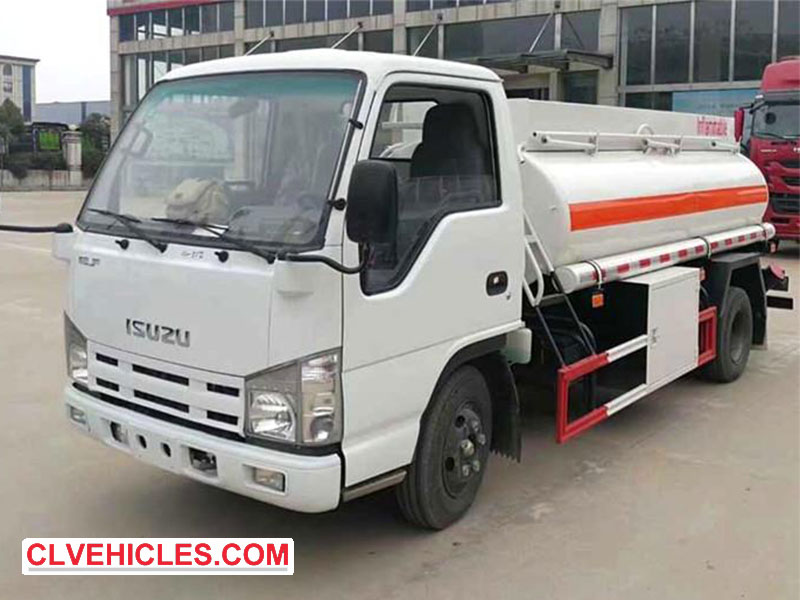
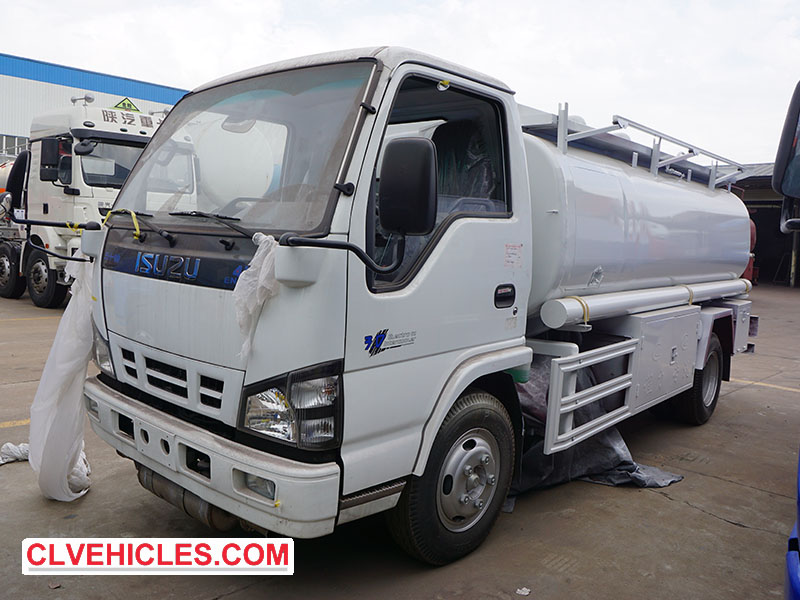
The development of large ISUZU fuel tank trucks, especially those conforming to European standards, represents a significant improvement in safety and efficiency, primarily due to a fundamental shift in vehicle loading methods. Traditional tank trucks are equipped with dedicated pumps and simple piping systems, typically made of Wuhan carbon steel or 304 stainless steel, used to transport products to tanks with capacities ranging from 5 to 30 cubic meters, while semi-trailers can reach capacities of up to 55 cubic meters. Traditional tank filling is done through open manholes on the top of the tank truck, a method fraught with safety hazards. Modern tank truck manufacturing processes have largely replaced this method, employing a closed bottom-loading system, the API system, which is the core of its working principle. This system relies on the coordinated operation of a series of key components: an exhaust gas recovery system to capture harmful vapors; an overflow prevention system with probes to prevent spills; a pressure-balanced bottom valve (also known as an emergency shut-off valve) at the bottom of each tank compartment; sealed European standard tank interfaces; a grounding system to dissipate static electricity; and the bottom-loading API connector itself. The system's manufacturing process is extremely rigorous. First, the storage tanks undergo steam purging and thorough cleaning. Then, the oil sump is precisely cut and the subsea valve is installed. Next, all oil and gas recovery circuits are installed, and traditional well covers are replaced with sealed European standard well covers. Finally, the integrity of the entire system is verified through stringent water pressure, airtightness, and kerosene leakage tests.
Static electricity management is crucial to ensuring the safety of bottom loading operations. The rapid flow of fuel through pipes and filters generates a large amount of static electricity, which, if uncontrolled, can ignite flammable gases. Therefore, a static grounding system is essential. Large oil depots are equipped with fixed grounding points, and each tanker truck is equipped with a static grounding strap and alarm device. During loading, the tanker truck is quickly connected to the depot's grounding system. The anti-static device not only safely conducts accumulated static electricity to the ground but also continuously monitors the grounding connection. If the connection is poor or accidentally disconnected during operation, the device automatically issues a loud alarm and immediately stops fuel delivery, ensuring absolute safety.
The internal compartmentalized design of the tanker truck is key to its versatility. The oil tanks are divided into multiple independent storage tanks, each requiring an aluminum alloy opening or manhole on top. This manhole itself is a sophisticated safety device, incorporating a breather valve and an emergency venting system. The breather valve maintains stable internal pressure during transport by balancing the internal pressure with external atmospheric pressure, preventing tank collapse due to vacuum or expansion due to excessive pressure. The emergency venting system is a crucial safety feature: in the event of a fire or a sudden increase in internal pressure, it automatically opens to release pressure, preventing a catastrophic explosion. The manhole cover can also be equipped with auxiliary safety devices such as vapor recovery valves, manual metering hatches, and overflow probes. During bottom filling, when the liquid level rises and reaches the probe's detection point, the sensor system immediately signals the tank pump, automatically cutting off flow to prevent any leakage.
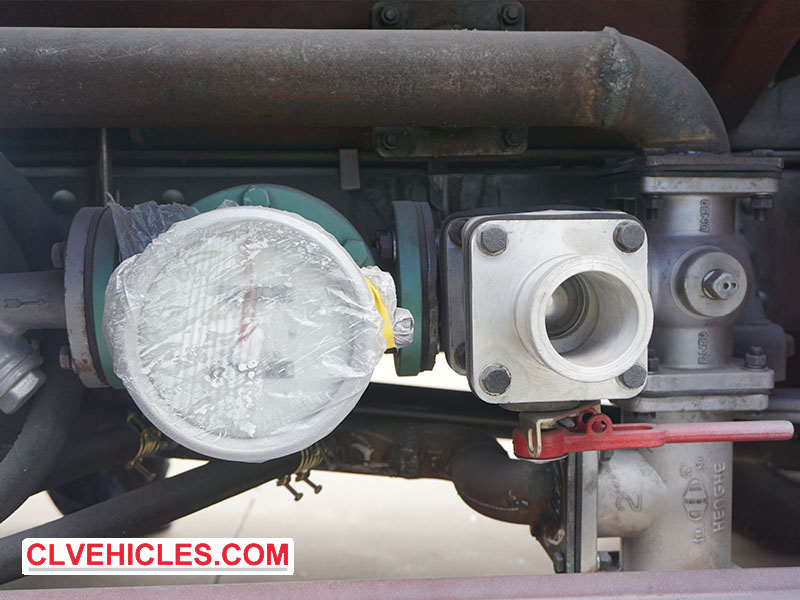
The flow rate of the bottom product is controlled by a dedicated valve. The subsea valve installed at the bottom of each tank is the primary safety barrier. Except for authorized loading and unloading operations, this valve remains closed at all times, serving as an emergency shut-off. In multi-compartment tankers, pressure-balanced subsea valves are typically used. Its ingenious design incorporates a tee fitting, simplifying piping layout and reducing weight, while allowing independent loading and unloading of cargo from different compartments to avoid cross-contamination, and offering simple and reliable operation. The pneumatic shut-off valve is another key component. This valve is designed to reduce internal pressure drop and increase flow rate, ensuring efficient delivery. An important safety feature is the shear groove machined into the valve body flange. In the event of a collision causing the pipeline to separate from the tanker, the flange will break cleanly at this shear groove. This action allows the self-centering plunger and durable spring mechanism to immediately seal the valve, preventing any product leakage from the tank and thus avoiding significant environmental and fire hazards.