Agricultural work often involves moving heavy materials, stacking hay bales, loading feed, and handling supplies across uneven terrain. An agricultural telehandler offers a versatile solution by combining lifting height, extended reach, and flexible attachment options in one machine.
Whether you manage a small farm or a large agricultural operation, choosing the right telehandler can improve handling efficiency and simplify daily tasks. In this guide, we'll explore the key benefits, common agricultural applications, and essential factors to consider when buying a telehandler.
1.Quick Answer
An agricultural telehandler is a versatile machine designed for lifting, moving, stacking, and loading materials on farms. Combining a telescopic boom with flexible attachment options, a telehandler provides greater lifting height, extended forward reach, and improved adaptability across different farm environments. When choosing the right agricultural telehandler, buyers should consider lifting capacity, maximum lifting height, forward reach, working conditions, and compatible attachments to ensure efficient and reliable farm operations.
2.Key Takeaways
A farm telehandler combines lifting, loading, stacking, and material handling capabilities in one machine.
Common telehandler uses include hay bale handling, feed transportation, pallet loading, and farm maintenance.
Telescopic booms and versatile attachments improve operational flexibility and efficiency.
Actual lifting capacity depends on boom height and forward reach, not just the rated load.
The right telehandler should match your farm size, working conditions, and budget.
3.What Is an Agricultural Telehandler?
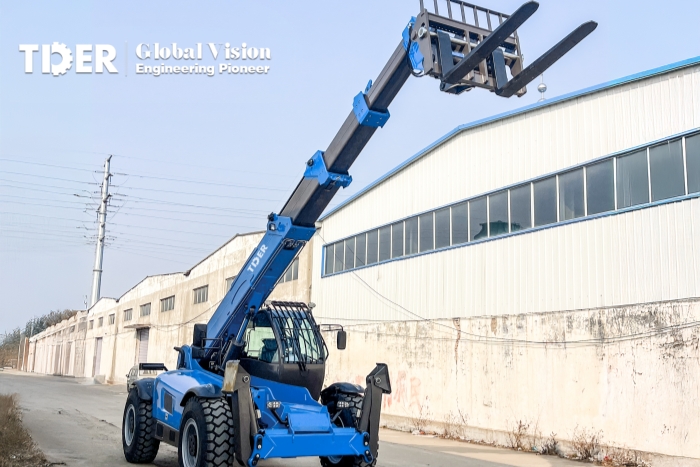
A telehandler, also known as a telescopic handler, is a versatile material-handling machine equipped with a telescopic boom that can extend forward and lift loads to different heights. Its main components include a chassis, an operator cab, a telescopic boom, and interchangeable attachments such as pallet forks and buckets. Unlike conventional forklifts, which mainly lift and transport loads vertically over relatively short distances, a telehandler offers greater lifting height and forward reach, making it suitable for handling materials in more demanding working environments.
An agricultural telehandler is specifically suited to the diverse needs of farm operations. Farms often involve uneven ground, narrow working areas, heavy materials, and frequent loading and stacking tasks. Therefore, a farm telehandler typically requires reliable traction, stable performance, and flexible attachment options to handle hay bales, animal feed, fertilizers, and other agricultural supplies. Depending on the application, configurations such as four-wheel drive, different steering modes, suitable tires, and specialized attachments can improve operating efficiency and adaptability. While standard telehandlers can also be used in agriculture, selecting a configuration that matches actual farm conditions is essential for achieving better productivity, safety, and long-term operating value.
4.Benefits of Using a Telehandler on a Farm
A telehandler offers several practical advantages for modern agricultural operations, making it a valuable machine for farms of different sizes.
Greater Lifting Height and Forward Reach
One of the main advantages of a telehandler is its telescopic boom, which provides greater lifting height and forward reach than many conventional material-handling machines. This allows operators to stack hay bales in high storage areas, load materials onto trucks, and move loads over obstacles or into hard-to-reach locations, improving flexibility during daily farm operations.
Versatility with Multiple Attachments
A farm telehandler can handle various tasks by changing attachments according to different working requirements. Pallet forks, buckets, bale clamps, and other specialized attachments enable the same machine to transport feed, handle hay, load bulk materials, and move agricultural supplies. This versatility reduces the need to purchase multiple machines for separate applications.
Improved Efficiency and Labor Savings
By combining lifting, loading, and transportation functions, a telehandler helps reduce repeated material handling and unnecessary equipment changes. Operators can complete multiple tasks with one machine, saving working time, reducing labor requirements, and improving overall farm productivity.
Better Maneuverability Across Farm Environments
Agricultural operations often take place on uneven ground, muddy fields, and narrow passages. Four-wheel drive, different steering modes, and suitable tire configurations help a telehandler adapt to these conditions. Depending on the terrain and application, choosing the right tires can improve traction, stability, and maneuverability, making different telehandler uses more practical across the farm.
5.Common Agricultural Telehandler Uses
An agricultural telehandler is designed to handle a wide range of daily farm tasks, from moving heavy materials to loading and stacking supplies. With its telescopic boom and interchangeable attachments, it provides a flexible solution for different agricultural operations.
Hay Bale Handling and Stacking
Hay bale handling is one of the most common telehandler uses on farms. Operators can use bale clamps or bale forks to lift, transport, and stack large quantities of hay in barns or outdoor storage areas. The extended boom allows bales to be placed at greater heights, helping farmers make better use of available storage space.
Loading and Moving Feed and Grain
Telehandlers are widely used to transport animal feed, grain, and other bulk materials. Equipped with buckets, pallet forks, or specialized attachments, they can move feed between storage areas, load materials into trucks, and handle palletized agricultural products efficiently.
Livestock and Barn Operations
On livestock farms, a farm telehandler helps transport feed, move supplies, and handle materials around barns and feeding areas. Its lifting and reaching capabilities make it easier to deliver materials to different locations, particularly where access is limited.
Fertilizer, Pallet and Farm Material Handling
Agricultural operations require frequent transportation of fertilizers, seeds, equipment, and other supplies. A telehandler equipped with pallet forks can load and unload trucks and trailers, move heavy pallets, and organize materials in farm warehouses.
Farm Maintenance and General Material Handling
Beyond daily agricultural production, telehandlers can support general farm maintenance. They can transport construction materials, move equipment, and assist with repairs to farm buildings and infrastructure. With suitable attachments, an agricultural telehandler becomes a versatile machine for both routine handling and additional farm support tasks.
6.How to Choose the Right Agricultural Telehandler
Choosing the right agricultural telehandler requires more than comparing prices and maximum lifting capacities. Buyers should evaluate their daily workload, operating environment, and long-term ownership costs to find a machine that meets their specific farm requirements.
The first factor to consider is lifting capacity. Determine the maximum weight of materials you regularly handle, including hay bales, feed pallets, and agricultural supplies. However, the rated lifting capacity does not represent the actual capacity under every working condition. The load a telehandler can safely handle changes with boom extension and lifting height, so buyers should check the load chart before making a decision.
Lifting height and forward reach are equally important. Consider the height of hay storage stacks, warehouse ceilings, and truck loading platforms when selecting the boom specifications. Forward reach should also match the distance required to place materials. A suitable load chart helps confirm the machine's actual lifting performance at different boom positions.
Next, evaluate engine power and drive configuration according to the workload and terrain. Farms with heavy-duty operations may require higher engine power, while muddy fields and uneven surfaces often benefit from four-wheel drive. Transmission performance and fuel consumption should also be considered for efficient daily operation.
Tires and attachments directly affect versatility and working efficiency. Pneumatic tires are commonly suitable for outdoor agricultural environments, while other tire options may be selected according to specific ground conditions. Pallet forks, buckets, and bale clamps allow one telehandler to perform different tasks. Before purchasing, confirm that the attachments are compatible with the quick coupler and hydraulic system.
Safety and operator comfort should never be overlooked. Look for reliable load stability systems, rollover protection, clear cab visibility, ergonomic controls, and optional load moment indicators or warning systems. These features help operators work more confidently under different conditions.
Finally, consider your budget and total cost of ownership rather than focusing only on the initial purchase price. Fuel consumption, routine maintenance, spare parts, transportation, warranty coverage, and after-sales support all influence long-term costs. When comparing a telehandler for sale, evaluate the manufacturer's experience, product quality, configuration options, and service capabilities. A well-planned Telehandler Buying Guide should ultimately help you select a machine that balances performance, safety, and long-term operating value.
7.Telehandler vs. Tractor vs. Wheel Loader: Which Is Better for Your Farm?
Choosing the right agricultural machine depends on the type of work, lifting requirements, and farm operating conditions. Telehandlers, tractors with front loaders, and wheel loaders all play important roles in agriculture, but their capabilities differ. A telehandler stands out for its telescopic boom, offering greater lifting height and forward reach, making it ideal for high-level stacking, pallet handling, and loading materials at a distance. A tractor with a front loader is more suitable for general agricultural operations, including towing, fieldwork, and daily farm tasks. A wheel loader is particularly effective for handling large volumes of loose materials such as grain, soil, and feed. The following comparison highlights their main differences.
|
Comparison |
Telehandler |
Tractor with Front Loader |
Wheel Loader |
|
Lifting height |
Excellent |
Moderate |
Model-dependent |
|
Forward reach |
Excellent |
Limited |
Limited |
|
Pallet handling |
Excellent |
Attachment-dependent |
Attachment-dependent |
|
Hay bale stacking |
Excellent |
Suitable |
Attachment-dependent |
|
Bulk material loading |
Suitable |
Suitable |
Excellent |
|
Attachment versatility |
High |
High |
High |
|
Main applications |
High-reach lifting and material handling |
Fieldwork, towing, general farm operations |
Bulk material loading and transfer |
Which Machine Should You Choose?
Choose a Telehandler: If your farm requires high lifting, extended forward reach, hay bale stacking, and versatile material handling, a telehandler is the better choice.
Choose a Tractor: If your primary needs include towing, plowing, planting, and general fieldwork, a tractor is more suitable.
Choose a Wheel Loader: If your daily operations involve loading and transferring large volumes of loose materials, a wheel loader is the more efficient option.
TDER Equipment Solutions
TDER offers different machinery solutions for agricultural operations, including telehandlers, tractors, and wheel loaders. For example, the TDER FT30 telehandler features a 3,000 kg rated capacity, 7 m maximum lifting height, and 3.2 m maximum outreach. TDER also provides tractors for field operations and 0.6–3-ton small wheel loaders for farm material handling. The right choice depends on your specific workload and operating requirements.
8.Choosing a Reliable Telehandler Supplier
Choosing a reliable supplier is just as important as selecting the right Telehandler. Before purchasing a Telehandler for Sale, buyers should evaluate the manufacturer's production capabilities, product quality, and export services to reduce procurement risks and ensure long-term operating support.
Check Manufacturer Experience and Production Capability
Look for a manufacturer with established factory facilities, professional production processes, and experience in material handling equipment. Check its available telehandler models, lifting capacities, and configuration options to ensure it can meet your specific requirements. Export experience and an established international market presence are also important indicators of reliability.
Verify Product Quality and After-Sales Support
Ask about quality inspection procedures, product certifications, and warranty coverage. A reliable supplier should also provide access to spare parts, technical guidance, and responsive after-sales support.
Compare Quotations and Export Terms
Compare quotations based on trade terms such as FOB and CIF, rather than focusing only on the equipment price. Confirm packaging standards, shipping arrangements, estimated delivery time, and required import documents. Clear communication and practical export support can make the purchasing process smoother.
9.TDER Telehandler Solutions for Agricultural Applications
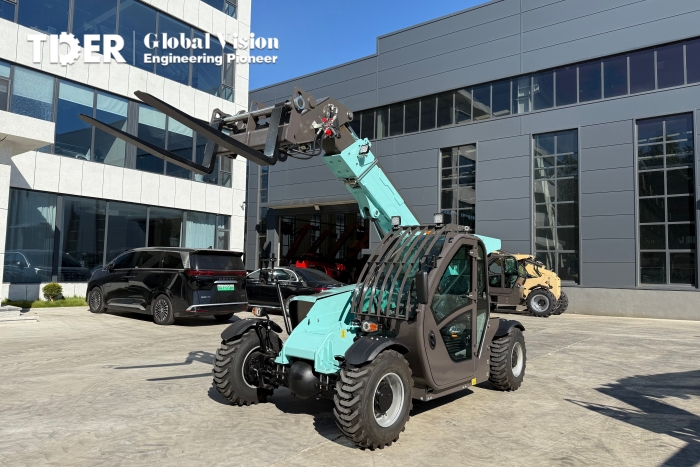
TDER offers a range of telehandlers with different lifting capacities and heights to meet various material handling requirements. Available models include 2.5-ton, 3-ton, 3.5-ton, 4-ton, 5-ton and 6-ton options, with maximum lifting heights ranging from 5.9 m to 17.55 m. Buyers can select suitable configurations according to their load requirements, working height and farm operating conditions.
TDER supports OEM/ODM customization, including engine brands, tires, attachments, colors and machine configurations. Our team also provides pre-shipment inspections, international shipping arrangements and import procedure guidance for overseas buyers. With export experience in 158 countries, TDER helps customers simplify equipment procurement and international purchasing.
|
Item |
Website Information |
|
Load Capacity |
2.5T–6T |
|
Maximum Lifting Height |
5.9m–17.55m |
|
Engine Customization |
Available |
|
Tire and Attachment Options |
Available |
|
OEM/ODM Services |
Available |
|
Pre-shipment Inspection |
Available |
|
International Shipping |
Container Shipping, Bulk Shipping and Ro-Ro Shipping |
|
Import Procedure Support |
Available |
|
Export Markets |
158 Countries |
10.Frequently Asked Questions About Agricultural Telehandlers
What is the main purpose of an agricultural telehandler?
An agricultural telehandler is a versatile material handling machine used for lifting, moving and placing loads on farms. Common telehandler uses include handling hay bales, transporting feed, moving pallets and loading agricultural materials.
What lifting capacity is suitable for farm work?
The required capacity depends on the load weight, lifting height and working conditions. TDER offers telehandlers with capacities from 2.5 to 6 tons, allowing buyers to select a suitable model for different farm operations.
What attachments are commonly used on agricultural telehandlers?
Common attachments include pallet forks, buckets, bale grabs and other material handling tools. The appropriate attachment depends on the specific application and machine compatibility.
Are telehandlers suitable for uneven farm terrain?
Yes. Selected telehandler configurations with suitable tires and ground clearance can operate on uneven farm surfaces. Buyers should consider terrain conditions, load stability and tire options when choosing a telehandler for sale.