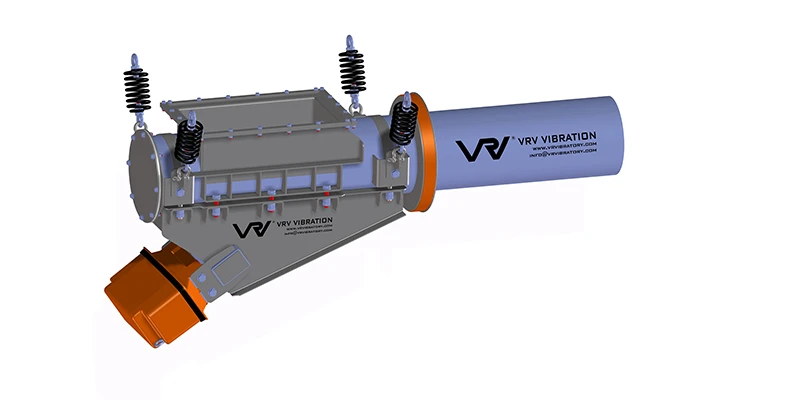
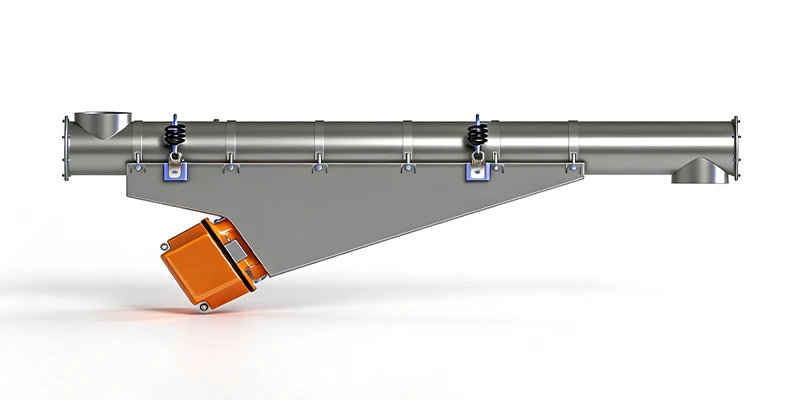
High Quality Bin Activator | Superior Welding Craftsmanship Ensures Stable Operation

In industrial bulk material conveying and storage systems, bin activator plays an irreplaceable role in solving material bridging, arching and discharging blockage. Most buyers only focus on overall structure, vibration power and material selection, but easily ignore the most critical hidden standard — weld seam quality.

A real high-quality bin activator is never reflected only in appearance configuration, but rooted in rigorous internal and external welding technology. As a professional industrial equipment manufacturer, VRV always takes standard welding process as the first standard for producing qualified bin activators.

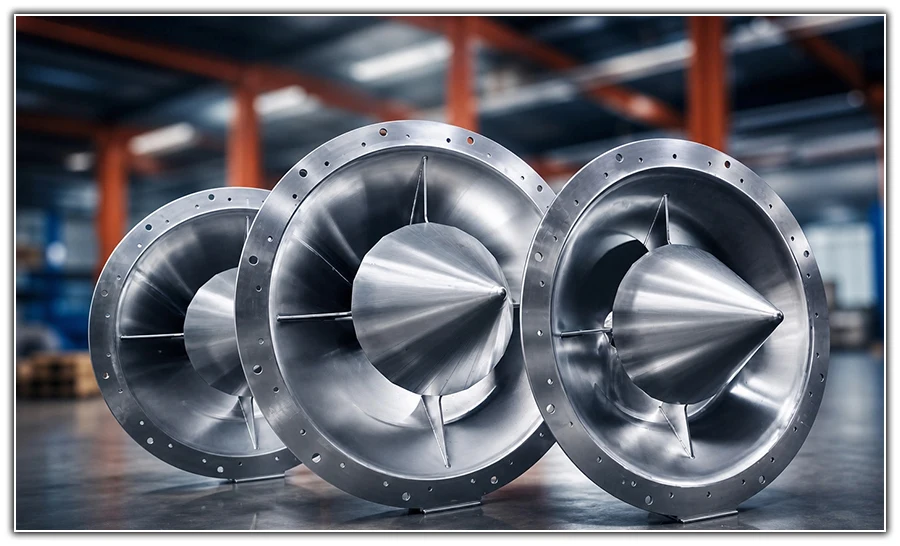
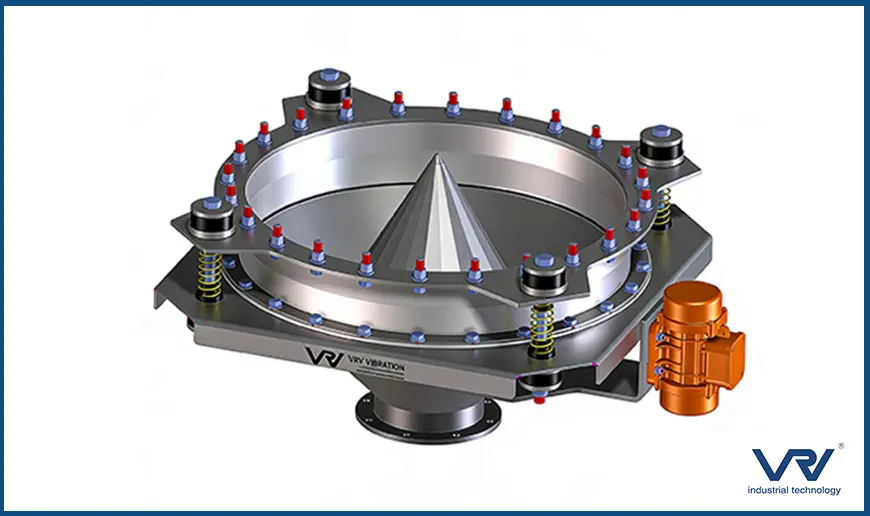
Stainless steel bin activator units with precision welded internal cones

We adopt full penetration welding process for all connecting parts of stainless steel bin activators. Compared with ordinary spot welding and thin welding, our firm welding structure can bear long-term continuous vibration load without cracking, deformation or loose joints. This effectively reduces equipment failure rate and greatly extends the overall service life of the bin activator.

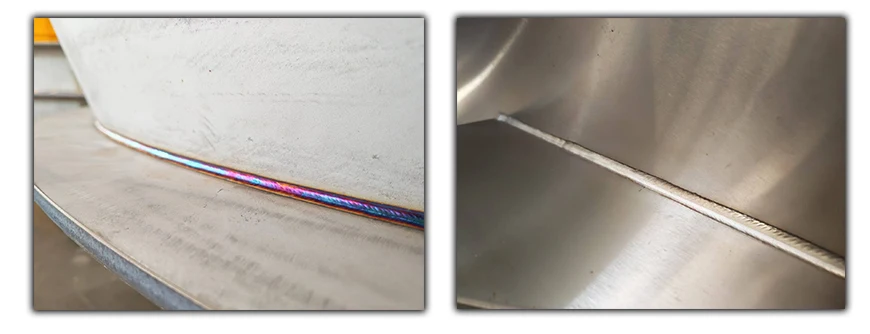
For food-grade, pharmaceutical and chemical industrial bin activators, smooth weld treatment is particularly important. After fine welding, we carry out overall polishing treatment on internal and external weld seams to realize seamless transition without dead corners. Flat and clean weld surfaces will not adhere to powder, granular and sticky materials, thoroughly avoid material residue and cross contamination, and fully meet high-standard hygienic production requirements.

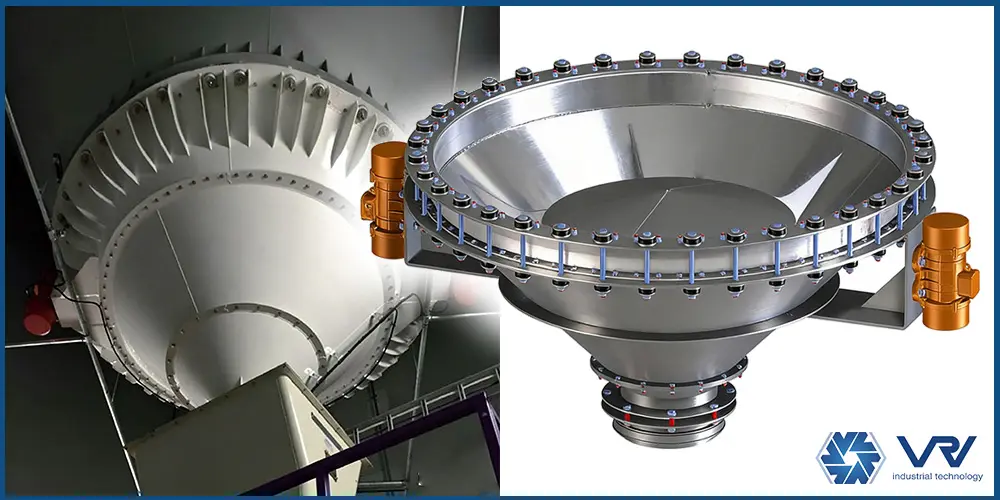
Close-up of precision welded seams on high-quality stainless steel bin activator

Rough and unpolished weld seams are not only easy to accumulate materials and cause discharging unsmoothness, but also prone to rust and corrosion at welding gaps in humid and corrosive working environments. Unqualified welding will lead to equipment vibration deviation, frequent maintenance and increased production cost in the later stage.

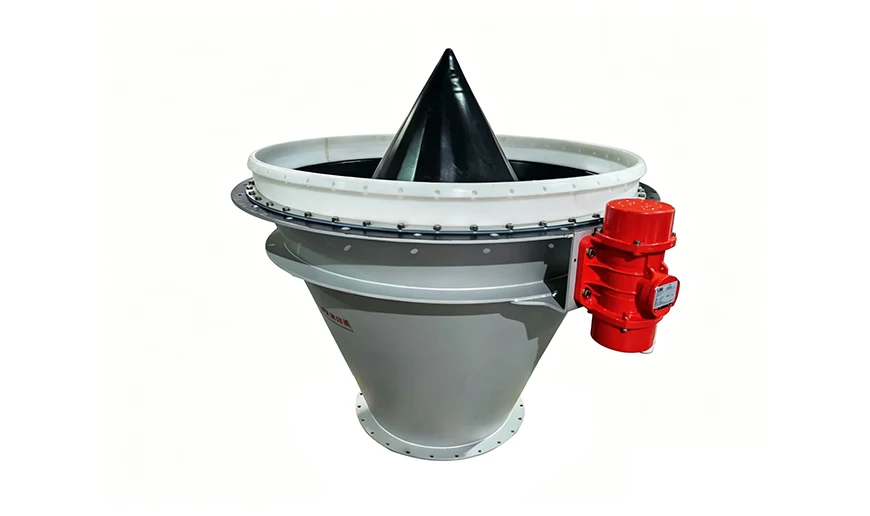
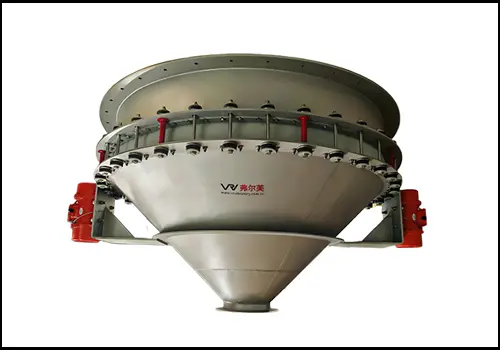
Complete vibrating bin activator with high-quality welded construction and vibration motor

Every VRV bin activator undergoes strict welding inspection and quality testing before leaving the factory. From welding material selection, welding operation to post-weld polishing, every process is strictly controlled. Whether it is standard vibrating bin activator or customized large-size bin activator, we always maintain consistent high-standard welding level.

Choosing a high-quality bin activator means choosing reliable welding quality. Stable welding technology brings stable discharging performance, low failure rate and higher cost performance, which is the most cost-effective choice for long-term industrial production lines.

How does a bin activator work?

316L stainless steel food-grade bin activator for food processing

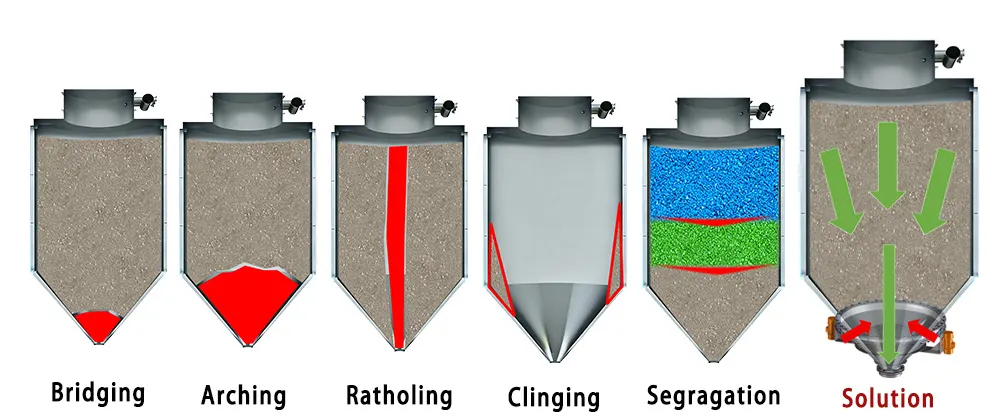
A bin activator is a critical bulk material handling device designed to solve material bridging, rat-holing, and discharge blockages in hoppers, silos, and binscommon pain points in food processing, mining, chemical, and building materials industries. As a compact and efficient discharge assistant, it works by combining mechanical vibration and structural design to keep bulk materials flowing smoothly and realize controlled, quantitative discharge. Below we break down its core components, basic working principle, and operational characteristics of specialized types like food-grade bin activators, with clear, easy-to-understand explanations for industrial users and equipment selectors.


Core Components of a Bin Activator (The Foundation of Its Operation)

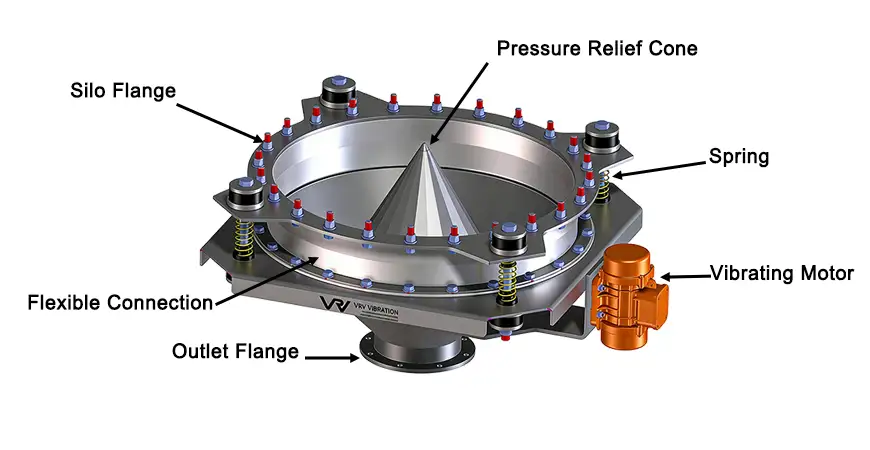
Bin activator's core components

Before understanding how a bin activator works, its essential to know its key structural parts, which work together to drive material discharge. A standard industrial bin activator, including 316L stainless steel food-grade bin activators, consists of four core components:

Vibration Drive Unit: The "power source" of the bin activator, usually an electric vibrator, which generates stable, adjustable vibration frequency and amplitude.

Discharge Cone/Base: A conical or tapered structural part connected to the vibration drive, mounted at the bottom of the hopper/bin. Its inclined surface reduces material friction and guides material flow.

Flange Connection: Secures the bin activator to the hopper/silo outlet, ensuring a tight seal (especially critical for food-grade applications to prevent material contamination and leakage).

Adjustment System: Includes amplitude regulators and speed control knobs, allowing operators to adjust vibration intensity according to material properties (e.g., powder, granules, bulk solids) and discharge requirements.

For food-grade bin activators, the discharge cone and contact parts are made of 316L stainless steel (compliant with EC 1935/2004 standards), with a seamless, easy-to-clean designadapting the core structure to hygienic processing needs while retaining the basic operational mechanism.


The Basic Working Principle of a Bin Activator

At its core, a bin activator works by transmitting controlled vibration to the bulk material at the hopper outlet, breaking up material cohesion and structural bridges, and promoting continuous, uniform discharge. The whole working process is a simple, efficient mechanical cycle with three key steps:

Vibration Generation: When the bin activator is powered on, the vibration drive unit starts operating, producing high-frequency, low-amplitude (or adjustable) vibration. This vibration is directly transmitted to the discharge cone and the material layer in contact with it.

Material Loosening: The vibration energy breaks the intermolecular cohesion of the bulk material and disrupts the "bridging" or "rat-holing" structure formed by material gravity and friction at the hopper outlet. The material, originally compacted, becomes loose and loses its stable accumulation state.

Guided Discharge: The loose material slides down the inclined surface of the discharge cone under the combined action of vibration force, gravity, and the cones structural guidance. It is then discharged from the outlet at a steady rate, completing the material transfer from the hopper to the downstream conveying system (e.g., vibrating feeders, conveyor belts).

Unlike traditional discharge devices that rely solely on gravity, the bin activators vibration force eliminates passive material accumulationensuring discharge even for sticky, hygroscopic, or easily compacted materials (e.g., food powder, chemical granules, mining bulk solids).

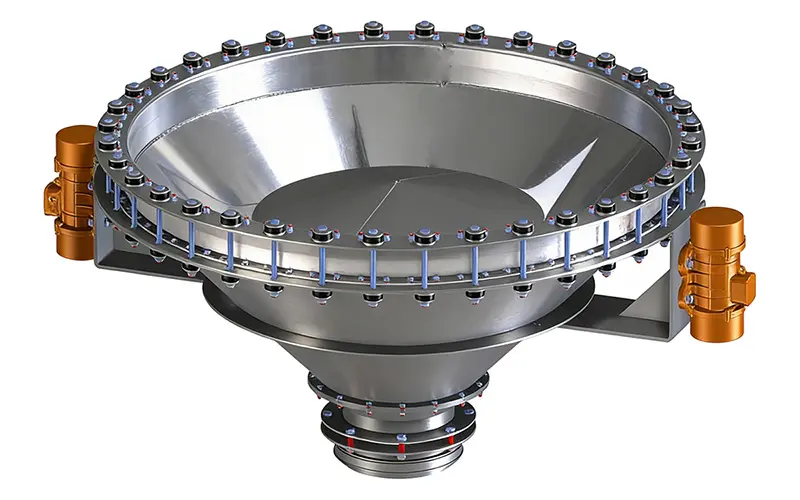
Vibrating bin activator solution for material bridging problem


How Specialized Bin Activators Work (Food-Grade vs Industrial)

While the basic working principle is universal, vibrating bin activators for different industries are optimized in vibration parameters and structural design to match specific material and application needstheir operational logic remains consistent, with only adaptive adjustments to key working details:


Food-Grade Stainless Steel Bin Activator: Designed for food processing (flour, sugar, milk powder, snack granules), it uses low-frequency, gentle vibration to avoid material splashing and dust generation (meeting food hygiene and dust control requirements). Its 316L stainless steel discharge cone has a smooth, polished surface, so vibration-driven material flow leaves no residue, and the sealed connection prevents cross-contamination during discharge.


Industrial Heavy-Duty Bin Activator: Used in mining, cement, and chemical industries (for gravel, cement clinker, industrial pellets), it features a high-power vibration drive and thickened steel structural parts. It generates higher-amplitude vibration to break up hard, compacted material bridges, and its robust design withstands the abrasion of heavy bulk materials during long-term operation.

Both types retain the core "vibration loosening + gravity discharge" mechanismthe difference lies in vibration intensity, material selection, and structural sealing, all tailored to industry-specific operational demands.


Key Operational Features That Enhance a Bin Activators Working Efficiency

A bin activators reliable performance in practical applications is not just about its basic working principle, but also its optimized operational features that complement the core mechanismthese features directly boost discharge efficiency and adaptability:

Adjustable Vibration Parameters: Operators can fine-tune vibration frequency and amplitude based on material particle size, moisture content, and desired discharge rate, ensuring optimal flow for different bulk materials (no over-discharge or under-discharge).

Low Energy Consumption & Compact Design: The vibration drive unit is energy-efficient, and the bin activators small footprint makes it easy to install at the bottom of existing hoppers/silos without major structural modifications to the material handling system.

Smooth Discharge with No Blockage: Continuous vibration eliminates material stagnation at the outlet, reducing downtime for manual cleaning and unblockingcritical for continuous production lines in food and industrial plants.

Low Noise & Stable Operation: Modern bin activators use shock-absorbing design in the vibration drive unit, minimizing operational noise and mechanical wear, which extends the equipments service life and improves workshop working conditions.

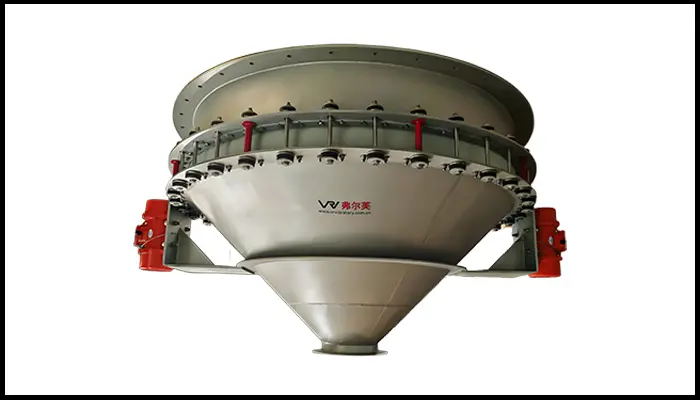
Carbon steel bin activator


In short, a bin activators working principle is rooted in controllable mechanical vibration to break material cohesion and guide gravity dischargea simple yet highly effective solution to bulk material discharge blockages in hoppers and silos. Whether its a 316L stainless steel food-grade bin activator for hygienic food processing or a heavy-duty industrial bin activator for mining and cement production, all retain this core working logic, with adaptive optimizations for industry-specific material, hygiene, and durability requirements.


As a key component in bulk material handling systems, the bin activators reliable operation directly improves the efficiency of the entire production lineeliminating costly downtime from material blockages and ensuring continuous, quantitative material flow. If youre selecting a bin activator for your hopper/silo, its critical to match the devices type, vibration parameters, and material with your specific bulk material properties and industry application needs. For custom bin activator solutions (including food-grade and industrial models), contact our professional team for tailored recommendations and technical support.

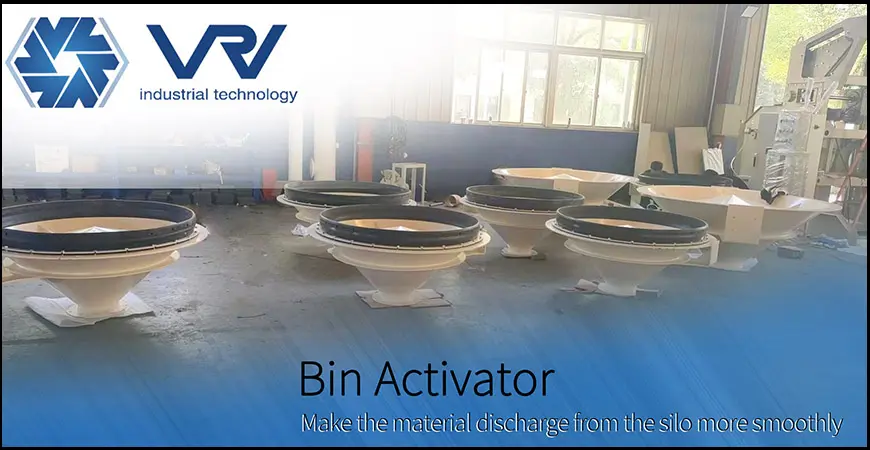
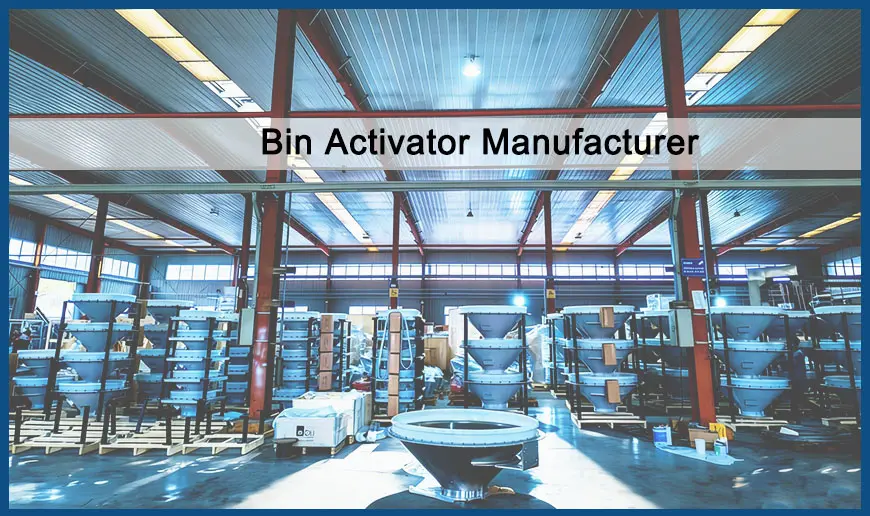
China bin activator manufacturer

How to Choose the Right Bin Activator for Your Bulk Material Handling?

A bin activator is a key piece of equipment used to promote smooth, consistent material discharge from silos, hoppers, and storage bins. It effectively eliminates common issues like bridging, rat-holing, and material segregation, ensuring stable operation for downstream processing equipment.

vibratory bin activator for mining and construction bulk material discharge

Vibratory Bin Activator for Mining & Construction Bulk Material Discharge

What Is a Bin Activator?

A vibratory bin activator uses controlled vibration to loosen and flow bulk materials. It is installed between the storage bin and the discharge outlet, creating uniform material movement without damaging particles or causing blockages.

Key Benefits of a Bin Activator

1. Eliminates bridging and rat-holing in storage bins

2. Ensures continuous and uniform material discharge

3. Protects downstream equipment from overload or interruption

4. Low power consumption and minimal maintenance

5. Suitable for powder, granular, and bulk solid materials

stainless steel vibratory bin activator for pharmaceutical and food industry

Stainless Steel Vibratory Bin Activator for Pharmaceutical & Food Industry

How to Select a Bin Activator?

1. Material Characteristics

- Choose the right model based on material properties:

- Fine powder: Select a bin activator with adjustable vibration intensity

- Abrasive material: Use wear-resistant lining and heavy-duty structure

- Food/pharma materials: Use 304/316L stainless steel for hygiene compliance

2. Bin Size & Discharge Capacity

- Match the activator diameter to your silo opening and required throughput. Standard sizes range from 300mm to 3600mm to fit most industrial bins.

3. Installation Environment

- Dry industrial sites: Carbon steel bin activator with paint coating

- Corrosive/humid sites: Stainless steel vibratory bin activator

- Dust-proof requirements: Fully sealed structure with isolation sleeves

vibratory bin activator for silo and bulk material discharge

Vibratory Bin Activator for Silo & Bulk Material Discharge

Common Applications

Mining & quarrying: ore, sand, gravel

Food industry: flour, sugar, salt, grain

Chemical industry: powder, granules, additives

Building materials: cement, lime, gypsum


A high-quality bin activator greatly improves material flow efficiency and reduces downtime. Choosing the right type depends on your material, bin size, industry standards, and working environment.

We provide customized vibratory bin activators in carbon steel, 304 stainless steel, and 316L stainless steel. Contact our engineering team for a free selection solution.

professional vibratory bin activator manufacturer with custom design and production

Professional Vibratory Bin Activator Manufacturer | Custom Design & Production

Mild Steel vs Stainless Steel Vibrating Feeder Which to Choose

When selecting an electromagnetic vibrating feeder for bulk material handling, the construction material is one of the most critical decisions you will make. The two most common options are mild steel and stainless steel, each with distinct strengths, ideal applications, and cost differences.
Choosing the wrong material can lead to premature corrosion, hygiene violations, higher maintenance costs, or unnecessary over-investment.


In this guide, we break down the differences between mild steel and stainless steel vibrating feeders to help you select the right one for your operation.

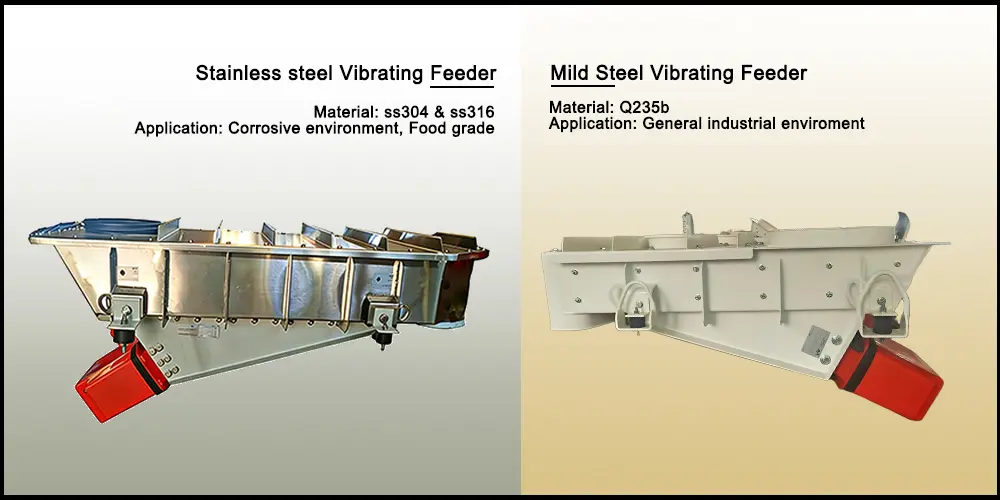
mild steel vs stainless steel electromagnetic vibrating feeder comparison with material specifications and application scenarios

Electromagnetic Vibrating Feeder: Mild Steel (Q235b) vs Stainless Steel (304/316L) – Material and Application Comparison

What Is a Mild Steel Vibrating Feeder?

Mild steel (also called carbon steel) is the standard, economical material used in general‑purpose vibrating feeders. It offers good structural strength and is widely used in heavy industrial environments where corrosion and strict hygiene are not primary concerns.

1. Advantages

- Lower upfront cost

- High structural strength and durability

- Easy to machine, weld, and repair

- Ideal for heavy-duty loading

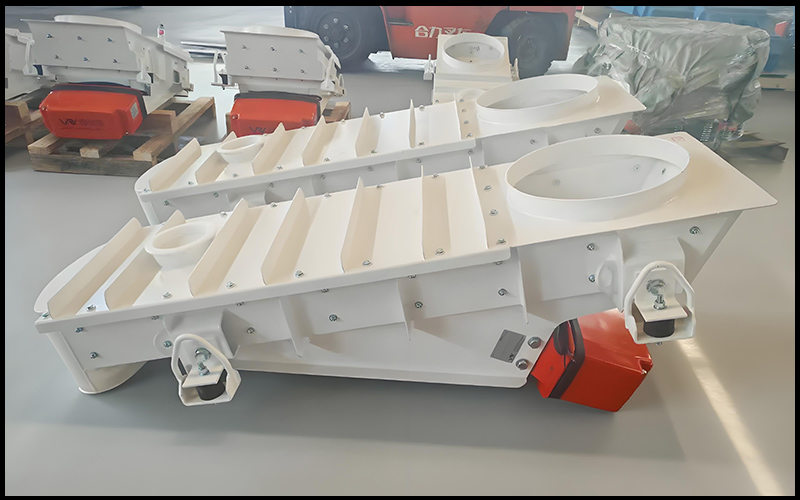
mild steel electromagnetic vibrating feeder q235b for general industrial material handling

Mild Steel Electromagnetic Vibrating Feeder (Q235b) – Cost-Effective for General Industrial Use

2. Disadvantages

- Prone to rust and corrosion in humid or corrosive environments

- Not suitable for food, pharmaceutical, or clean applications

- Requires painting or surface coating for basic protection

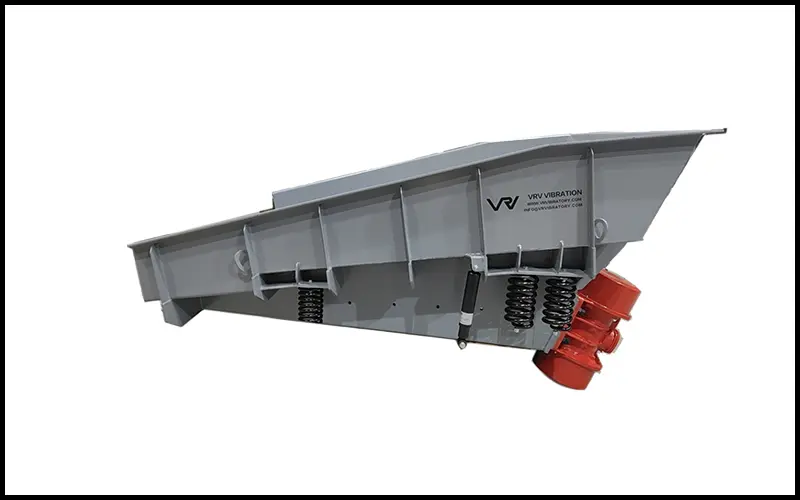
heavy-duty mild steel electromagnetic vibrating feeder for mining and construction applications

Heavy-Duty Mild Steel Electromagnetic Vibrating Feeder: For Mining & Construction Material Handling

3. Best For

Mining, quarrying, construction, sand & gravel, coal, and other non-corrosive, non-hygienic industries.

What Is a Stainless Steel Vibrating Feeder?

Stainless steel vibrating feeders are typically made from **304 stainless steel** or **316L stainless steel**. They are designed for applications that require corrosion resistance, easy cleaning, or compliance with food and pharmaceutical standards.

1. Advantages

- Excellent corrosion and rust resistance - Smooth, easy-to-clean surfaces - Compliant with food-grade, hygienic, and chemical industry requirements - Long service life in harsh environments

corrosion-resistant stainless steel vibrating feeder for pharmaceutical and corrosive environments

Stainless Steel Electromagnetic Vibrating Feeder: Corrosion-Resistant for Pharmaceutical & Harsh Environments

2. Disadvantages

- Higher material cost than mild steel - Heavier in some designs - More expensive to fabricate

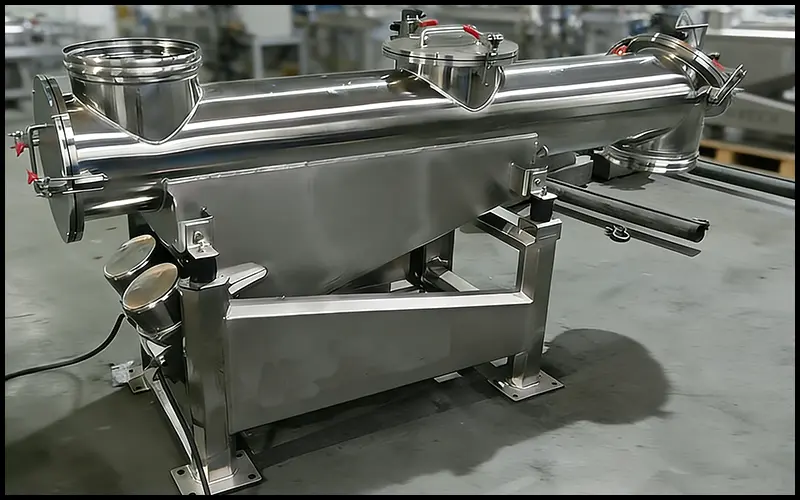
stainless steel electromagnetic vibrating feeder 304/316l for food and chemical applications

Stainless Steel Electromagnetic Vibrating Feeder (304/316L) – Ideal for Food & Chemical Processing

3. Best For

Food processing, pharmaceuticals, chemicals, fine chemicals, salt, sugar, flour, and corrosive material handling.

Mild Steel vs Stainless Steel Vibrating Feeder: Key Comparison

Item

Mild Steel Vibrating Feeder

Stainless Steel Vibrating Feeder

Cost

Lower

Higher

Corrosion Resistance

Poor

Excellent

Hygiene Level

Standard

Food / Pharma Grade

Durability

High (but prone to rust)

Very High

Surface Treatment

Painted / Coated

Brushed / Polished / Mirror

Typical Industries

Mining, quarry, construction

Food, pharma, chemical, marine

How to Choose: Simple Selection Guide

1. Choose Mild Steel if:

- You handle non-corrosive materials - Your environment is dry and non-humid - You need a cost-effective, heavy-duty solution - Food or pharmaceutical hygiene is not required

2. Choose Stainless Steel if:

- You handle food, pharmaceuticals, or chemicals - Your facility requires regular washing or sanitizing - You work in humid, wet, or corrosive environments - You need a long-life, low-maintenance feeder

3. Conclusion

Both mild steel and stainless steel vibrating feeders serve important purposes: - Mild steel is the practical, cost-effective choice for general industry. - Stainless steel delivers hygiene, corrosion resistance, and long-term reliability for sensitive applications. The best choice depends on your material type, working environment, industry standards, and budget.

As a professional vibrating feeder manufacturer in China. VRV supplies both mild steel and stainless steel vibrating feeders fully customized to your capacity, size, and industry requirements. If you need help deciding which material is right for your project, contact our engineering team for a free recommendation.

Selection and Application of Wear-Resistant Liners for Motor Feeders in Glass Industry

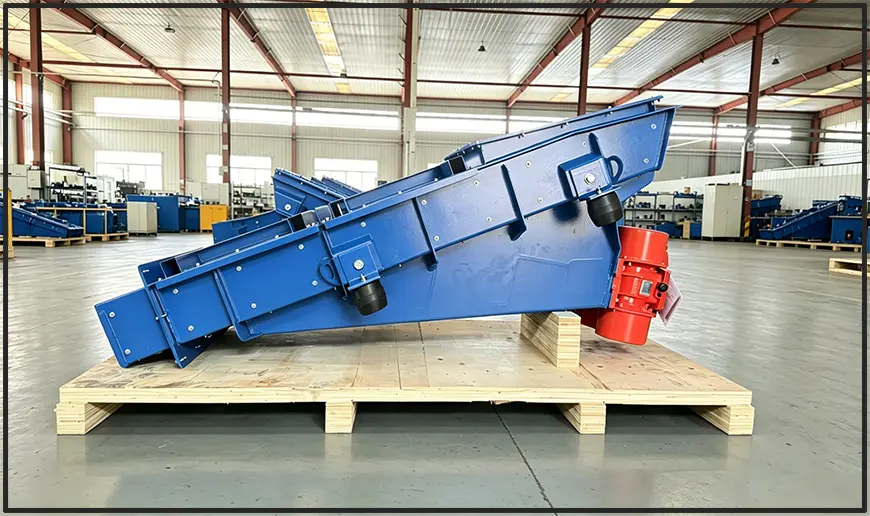
Motor vibrating feeder for glass industry, with red vibration motor and blue painted frame

Overall view of VRV motor vibrating feeder, featuring a heavy-duty blue frame and vibration motor, designed for stable conveying of quartz sand and other raw materials in glass production

Motor vibrating feeders serve as core equipment to steadily convey raw materials like quartz sand, soda ash and feldspar in glass production. These hard, sharp-edged materials constantly strike and rub against liners, causing rapid wear. Worn liners shorten equipment service life, raise maintenance costs. Worse still, fallen liner debris will mix into raw materials and damage the purity and quality of finished glass products. Therefore, proper selection of wear-resistant liners is vital for glass manufacturers to ensure continuous production, cut costs and improve product quality.


1. Key Operating Challenges for Vibrating Feeder Liners

Glass material delivery poses strict requirements on liners, mainly including three major difficulties:

  • Severe abrasion: Quartz sand reaches Mohs hardness grade 7. Continuous friction and impact lead to heavy wear on ordinary liners within several months.
  • Strict anti-contamination demand: Liner scraps will cause stones and bubbles on glass. Liners must feature stable material and zero metal pollution.
  • Complex working conditions: Fluctuating material humidity, fast feeding speed and partial high temperature near kilns require liners to combine wear resistance, impact resistance, anti-sticking and heat resistance.


2. Comparison of Common Wear-Resistant Liner Materials

2.1 Wear-resistant Steel Plate (NM400/HARDOX450)

    - Specification: Thickness 12-30mm, weldable and bendable, tensile strength ≥1200MPa, temperature resistance ≤350℃.

    - Advantages: Easy installation, outstanding impact resistance, ideal for feeding inlets and chutes with heavy material impact.

    - Disadvantages: Rough surface easily sticks wet materials; metal scraps cause raw material contamination; heavy weight increases - motor load and power consumption.

    - Application: Dry material conveying, low-purity raw material preprocessing and short-term working conditions with limited budget.

2.2 Alumina Ceramic Liner (92%-95% AlO)

    - Specification: Mohs hardness grade 9, compressive strength ≥2000MPa, wear resistance over 10 times of carbon steel, temperature resistance ≤1000℃, smooth non-stick surface.

    - Advantages: Top-grade wear resistance, no pollution, high heat resistance and anti-sticking performance, suitable for long-term delivery of hard raw materials.

    - Disadvantages: Brittle and vulnerable to cracking under heavy impact; double fixation by glue and welding raises installation cost.

    - Application: Feeder trough, discharge outlet and elbow pipes with high wear and moderate impact.

2.3 UHMWPE Liner

    - Specification: Extremely low friction coefficient, wear loss only 1/7-1/10 of steel plate, shock absorption, temperature resistance ≤80℃.

    - Advantages: Excellent anti-blocking effect, light weight reducing equipment load, pollution-free and easy installation.

    - Disadvantages: Poor heat resistance, easy deformation near high-temperature kilns; weaker wear resistance compared with ceramic liners.

    - Application: Normal temperature workshops, wet material conveying and hoppers prone to blockage.

2.4 Ceramic-Rubber Composite Liner

    - Specification: Alumina ceramic pieces embedded in wear-resistant rubber base, temperature resistance ≤80℃.

    - Advantages: Combined wear resistance and shock absorption, noise reduction, stable fixation and anti-falling performance.

    - Disadvantages: Rubber aging under high temperature; higher price than single material liners.

    - Application: Vibrating feeding sections and mixed heavy impact & wear conditions, widely adopted in glass industry.

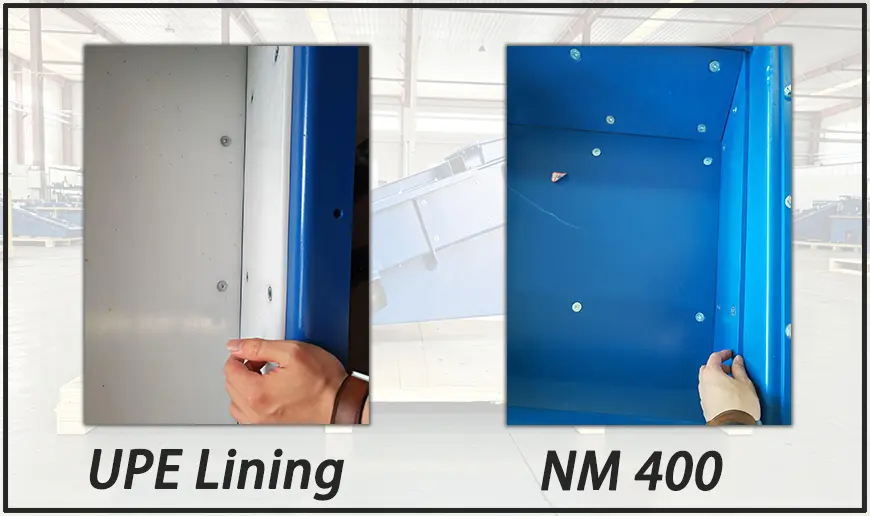
UPE lining vs NM400 steel lining comparison for vibrating feeders in glass industry

Comparison of two common wear-resistant liners for vibrating feeders: UHMWPE (UPE) lining for anti-sticking and low contamination, and NM400 steel lining for high impact resistance, both suitable for glass production applications


3. Core Principles of Liner Selection

3.1 Selection based on raw material property

  • Hard dry materials such as quartz sand and feldspar: Choose alumina ceramic or ceramic-rubber composite liners.
  • Moist and sticky materials: Adopt UHMWPE or rubber liners to avoid blockage.
  • Large-size materials with strong impact: Select wear-resistant steel or composite liners to prevent brittle fracture.

3.2 Selection based on working temperature

  • Normal temperature below 80℃: UHMWPE, rubber and composite liners are all applicable.
  • Medium temperature 80-350℃: Wear-resistant steel and alumina ceramic liners are preferred.
  • High temperature above 350℃: Only alumina ceramic and corundum castable can be used.

3.3 Selection based on cost performance

  • Short-term service within 1-2 years: Wear-resistant steel plate offers cost-effective installation.
  • Long-term service for 3-5 years: Composite liners lower overall cost with long service life and less maintenance.
  • High-end glass production with strict purity standard: Alumina ceramic liners eliminate metal contamination.


4. Installation and Maintenance Tips

  • Surface treatment: Remove oil and rust on inner walls to ensure tight fitting.
  • Fixed installation: Ceramic liners fixed with high-temperature glue and welding; composite liners fastened by special bolts.
  • Regular inspection: Check wear and looseness weekly and replace damaged parts timely.
  • Standard operation: Keep metal foreign matters away and control material humidity and feeding speed.

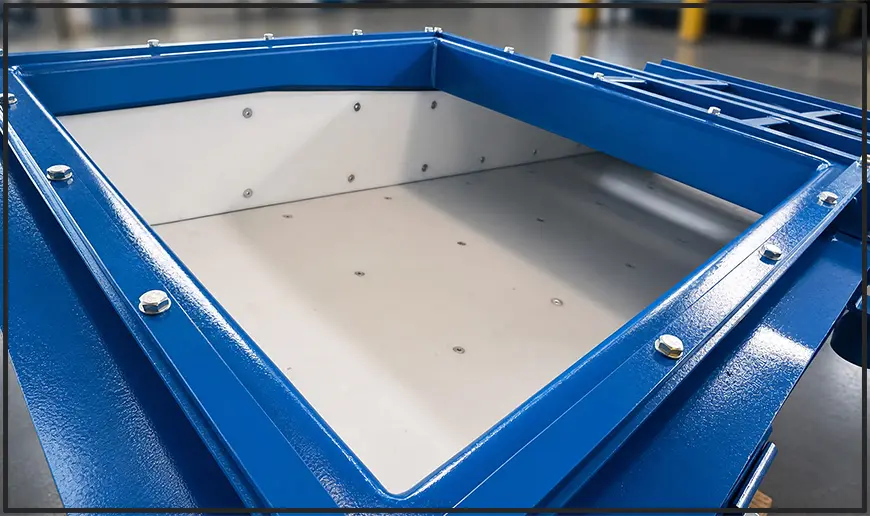
vibrating feeder with UHMWPE wear-resistant lining for glass raw material conveying

Close-up view of the internal lining of a vibrating feeder, showing the smooth UHMWPE (UPE) liner installed to reduce wear, prevent material sticking, and avoid contamination during glass raw material feeding

Liner selection needs balanced consideration of wear resistance, impact resistance, anti-pollution, heat resistance and cost. Ceramic-rubber composite liner becomes the mainstream choice with comprehensive performance. Alumina ceramic liner fits high-purity and heavy-wear scenarios. UHMWPE liner solves wet material blockage, while steel plate works well for short-term heavy impact working conditions.


As a professional vibrating feeder manufacturer, VRV specializes in custom motor vibrating feeders and matched wear-resistant liner solutions for the glass industry. We provide reliable, low-wear and anti-pollution feeding equipment tailored for quartz sand, feldspar and various glass raw material conveying, helping enterprises reduce maintenance costs and stabilize production quality.

Stainless Steel Vibrating Feeder The Ultimate Solution for Hygienic and Corrosive Bulk Material Handling

In industrial bulk material handling, choosing the right vibrating feeder is critical to ensuring production efficiency, material purity, and long-term operational stability. For industries with strict requirements for hygiene, corrosion resistance, and material integrity—such as food processing, pharmaceuticals, chemicals, and fine materials—the stainless steel vibrating feeder stands out as an indispensable piece of equipment, outperforming traditional mild steel feeders in harsh and demanding working environments.


Stainless steel trough vibrating feeder for bulk material distribution

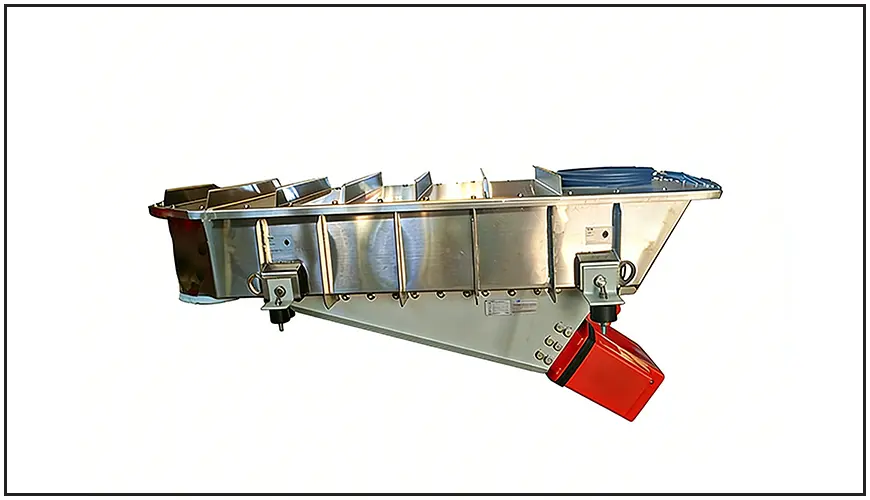
Stainless steel trough-style vibrating feeder with electromagnetic drive, suitable for uniform feeding of powders and granules in food, chemical, and pharmaceutical industries


Unlike ordinary carbon steel vibrating feeders, the stainless steel vibrating feeder is primarily constructed with high-quality SUS 304 or 316L stainless steel, materials renowned for their excellent corrosion resistance, rust proof properties, and hygienic performance. This unique material advantage makes it the first choice for applications where material contamination must be strictly avoided, as it features smooth, seamless welded surfaces that are easy to clean and meet the strictest food-grade and pharmaceutical standards.


The stainless steel electromagnetic vibrating feeder, a popular variant of this equipment, combines the durability of stainless steel with the precision of electromagnetic vibration technology. It operates with a simple structure, no mechanical transmission components, and low energy consumption, delivering uniform, continuous, and quantitative feeding of powders, granules, and small lumps. Whether handling corrosive chemical raw materials, delicate food particles, or sterile pharmaceutical powders, the stainless steel electromagnetic vibrating feeder ensures stable material flow without damaging the product or compromising its quality.


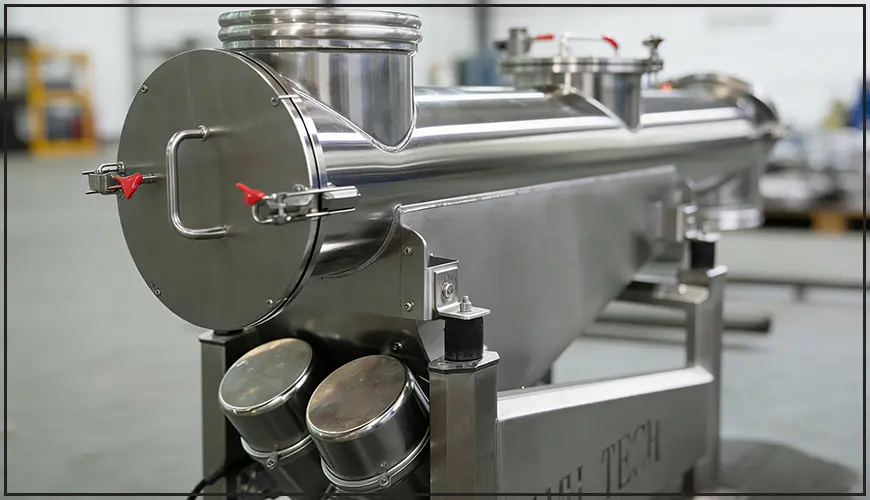
Hygienic stainless steel vibrating feeder for pharmaceutical and food processing

Hygienic stainless steel vibrating feeder with quick-open access door, ideal for pharmaceutical powders and food-grade materials. Corrosion-resistant stainless steel design meets strict hygiene standards


One of the key advantages of the stainless steel vibrating feeder is its versatility across diverse industries. In the food industry, it is widely used for feeding sugar, flour, grains, and processed food materials, thanks to its food-grade design that prevents cross-contamination and simplifies cleaning routines. In the pharmaceutical sector, it meets GMP certification requirements, making it ideal for conveying APIs and capsules with minimal product degradation. For chemical plants, the stainless steel vibrating feeder’s corrosion resistance allows it to handle acidic, alkaline, and hygroscopic materials without rusting or deteriorating over time, reducing maintenance costs and equipment downtime.

Compared to mild steel vibrating feeders, the stainless steel vibrating feeder offers superior long-term value despite a slightly higher initial investment. Its stainless steel construction boasts exceptional durability, with a service life far longer than coated mild steel alternatives, especially in wet or corrosive environments.


Additionally, it features adjustable feeding rates—controlled by a thyristor half-wave rectifier circuit—allowing for precise dosing and easy integration into automated production lines. The fully enclosed structure of many stainless steel vibrating feeders also prevents dust spillage and material scattering, creating a cleaner and safer working environment.


When selecting a stainless steel vibrating feeder, it’s important to consider the specific material properties and working conditions. For general hygiene and corrosion needs, SUS 304 stainless steel is sufficient, while SUS 316L is recommended for more extreme corrosive environments, such as those handling strong acids or high-salt materials. Custom stainless steel vibrating feeders can also be tailored to meet unique requirements, including trough size, feeding capacity (ranging from 10 to 1400 t/h), and vibration frequency, ensuring a perfect fit for any production line.


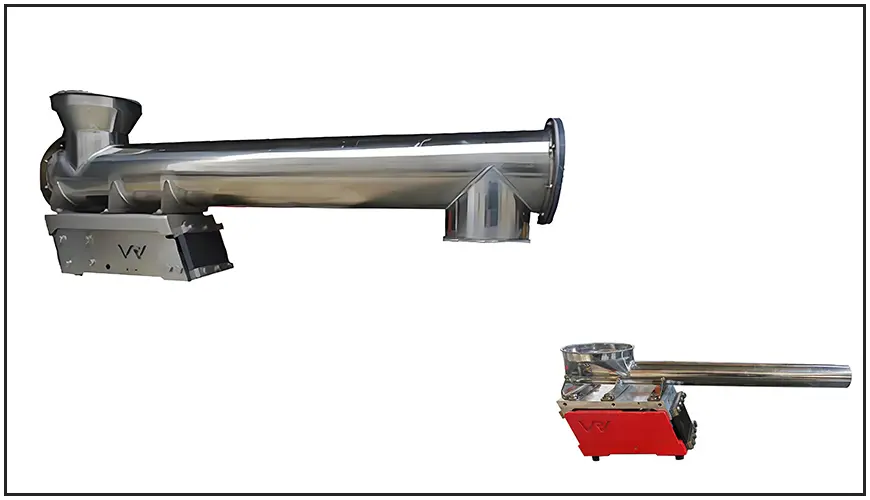
Stainless steel electromagnetic vibrating feeder for hygienic bulk material handling

Stainless steel tubular electromagnetic vibrating feeder, designed for food-grade and corrosive bulk material conveying. Smooth stainless steel construction ensures easy cleaning and contamination-free feeding


At VRV, we specialize in customizing high-quality stainless steel vibrating feeders, including stainless steel electromagnetic vibrating feeders, designed to meet the rigorous demands of food, pharmaceutical, and chemical industries. Our feeders are crafted with precision-welded stainless steel, featuring smooth surfaces, easy-clean designs, and reliable performance that minimizes maintenance and maximizes operational efficiency. Whether you need a standard model or a custom solution tailored to your specific material and workflow, our stainless steel vibrating feeders deliver the hygiene, durability, and precision your production line requires.


Investing in a stainless steel vibrating feeder is not just a purchase—it’s a long-term investment in product quality, operational efficiency, and cost savings. By choosing the right stainless steel vibrating feeder, you can avoid the pitfalls of corrosion, contamination, and frequent equipment replacement, ensuring your production line runs smoothly and reliably for years to come.

Vibrating feeder structure has a significant impact on its quality and working efficiency.

As a type of bulk materials feeder, the vibrating feeder is widely used in industries such as food, mining, coal, and building materials for the transportation of bulk raw materials due to its advantages such as high efficiency, low noise, anti - clogging, adjustable amplitude/frequency, and maintenance - free.


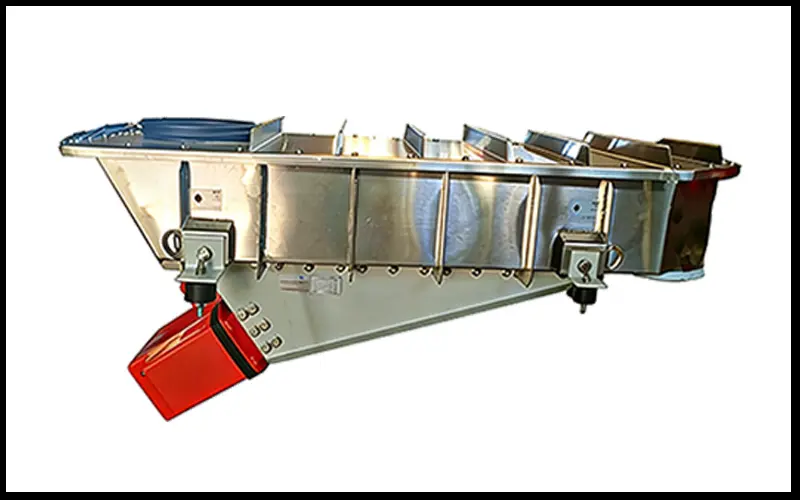
To improve the production efficiency of the factory using the vibrating feeder, first of all, we need to understand the structure of the vibrating feeder. After clearly sorting out our own needs, we can get a customized vibrating feeder.

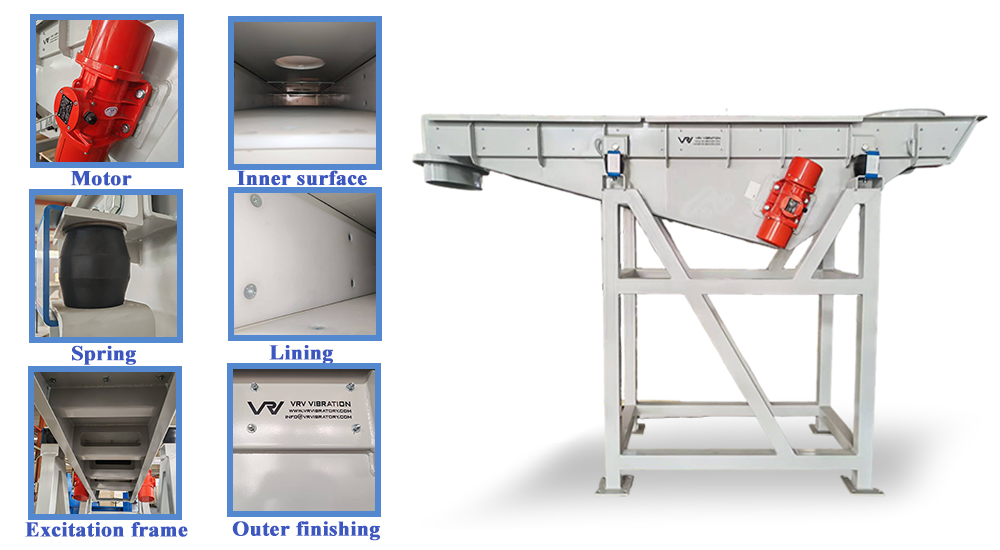
Motor vibrating feeder details

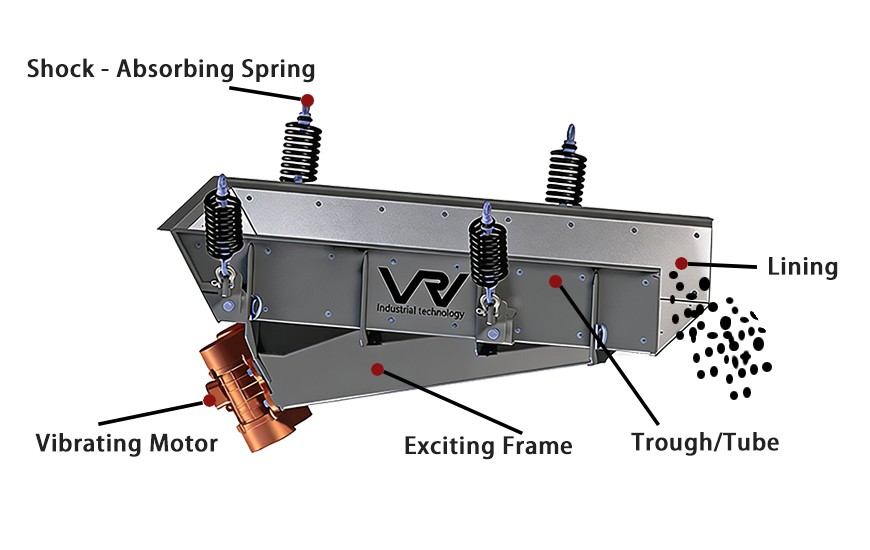
The structure of the vibrating feeder is very simple, mainly composed of a vibrating motor, a conveying trough/pipe, a vibration - exciting frame, supports, springs, liners, etc. To determine whether a vibrating feeder is of good quality, the most important thing is to look at the selection and design of the vibrating motor and the vibration - exciting frame. The vibrating feeder manufacturer needs to calculate based on parameters such as the handling capacity, bulk density, and size of the bulk materials to select a suitable vibrating motor and design the angle, length, etc. of the vibration - exciting frame.

Trough vibrating feeder for granular materials

Vibrating Motor

The vibrating motor is the power core of the vibrating feeder. It usually adopts a double - output - shaft eccentric block structure. By adjusting the angle between the eccentric blocks, the magnitude of the exciting force can be changed. After being powered on, it drives the equipment to generate directional vibration, thereby propelling the materials to move forward along the trough. Its rotational speed and exciting force parameters directly determine the conveying efficiency and amplitude stability of the feeder.


Conveying Trough / Pipe

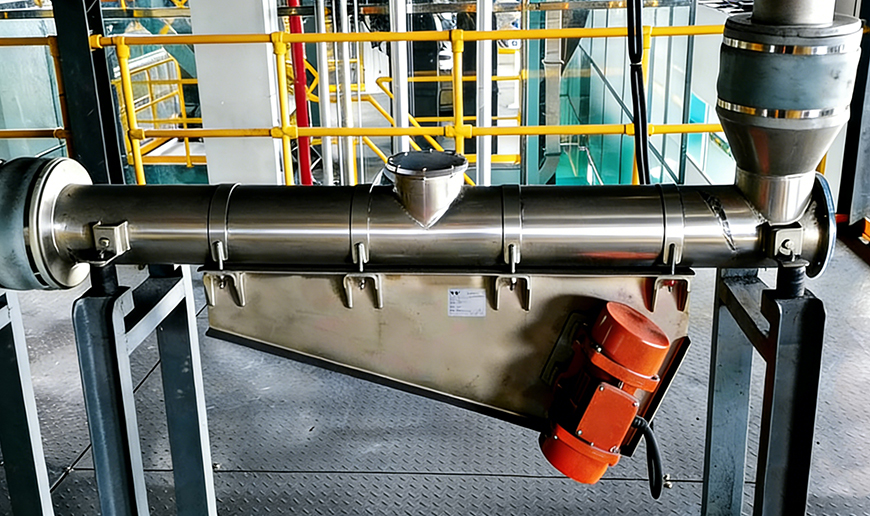
The conveying trough (or conveying pipe) is the material - carrying and conveying channel of the vibrating feeder. The trough body mostly has a trough - shaped or plate - shaped structure, while pipes are suitable for the closed - conveying scenarios of powders and small particles. Its shape, length, and inclination angle need to be designed according to the material characteristics and conveying requirements. During operation, it reciprocates with the vibration system, and realizes continuous conveying by means of the throwing or sliding of the materials. Some trough bodies are designed to be segmented for easy installation and maintenance.


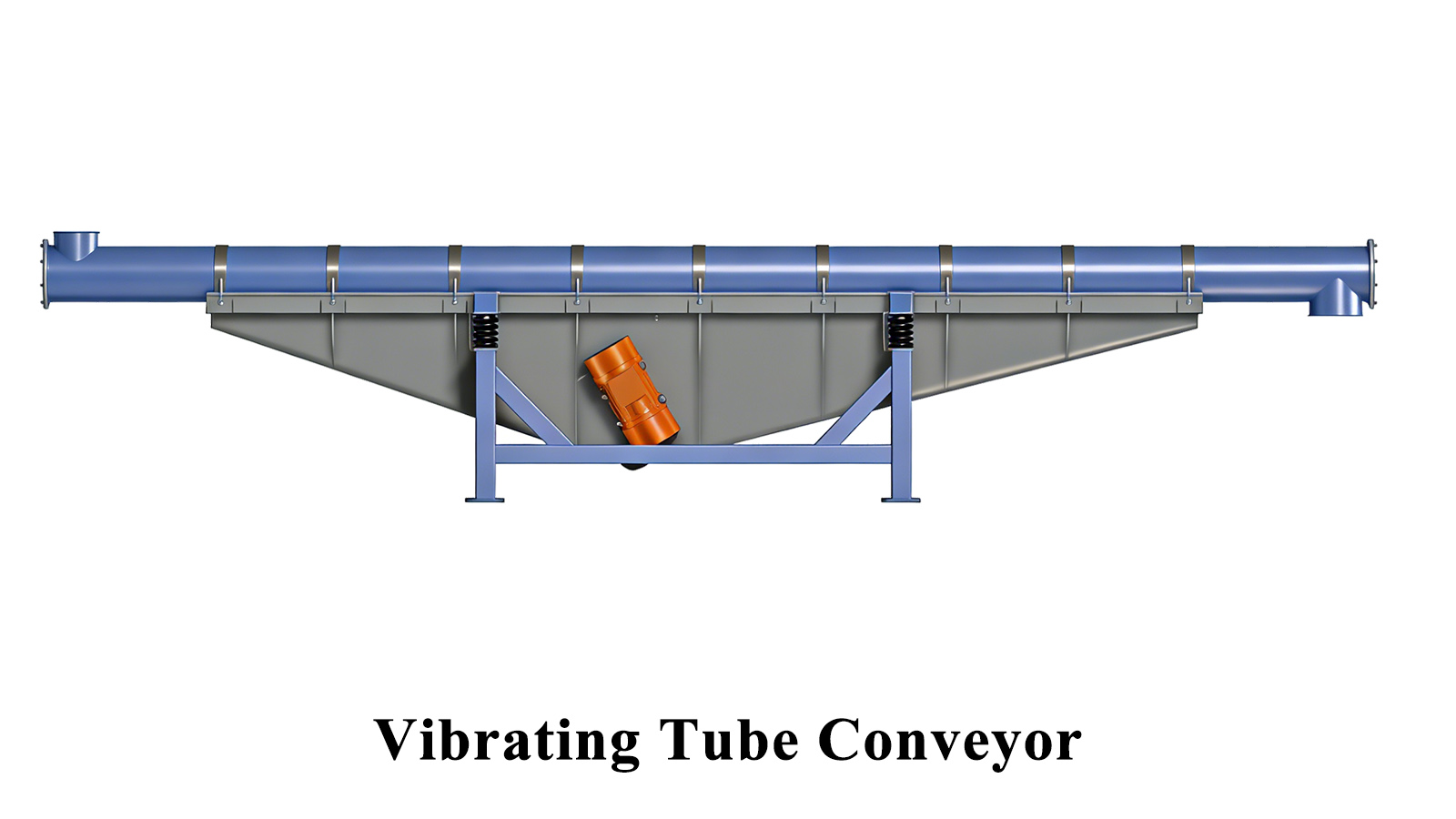
Tube vibrating conveyor


Vibration - exciting Frame

The vibration - exciting frame is the force - transmission and connection component of the vibrating feeder. It is generally rigidly connected to the vibrating motor and the conveying trough. Its function is to evenly transmit the exciting force generated by the vibrating motor to all parts of the conveying trough, ensuring that the entire trough body vibrates synchronously and avoiding local stress concentration. At the same time, it can also play a role in fixing the vibrating motor, ensuring the installation stability of the motor under high - frequency vibration conditions.


Support

The support is the support and installation foundation of the vibrating feeder. It is mainly used to fix the equipment on the foundation or frame. Its structural form needs to match the overall weight and vibration characteristics of the feeder. It is usually designed as a welded steel or cast - steel structure, having sufficient strength and stiffness to withstand the dynamic load during the operation of the equipment. Some supports can also adjust the height and inclination angle to meet different installation and conveying requirements.


Spring

The spring is a key component for vibration isolation and buffering of the vibrating feeder. It is installed between the support and the vibration - exciting frame (or conveying trough), and is mainly divided into types such as spiral springs and rubber springs. During operation, the spring can not only support the self - weight of the equipment, but also absorb vibration energy, reduce the transmission of equipment vibration to the foundation, prevent resonance from occurring, and at the same time, through its own elastic deformation, assist in maintaining the stable amplitude of the vibration system.


Liner

The liner is a protective and wear - resistant component laid on the inner wall of the conveying trough. Its materials are mostly wear - resistant steel plates, polyurethane, rubber, and other wear - resistant and impact - resistant materials. Its function is to protect the conveying trough body from the direct scouring and wear of the materials, and extend the service life of the trough body. In addition, liners of different materials can also adjust the friction coefficient between the materials and the trough body, optimize the conveying speed and fluidity of the materials, and prevent the materials from adhering to the trough wall.


VRV, a professional vibrating feeder manufacturer in China, customize vibrating feeders according to your requirement. Contact us to get a best quotation.

Vibrating Feeder Types Classification & Applications

A vibrating feeder is a critical, high-efficiency material handling machine designed to continuously and evenly convey bulk, granular, or powdered materials—such as ores, cement, grains, or chemical raw materials—from hoppers, silos, or bins to downstream processing equipment like crushers, screens, or mixers. Although the structure of the vibrating feeder is quite simple, it can vary greatly depending on different application scenarios. This article will take you through the types of vibrating feeders.


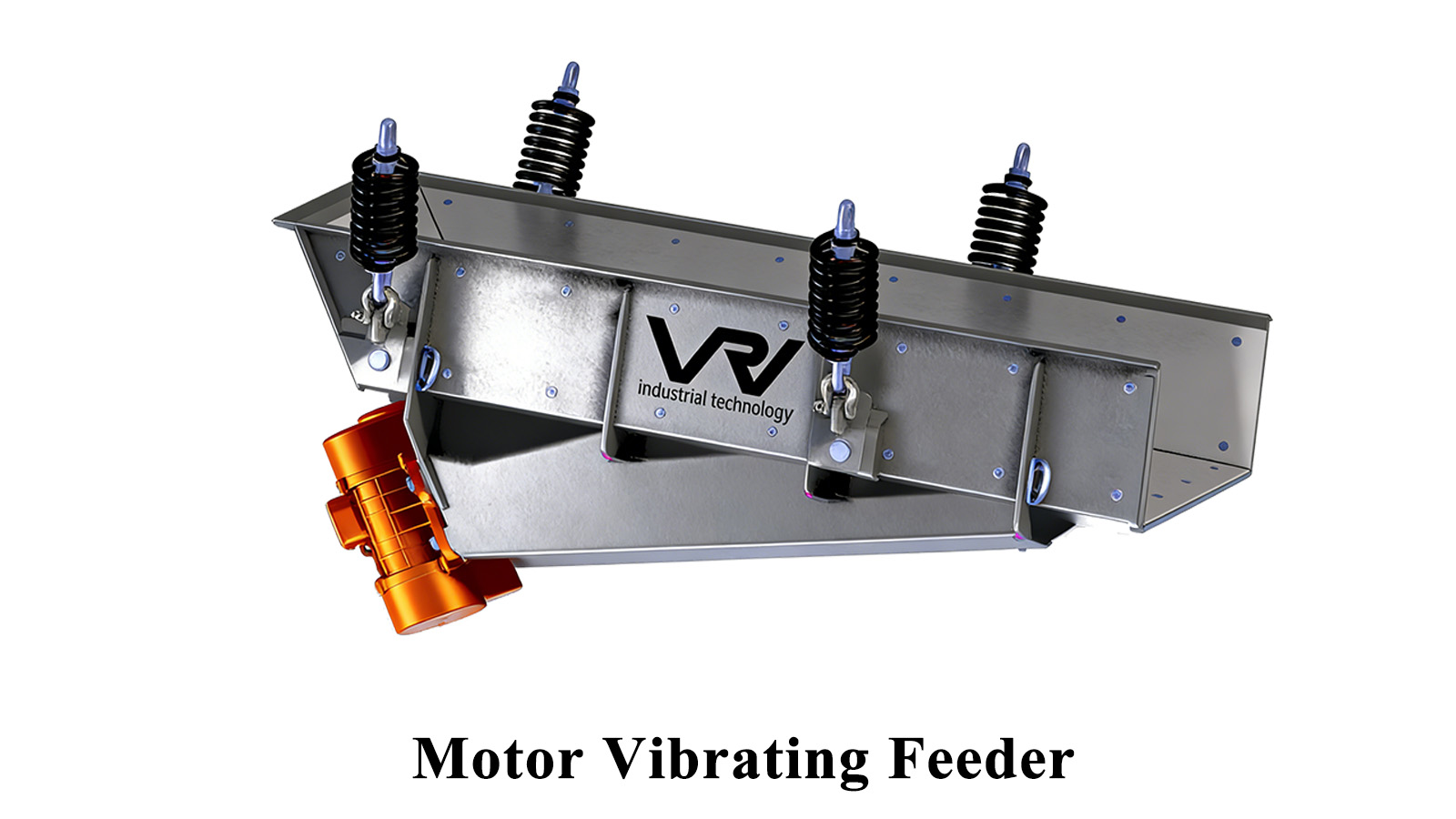
1. Motor Vibrating Feeder

The motor vibrating feeder is a high-efficiency industrial machine that uses vibration motors as the excitation source to convey bulk materials. It uniformly, continuously, and quantitatively feeds loose materials such as blocks, granules, and powders from storage bins or hoppers to downstream equipment like crushers, screens, or conveyors. Featuring a simple structure with core components including a trough, vibration motors, and shock-absorbing springs, it supports both suspended and seated installation for adaptability to complex working conditions. With adjustable vibration intensity and frequency via optional frequency conversion motors—it ensures stable and sensitive feeding while offering low maintenance costs and long service life. Widely applied in mining, metallurgy, coal, construction materials, chemical, and electric power industries, this reliable feeder enhances production line efficiency by preventing equipment blockages and stabilizing material flow.

Motor vibrating feeder for bulk materils

Features

1. Large feeding capacity

2. Simple structure & easy maintenance

3. Strong adaptability

4.Low energy consumption


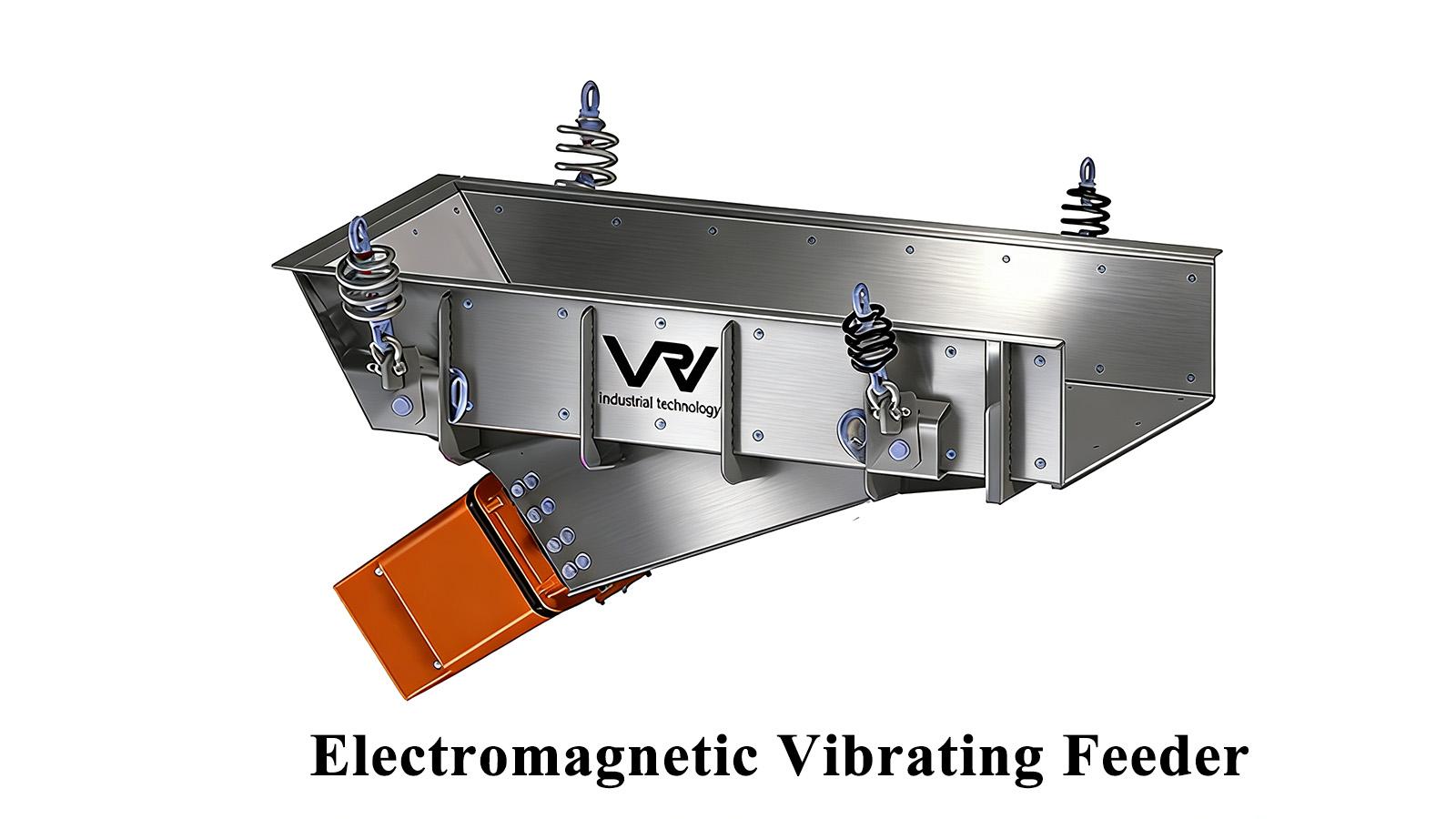
2. Electromagnetic vibrating feeder

The electromagnetic vibrating feeder is an automated feeding machine that drives the tray or tube to vibrate reciprocally relying on an electromagnetic vibrator. It can uniformly, quantitatively and continuously convey bulk, granular or powdered materials from the storage bin to the receiving device. It features a simple structure, no need for lubrication, low energy consumption, and stepless adjustment of the feeding amount. It can achieve automatic control of the production process and is widely used in various industries such as mining, metallurgy, coal, chemical engineering, electric power, and grain.


Electromagnetic vibrating feeder for bulk materials handling

Features

1. Precise feeding, stepless adjustment of output.

2. Energy-efficient, low power consumption.

3. Simple structure, easy installation and maintenance.

4. Gentle material handling, low breakage rate.

5. Low noise and dust, eco-friendly operation.

6. Fast start-stop response, suitable for automated systems.

7. No wearing parts, long service life.


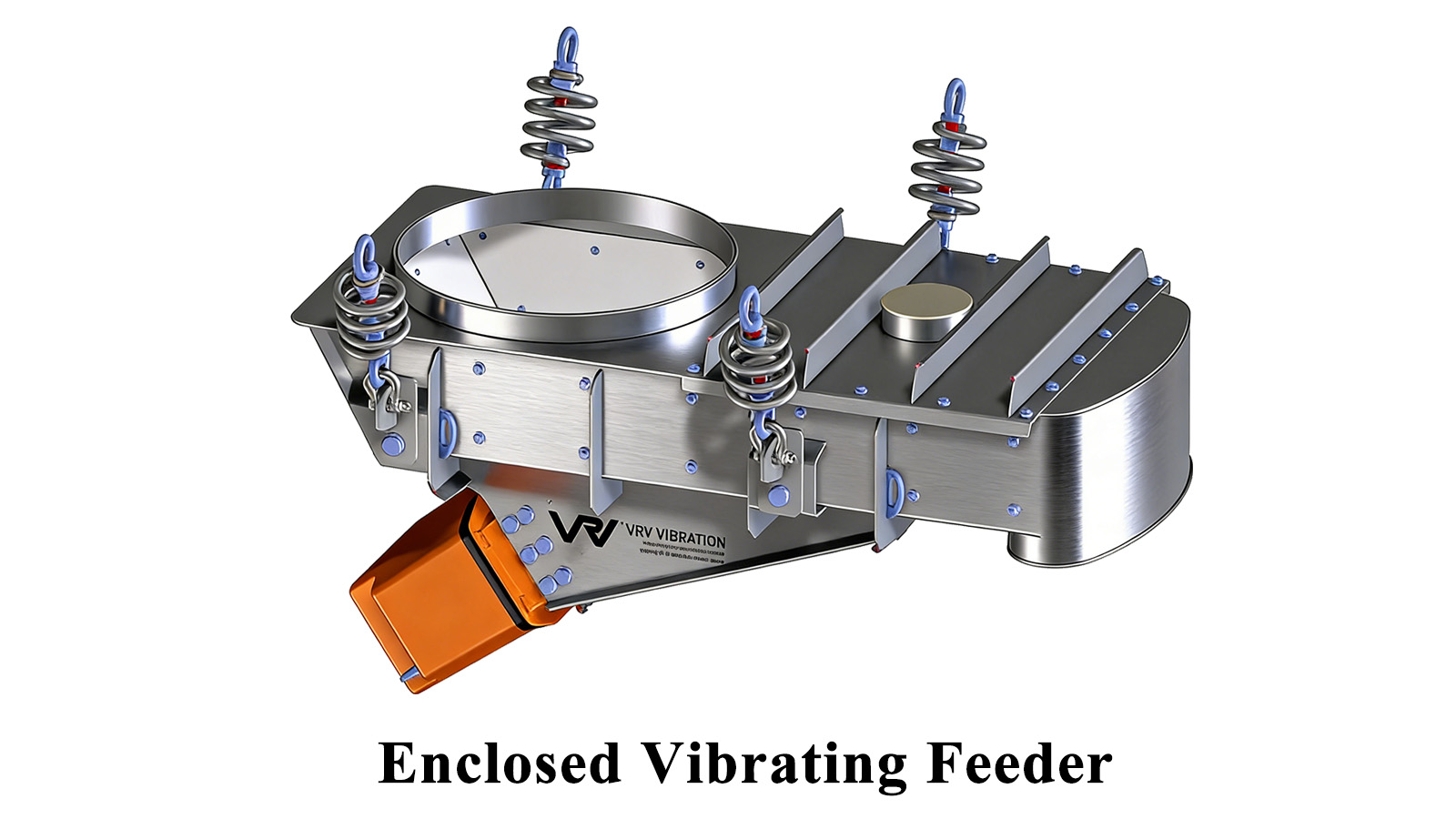
3. Enclosed Vibrating Feeder

The biggest difference between the closed - type vibrating feeder and the open - type vibrating feeder lies in whether it has a closed trough structure. The closed - type vibrating feeder has a sealed trough that can completely enclose the trough and the material - conveying area. This can effectively prevent dust from flying during material transportation, reduce noise diffusion, and avoid external impurities from mixing into the materials. It is suitable for scenarios in mining, chemical industry, building materials, etc., where requirements for environmental cleanliness, material purity, or noise control are high. The closed - type vibrating feeder can use either a vibrating motor or an electromagnetic vibrator as the excitation source to provide power for the vibrating transportation of materials.

Closed - type Vibrating Feeder Dedicated for Dust Materials

Features

1. Sealed structureDust/leakage prevention

2. Stable feedingUniform & continuous delivery

3. Low energy consumptionHigh-efficiency, low power loss

4. Strong adaptabilityMulti-material compatibility

5.Easy maintenanceFew wearing parts, easy repair


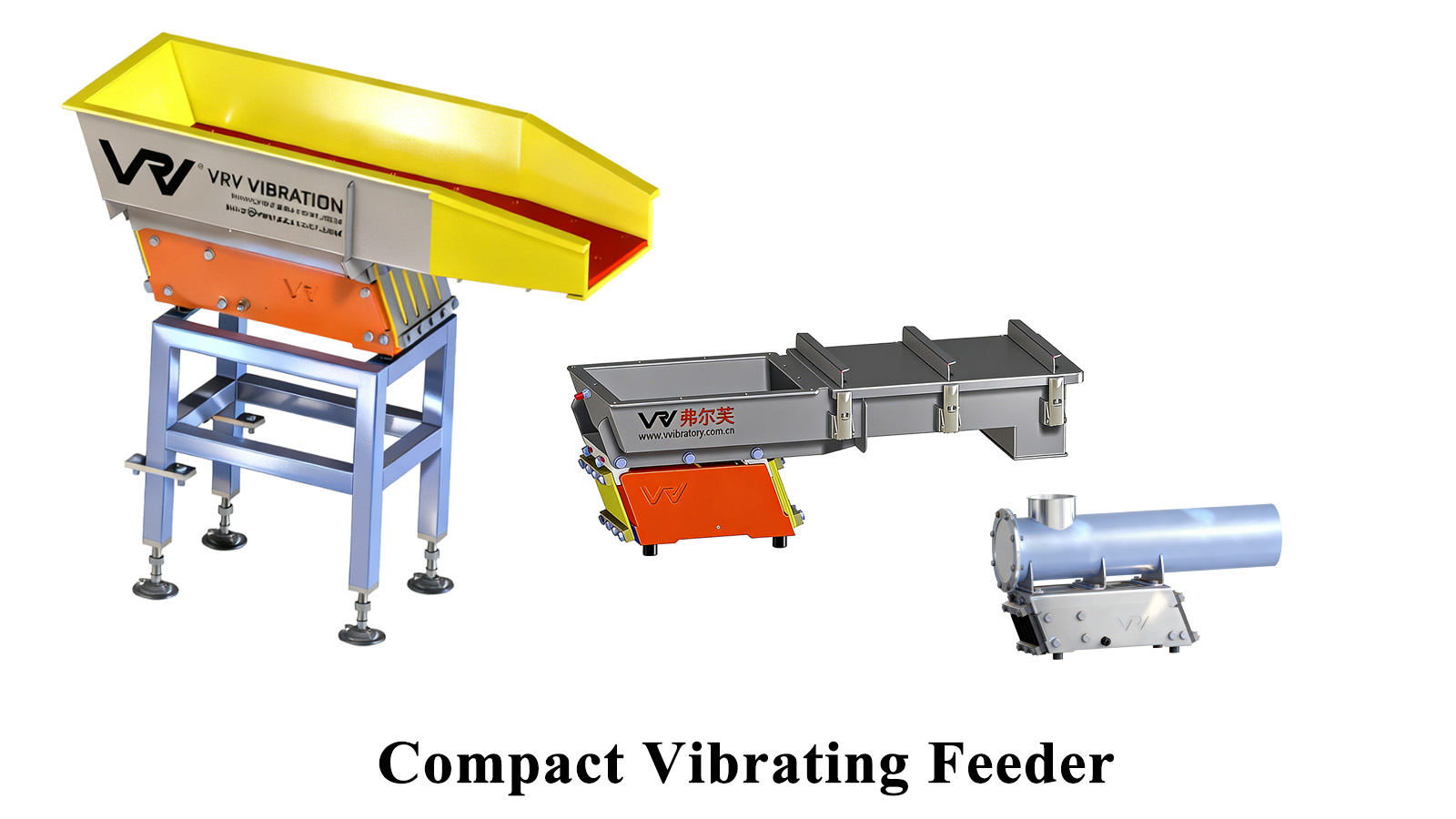
4. Compact Vibrating Feeder

The compact vibrating feeder is a material - conveying device with a small size and a compact layout. It is often equipped with a pedestal - type electromagnetic vibrator as the power source. Through vibration, it can uniformly and continuously feed materials such as granules and powders. It is suitable for production line scenarios with limited space. It has the characteristics of flexible installation, low energy consumption, and controllable feeding accuracy. It is widely used in the material pre - treatment or production transfer links of industries such as mining, chemical engineering, and food.Compact vibrating feeder for powder and granule materials

Features

1. Pedestal - mounted and no additional support is required.

2. Without rotating parts, it has a long lifespan and is maintenance - free.

3. With a compact structure, it takes up little space and is easy to operate.

4. Stable operation

5. High control accuracy and can start and stop without delay.

6. Low noise and low power consumption.


5. Vibrating Tube Conveyor

The Vibrating tube conveyor is a continuous feeding machine powered by vibration. Its core components include a sealed tubular trough, a vibrating motor (or exciter), an elastic support device, etc. The directional exciting force generated by the vibrating motor makes the powdered, granular or small - sized bulk materials in the tubular trough body perform continuous throwing or sliding movements, thus achieving smooth transportation and quantitative feeding from the feed inlet to the discharge outlet. It inherits the advantages of tubular equipment such as dust - tight sealing, a compact structure, and a small footprint. At the same time, due to its vibration - driven characteristics, material blockage is less likely to occur. Moreover, the feeding amount can be precisely controlled by adjusting the vibration frequency or amplitude. Compared with the screw - type tubular feeder, it has no internal rotating parts (such as screw blades), resulting in less wear and easier maintenance, making it more suitable for conveying materials that are prone to adhesion and blockage.

vibrating tube conveyor for bulk material conveying

Features

1. Continuous feeding: Provides continuous material feeding.

2. Sealed design: Keeps dust in and is dust - tight.

3. Compact structure: Occupies little space.

4. Vibration - driven: Reduces material blockage.

5. Precise control: Adjusts feeding amount via vibration.

6. Low - wear: No internal rotating parts, less wear.

7. Easy maintenance: Simple to maintain.


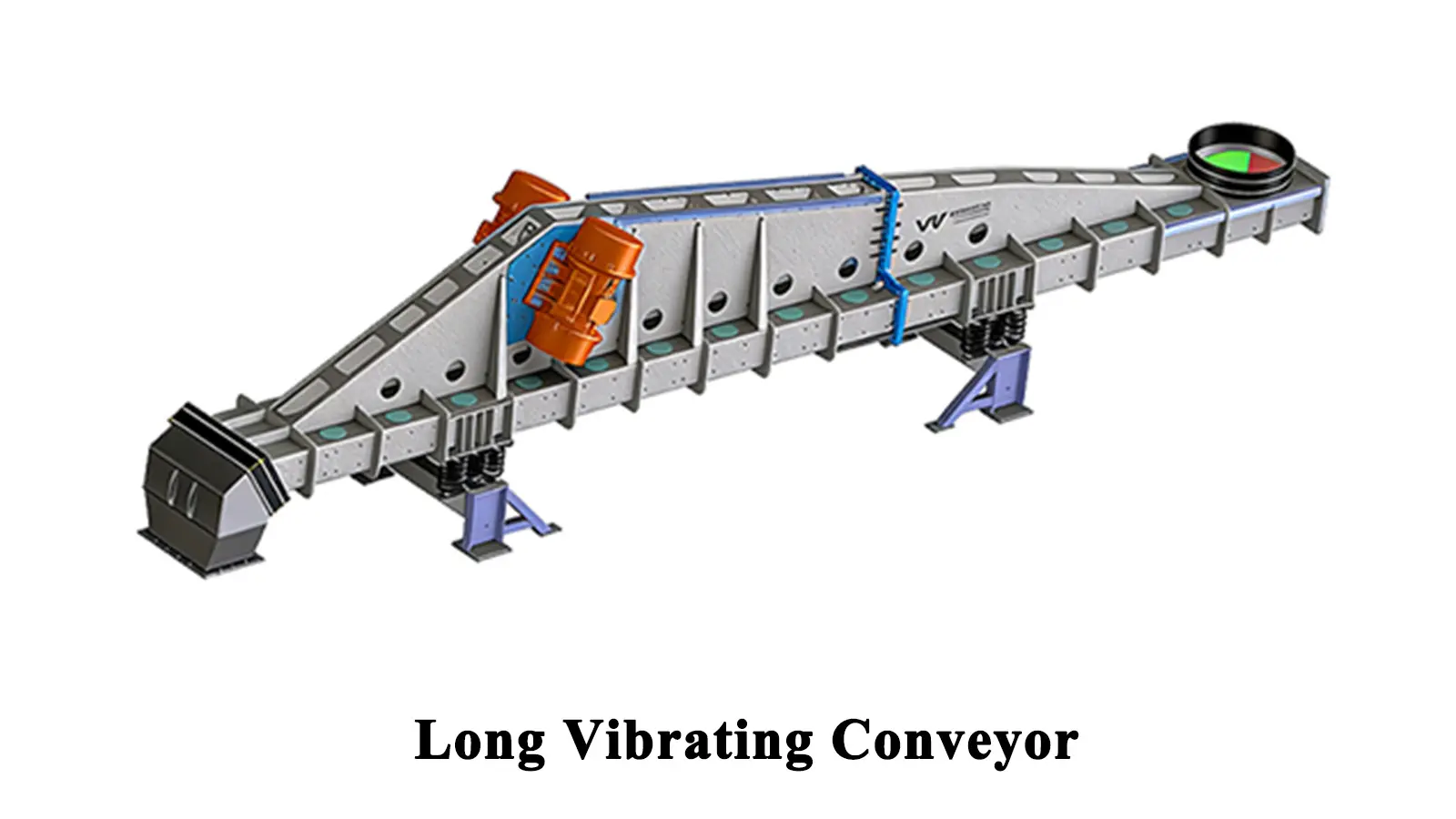
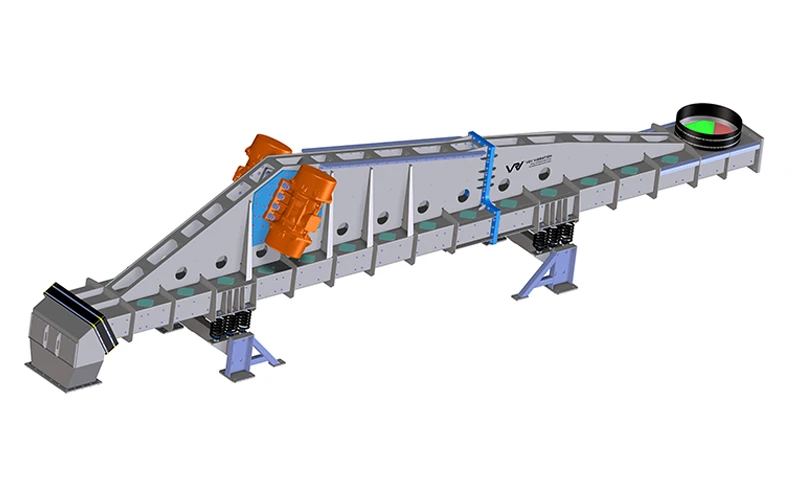
6. Long Vibrating Conveyor

Long Vibrating Conveyor is a high-efficiency long-distance conveying equipment designed for horizontal and slightly inclined transportation of powder, granular and bulk materials. Driven by vibration motors, it delivers stable and uniform material flow with low noise and easy maintenance. Equipped with a fully enclosed structure, it effectively avoids dust spillage and material contamination, and is widely applied in mining, building materials, chemical, food and other industries. We provide customized models with different lengths, materials (mild steel, stainless steel 304/316L) and conveying capacities to meet various working conditions.

long vibrating conveyor for long-distance bulk material conveying

Long Vibrating Conveyor for Long-Distance Bulk Material Conveying

Features

1. Suitable for long-distance horizontal and slightly inclined material conveying.

2. Ensures stable and uniform material flow with low operation noise.

3. Fully enclosed structure avoids dust spillage and material contamination.

4. Applicable to various powder, granular and bulk materials in multiple industries.

5. Customizable lengths, sizes and materials for different working conditions.


7. Bidirectional Vibrating Conveyor

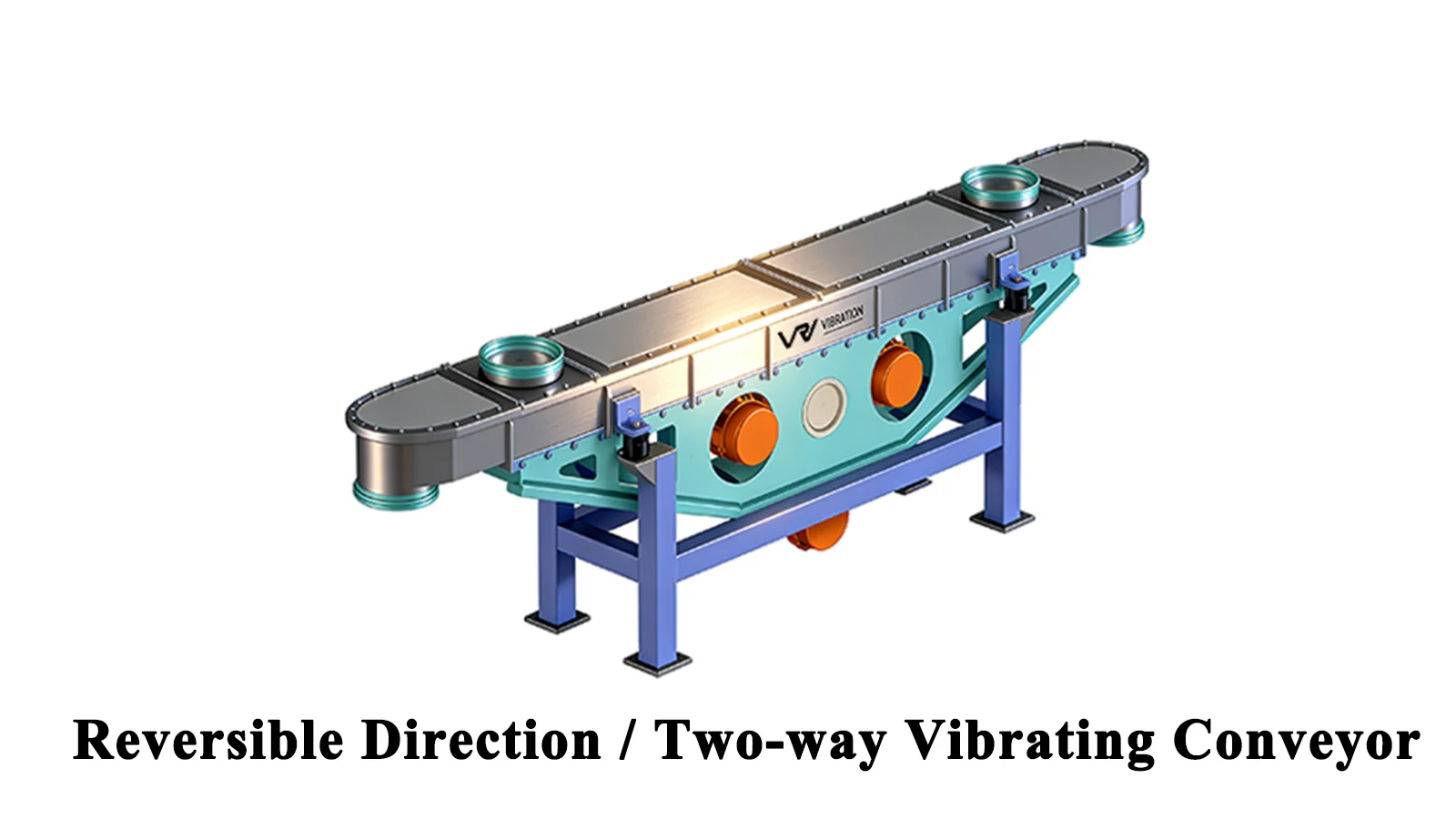
Two-way Vibrating Conveyor is a high-efficiency directional feeding equipment designed with two discharge outlets. It can flexibly switch between two different conveying directions according to actual production needs, while only conveying materials to one direction at a time. Driven by electromagnetic or vibration motors, it ensures stable, uniform and adjustable material flow, effectively coordinating material supply between different production links or processing equipment. With a compact and reasonable structure, it is widely used in mining, metallurgy, building materials, chemical industry, grain and other bulk material handling systems.

two-way vibrating feeder with dual discharge outlets for directional material feeding

Two-way Vibrating Feeder with Dual Discharge Outlets for Directional Material Feeding

Features

1. Equipped with two discharge outlets and supports flexible direction switching.

2. Conveys materials to only one direction at a time for stable and accurate feeding.

3. Provides uniform and adjustable material flow with reliable and smooth operation.

4. Compact structure saves layout space and optimizes production system configuration.

5. Suitable for powder, granular and block bulk materials in various industrial fields.


If you want to know more about Vibrating Feeder, please click here to download VRV product catalog.

Vibrating Feeder vs Vibrating Conveyor Your Go-To Guide for Industrial Material Handling

When it comes to industrial material handling, two pieces of equipment stand out as the backbone of efficient operations: vibrating feeders and vibrating conveyors. As a trusted supplier specializing in both devices, we understand that choosing the right one for your application is critical to optimizing productivity, reducing waste, and lowering operational costs. Whether you’re in the chemical, food, pharmaceutical, laboratory, or energy materials industry, knowing the key differences between these two core products will help you make an informed decision—while leveraging their unique strengths to streamline your processes.


Many industrial buyers confuse vibrating feeders and vibrating conveyors, often selecting the wrong equipment for their needs. In this guide, we break down the core distinctions between our flagship vibrating feeders and vibrating conveyors, highlight their ideal use cases, and show how our customizable designs make them the perfect fit for your specific material handling requirements.

1. Our Core Products: Vibrating Feeder & Vibrating Conveyor

At the heart of our material handling solutions are two essential devices: vibrating feeders and vibrating conveyors. Both are engineered to handle a wide range of materials—from fine-grained powders to bulk particles—but serve distinct purposes, with design features tailored to their unique functions. Below, we define each product and its role in your production line.

a. Vibrating Feeder: Precision Dosing & Controlled Feeding

vibrating feeder with customizable trough for precision material dosing and feeding

high-precision vibrating feeder, driven by compact electromagnetic vibrator, is designed for accurate dosing, feeding and fine-grained material handling

Our vibrating feederis a precision-engineered device designed to meter, dose, and feed materials with exceptional accuracy. It acts as the “control center” of your material handling system, transferring materials from a hopper, silo, or storage unit to other equipment (e.g., mixers, crushers, or vibrating conveyors) at a regulated rate. Built with compact, space-saving designs, our vibrating feeders are paired with our electromagnetic vibrators—delivering stepless adjustable vibration to ensure consistent, waste-free feeding.


Key features of our vibrating feeders include customizable troughs & tube (carbon steel for chemical industry applications, stainless steel for food/pharmaceutical/hygienic needs), low energy consumption, and easy integration into small-scale or automated production lines. They excel at handling fine-grained materials, powders, and small granules—making them ideal for precise dosing in laboratory R&D, pharmaceutical production, and chemical additive handling.

b. Vibrating Conveyor: Continuous Long-Distance Transport

Industrial vibrating conveyor for long-distance bulk material transport and automated production lines

vibrating conveyor ideal for continuous, long-distance transportation of bulk materials in various industrial applications

Our vibrating conveyoris a robust, high-capacity device designed to move materials over long distances—from one stage of your production line to another. Unlike vibrating feeders, its primary focus is continuous transport, not dosing accuracy. Using powerful vibration (paired with durable troughs or tubes), our vibrating conveyors propel materials seamlessly, handling higher volumes and longer distances than our vibrating feeders.


We offer customizable vibrating conveyors to fit your industry needs: carbon steel troughs for heavy-duty chemical or industrial use, stainless steel for hygienic food/pharmaceutical applications, and adjustable lengths to match your production space. They are perfect for moving bulk materials, larger particles, or high-volume loads—such as bulk chemicals, energy materials (battery powders), and finished products—across your facility.

2. Key Differences Between Our Vibrating Feeder & Vibrating Conveyor

While both devices use vibration to handle materials, their core functions, designs, and capabilities set them apart. Below is a clear breakdown of the most important distinctions—tailored to our products and your industry needs.

Small electromagnetic vibrating feeder for precision dosing and compact material handling

Compact electromagnetic vibrating feeder ideal for accurate, controlled feeding in food, chemical, pharmaceutical and laboratory applications

a. Primary Function

Vibrating Feeder: Focuses on precision dosing and controlled feeding. It regulates the flow rate of materials to ensure consistency in downstream processes. For example, our vibrating feeder might feed fine chemical powders into a mixer at a precise rate, or deliver small batches of pharmaceutical powder for laboratory testing.


Vibrating Conveyor: Focuses on continuous long-distance transport. It moves materials from point A to point B (often 5+ meters) without prioritizing dosing. For instance, our vibrating conveyor could transport bulk chemical materials from a storage area to a packaging station, or move battery powders through an automated production line.

Tubular electromagnetic vibrating feeder for precise material dosing in industrial applications

Tubular electromagnetic vibrating feeder designed for clean, accurate and enclosed material feeding

b. Design & Size

Vibrating Feeder: Compact and space-saving, designed for tight production spaces or laboratory settings. Base-mounted and paired with our EV or BM series electromagnetic vibrators, it features shorter troughs (a few feet at most) that can be customized by material (carbon steel/stainless steel) and size to fit your needs.


Vibrating Conveyor: Larger, more robust, and longer (often several meters). It features an extended trough/tube and a powerful vibration drive to propel materials over distance. Its design prioritizes durability and high-volume handling, making it bulkier than our vibrating feeders but ideal for large-scale operations.

Trough type electromagnetic vibrating feeder for precision material dosing and feeding

Trough type electromagnetic vibrating feeder with customizable stainless steel or carbon steel trough, ideal for accurate and stable material handling in food, chemical, pharmaceutical and laboratory industries

c. Material Handling Capabilities

Vibrating Feeder: Specializes infine-grained materials, powders, and small granules(e.g., spices, pharmaceutical powders, chemical additives, battery materials). It excels at small-batch, precise dosing and can handle sensitive materials without contamination (thanks to food-grade 316L stainless steel trough options).


Vibrating Conveyor: Handlesbulk materials, larger particles, and high volumes(e.g., bulk chemicals, aggregates, finished products). It can move materials over long distances and is built to withstand abrasive or heavy materials (with carbon steel troughs for industrial use).

d. Vibration & Control

Vibrating Feeder: Powered by our EV or BM series electromagnetic vibrator, it offersstepless adjustable vibration amplitude and frequency. This allows operators to fine-tune the feed rate for maximum precision—critical for applications like laboratory testing or pharmaceutical dosing.
Vibrating Conveyor: Uses a more powerful vibration drive (motor or heavy-duty electromagnetic) to propel materials. While some models offer speed adjustment, the focus is on continuous transport rather than precise dosing.

3. Ideal Applications: Which Product Is Right for You?

Choosing between our vibrating feeder and vibrating conveyor depends on your specific material handling needs. Below is a quick guide to help you select the perfect solution:

a. Choose Our Vibrating Feeder If:

  • You need precise dosing or metering of materials (e.g., 10g of pharmaceutical powder per minute).
  • Your operation has limited space(e.g., laboratory R&D, small-scale production lines).
  • You’re handlingfine-grained powders, sensitive materials, or small batches(food, pharmaceutical, chemical additives).
  • You wantlow energy consumption and easy integrationwith other equipment.

Trough type vibrating conveyor for industrial bulk material transportation

Trough type vibrating conveyor designed for stable, long-distance and efficient material handling in automated production lines

b. Choose Our Vibrating Conveyor If:

  • You need to move materials over a long distance(e.g., from a hopper to a packaging line).
  • Your operation requires high-volume material handling(bulk chemicals, energy materials, aggregates).
  • You’re handling bulk materials or larger particles that don’t require precise dosing.
  • You need seamless, automated transport in a large-scale production line.

Tubular vibrating conveyor for enclosed industrial material transport and bulk handling

Tubular vibrating conveyor – enclosed design for clean, efficient long-distance transport of bulk or fine-grained materials, complementary to our vibrating feeders in industrial material handling systems

4. Why Choose Our Vibrating Feeder & Vibrating Conveyor?

As a leading supplier of vibrating feeders and vibrating conveyors, we prioritize customization, durability, and performance. Our products are engineered to fit your industry’s unique needs: carbon steel troughs for chemical applications, stainless steel for hygienic industries, and compact designs for laboratory use. Paired with our electromagnetic vibrators, our vibrating feeders deliver unmatched precision, while our vibrating conveyors ensure reliable, long-distance transport.


Whether you need a small, precise vibrating feeder for laboratory testing or a robust vibrating conveyor for bulk chemical transport, we have the solution to optimize your material handling processes.

5. Get the Right Equipment for Your Operation

Understanding the difference between our vibrating feeder and vibrating conveyor is the first step to streamlining your material handling. Both are core products in our lineup, designed to work together or independently to meet your specific needs. If you’re unsure which device is right for you, our team can help you assess your material type, production space, and goals to recommend the perfect solution.


Invest in the right vibrating feeder or vibrating conveyor today—and experience the difference in efficiency, precision, and reliability for your industrial operations.

Dry Electrode Process The Key to Mass Production of High-Performance Solid-State Battery

In all-solid-state batteries, the liquid electrolyte is replaced by a solid-state electrolyte membrane. Consequently, the front-end production process requires the preparation of this solid electrolyte film in addition to the traditional positive and negative electrode sheets. This process is a critical link in the battery manufacturing workflow, directly determining the performance and quality of the final cell. While the wet process currently dominates solid-state battery production lines, the dry process is increasingly becoming the mainstream direction for next-generation solid-state battery front-end technology, thanks to its combined advantages in cost, process efficiency, and material compatibility.


01. Key Upgrades in Solid-State Battery Pre-Forming Production

The manufacturing process for solid-state batteries fundamentally differs from that of traditional liquid batteries. The front-end film preparation segment is the critical, transitional phase in the battery manufacturing process. This stage directly dictates the finished cell's energy density, rate performance, and cycle life. In all-solid-state batteries, the solid-state electrolyte membrane replaces the liquid electrolyte. Therefore, front-end preparation must include not only the conventional positive and negative electrode sheets but also the solid-state electrolyte film. This fundamental change introduces new challenges and simultaneously presents opportunities for process upgrading.

dry electrode sheet

02. Technological Transformation: The Leap from Wet to Dry Process

Current solid-state battery front-end preparation processes are mainly categorized into two technical routes: wet and dry. The wet process still relies on the solvent system of traditional liquid batteries, where electrode or electrolyte materials are mixed with a binder to form a slurry, coated, and then dried to complete film formation.

While this process is relatively mature, it has inherent drawbacks: it requires the use of large amounts of toxic organic solvents (such as NMP), necessitates high-energy-consumption steps for drying and solvent recovery, and restricts the application of certain cutting-edge materials sensitive to solvents.

In contrast, the dry process innovates electrode manufacturing by eliminating the use of solvents and the subsequent drying step. The dry process relies more heavily on high-shear dry mixing and fibrillation equipment to achieve uniform material dispersion and pre-forming, followed by multi-roll pressing to complete the film formation directly.


The core advantages of dry film formation technology are evident across three dimensions:

• Cost Efficiency: By omitting the coating, drying, and solvent recovery stages, equipment investment is lower, energy consumption is reduced, and overall cell manufacturing costs can be reduced by approximately 18%.

• Performance Enhancement: The dry process effectively increases the active material's compaction density, leading to an energy density increase of about 20%. SAIC Group's semi-solid-state battery, integrated into its MG4 model, has achieved a system energy density of 400Wh/kg, supporting a 12-minute fast charge for 400 km.

• Environmental and Material Compatibility: The dry process eliminates the need for toxic solvents, solving the environmental pollution issues of the traditional wet process. Concurrently, it enables the application of more cost-effective materials (such as manganese-based cathodes).


03. Technology Matrix: Diversified Paths for Dry Film Formation

Dry film formation is not a single process but a matrix encompassing various technical routes. Currently, the more representative dry electrode preparation technologies primarily include six types:

• Fibrillation Method: Uses high shear force to fibrillate the binder, enabling it to tightly encapsulate active materials and conductive agents, forming a self-supporting electrode film. This process demands extremely high shear force and temperature control capabilities from the equipment.

• Dry Spray Deposition: Utilizes charged powder, which is uniformly deposited onto the current collector under an electric field, followed by hot pressing to melt and fix the binder, forming a self-supporting film.

• Other Methods: Vapor deposition, hot-melt extrusion, direct pressing, and 3D printing are applied based on different material characteristics and application scenarios.

These different paths vary in technical principles, applicable materials, film-forming capability, and equipment complexity, and are suited for different applications such as large-scale, flexible electrodes, small-sized devices, and thick electrode sheets.


Comparison of Major Dry Film Formation Technical Routes

Technical Route

Core Principle

Applicable Scenarios

Equipment Complexity

Fibrillation Method

High shear force fibrillates binder to wrap active material

Large electrodes, all-solid-state batteries

High

Dry Spray Deposition

Electrostatic powder deposition followed by hot pressing

Flexible electrodes, complex shapes

Medium

Direct Pressing

Direct pressing and forming of powder material

Thick electrode sheets, experimental lines

Low

3D Printing

Layer-by-layer accumulation and forming

Small-sized devices, customized structures

High

The industry generally considers the Binder Fibrillation Method to exhibit superior performance stability and processability, positioning it as the emerging mainstream route.


04. Industrialization Challenges: Bridging the Gap from Laboratory to Mass Production

Despite the clear advantages of dry film formation, scaling from the laboratory to mass production faces numerous hurdles. Capacity and efficiency are paramount concerns. Dry coating capacity and speed still lag behind traditional wet processes, and uniformity and adhesion performance during wide-format spraying require significant improvement.

Coating uniformity and quality control present another major challenge. Non-uniform dry electrode coatings can create "hot spots" within the electrode, leading to accelerated battery performance degradation and potential safety risks.

Binder and material compatibility also need further optimization. Achieving uniform distribution of PTFE fibrils within the mixture while preventing damage to active material particles is essential. Furthermore, PTFE is unstable at low potentials and reacts irreversibly with lithium, which limits its application in negative electrodes.

Challenges on the equipment side are equally severe. The dry process imposes higher demands on core roller-pressing machinery. The performance and production efficiency of the calendaring machine as the core equipment are central to determining the dry process's viability for mass production.

TOB NEW ENERGY is actively working to address these challenges, aiming to control the binder content in the negative electrode to 0.7% and the positive electrode below 1.5% to achieve more efficient, low-cost film-forming performance.


05. Equipment Innovation: The Critical Force Driving Dry Process Implementation

Equipment typically spearheads the industrialization of solid-state batteries. In the realm of dry film formation, equipment innovation is the key driver for technological implementation.

• Front-End Process Equipment: Accounts for approximately 32% of the entire production line's value, including core equipment for high-efficiency mixing, material dispersion, coating, and high-shear treatment.

• Mid-End Process Equipment: Accounts for approximately 45% of the line's value, centered around high-efficiency stacking machine (25% of the line's value) and horizontal isostatic presses (13% of the line's value), covering the entire process from shaping to densification.

• Back-End Process Equipment: Accounts for approximately 23% of the line's value, including dry powder comprehensive testers and horizontal high-temperature fixture solutions for solid-state battery integrated cabinets, achieving high-voltage formation and capacity grading and assembly.


06. TOB NEW ENERGY: Providing Comprehensive Solutions from Laboratory to Mass Production

Addressing the industrialization opportunities and challenges of dry film formation technology, TOB NEW ENERGY leverages years of technical accumulation in battery manufacturing to offer customers a complete solution spanning from the laboratory to mass production.

Solutions for Laboratory-Scale Dry Electrode Lines

We provide a full suite of customized equipment and services for dry electrode experimental lines. Our developed Laboratory Jet Mill integrates miniaturization, intelligence, and high precision, suitable for experimental-grade powder preparation needed for the fibrillation of lithium battery dry electrode materials. The Lab Dry Electrode Film Forming Machine is a laboratory dry electrode research equipment that can be used for the powder to film forming process.

Laboratory Jet Mill

Lab Dry Electrode Film Forming Machine

Solutions for Pilot-Scale Production

We offer Dry Electrode Film Forming Machines that support various production line requirements, including equipment for GWh-level mass production capacity. Through precise tension control and thickness adjustment, we can achieve the preparation of dry electrode sheets as thin as 27μm or even thinner.

Dry Electrode Film Forming Machines

Solutions for Industrial Mass Production

For industrial mass production needs, we provide complete dry electrode production line solutions. Our system covers all processes, including controllable feeding, film formation, thinning, current collector compounding, and quality inspection. Product width can reach 1000mm, with a thickness range of 40-300μm, and is compatible with 2 to 6 dry electrode sheets operating in parallel for high-efficiency production.

Our technical team deeply understands every aspect of the dry film formation process and can provide customized process optimization solutions based on the client’s specific material systems (such as graphite/silicon-carbon negative electrodes, ternary/LFP positive electrodes, and various all-solid-state electrode materials) and equipment needs. On the materials front, we support our clients with cutting-edge battery materials, including specialized binders and modified conductive agents suitable for the dry process, ensuring optimal compatibility between materials and process.