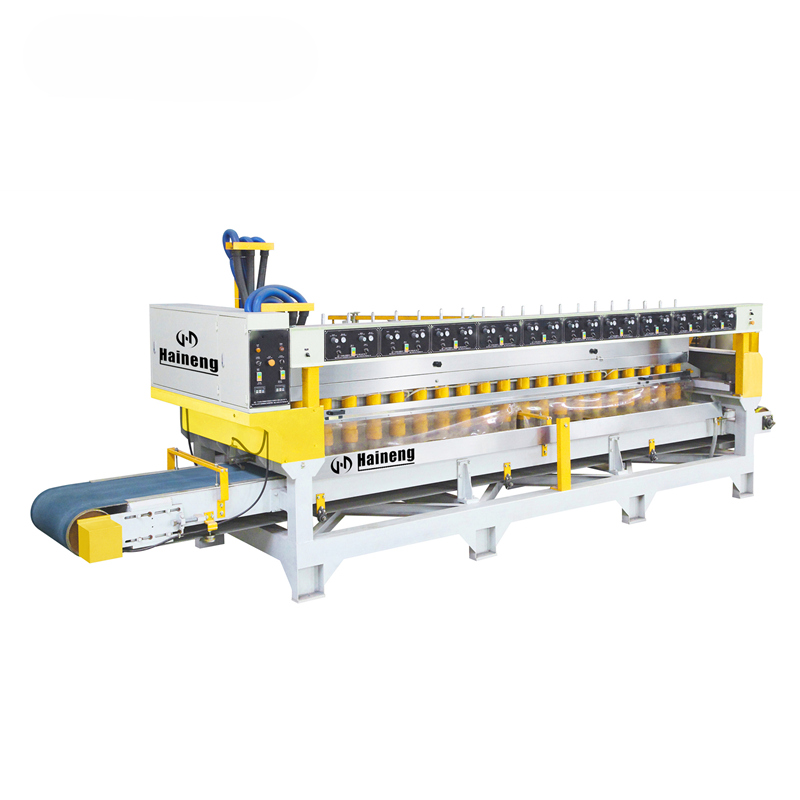
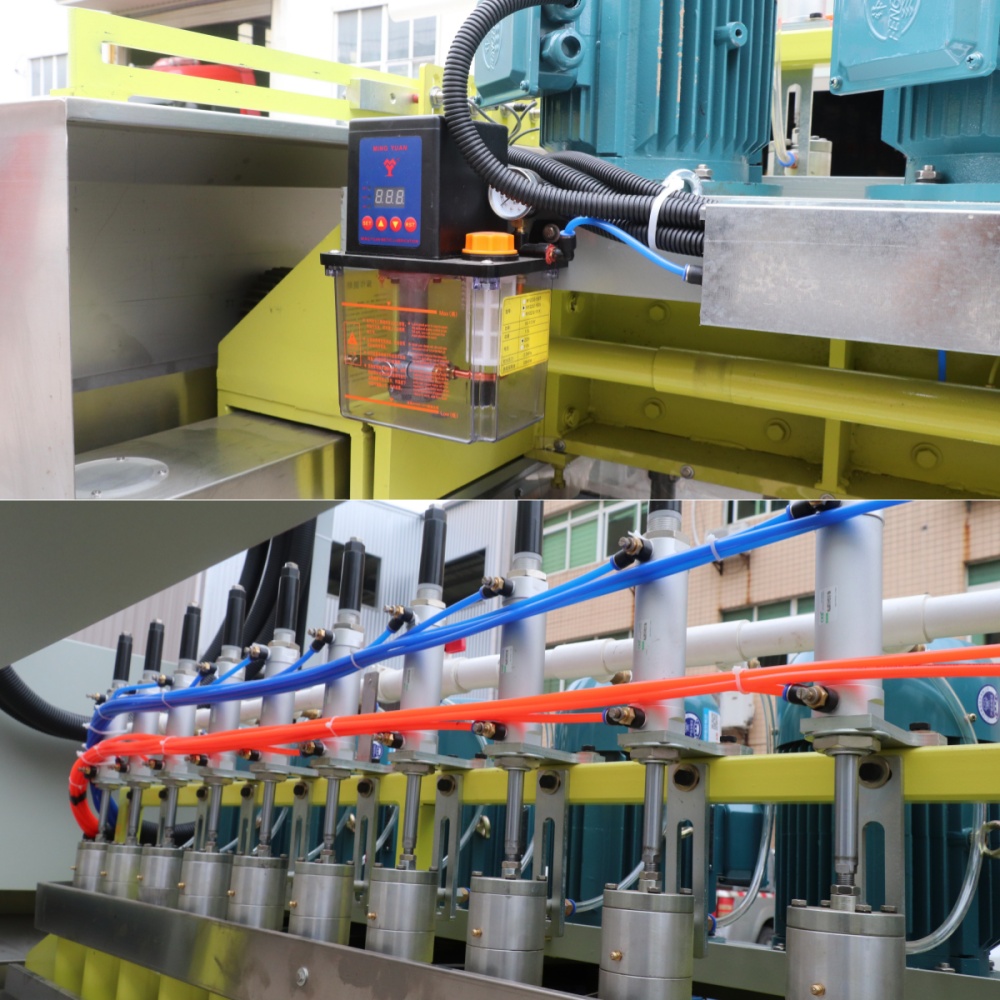
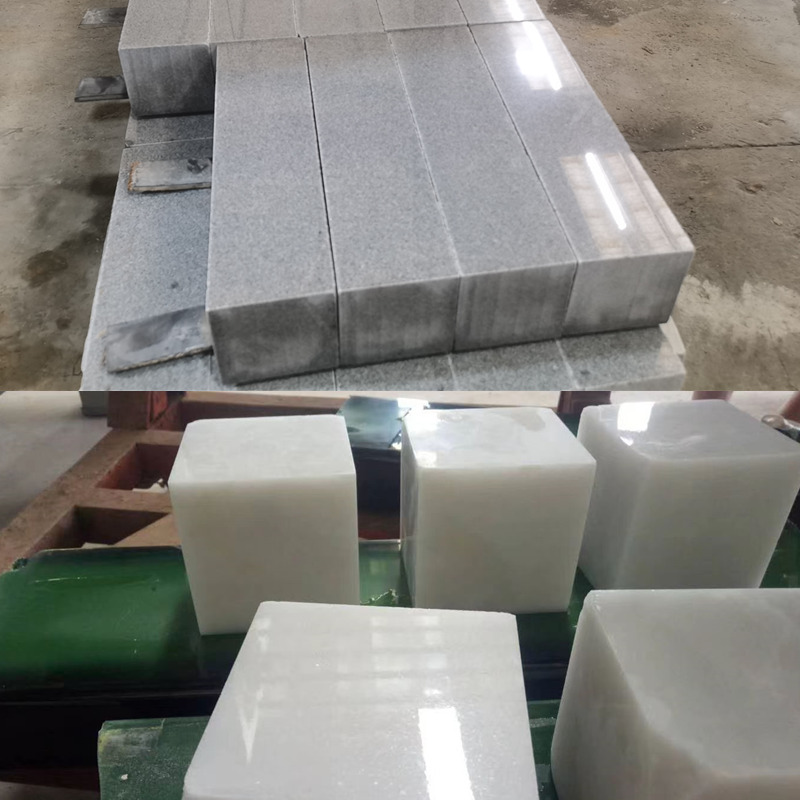
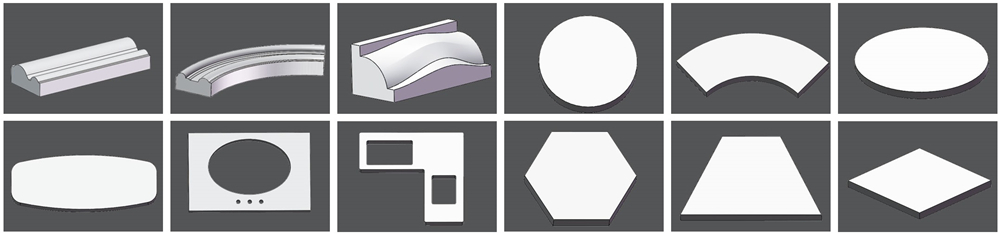
In the stone processing industry, stone polishing machine are absolute game - changers. By combining physical abrasion with chemical reactions, stone polisher enhance the gloss and smoothness of stone surfaces, a five-step process comprising ‘coarse grinding → semi-fine grinding → fine grinding → precision grinding → polishing’ resulting in a sleek and attractive finish.
The Marvels of Stone Polishing Machines
Stone polishing machines come in a wide variety,include manual polishing machine, fully automatic polishing machine and robotic polishing machine etc. Every type has its distinct design, crafted to deal with diverse polishing tasks. If you're a local artisan carefully working on a dainty stone carving, or an industrial pro managing large quantities of stone slabs, these machines are essential for achieving that flawless finish.
Discovering Polishing Techniques
The true allure of stone polishing machines is in the techniques employed. These techniques can make or break the polish. For example, lots of machines use diamond - coated pads. You start with a coarse - grit pad to smooth out any bumps or flaws on the stone's surface. Then, you gradually switch to finer - grit pads. This methodical process is crucial for attaining a sleek, uniform shine. You need to adjust the pressure and speed of these pads according to the stone type. Softer stones require a lighter touch, while harder stones can withstand a bit more force.
Machine Performance: The Heart of the Operation
When it comes to stone polishing, machine performance is super important. A well performing machine can get the job done faster and better, saving you a ton of time and money. High quality motors are the heart of these machines. They give the power needed to polish large stones without breaking a sweat. And then there are those adjustable speed settings. They're like the dials on a control panel, allowing you to fine tune the polishing process based on what you're working on.
Diverse Polishing Applications
Stone polishing machines have a wide range of applications. Stone polishing is primarily used to treat the surfaces of rough-cut slabs or shaped products following the processing of raw blocks, in order to achieve a glossy finish.They are frequently used for treating floor tiles, worktops and wall panels. Once polished, stone not only looks attractive but also becomes more durable and easier to maintain. Many artists also rely on these machines to bring out the beauty of stone carvings.
Maintaining Stone Polishing Quality
The quality of the stone polishing is what it's all about. To keep that quality high, you've got to take good care of the machine. Regular maintenance is key. Check the polishing pads often and replace them when they start to wear out. Lubricate the moving parts so everything runs smoothly. And don't forget to calibrate the sensors. All these little things add up to ensure that every stone you polish comes out looking its absolute best.
In a nutshell, if you're in the market for top - notch stone polishing machines that are great at techniques, performance, applications, and quality, click here to check out our Automatic Stone Polishing Machine. Our machines are made to meet all your stone polishing needs, turning rough stones into shiny showstoppers every single time.
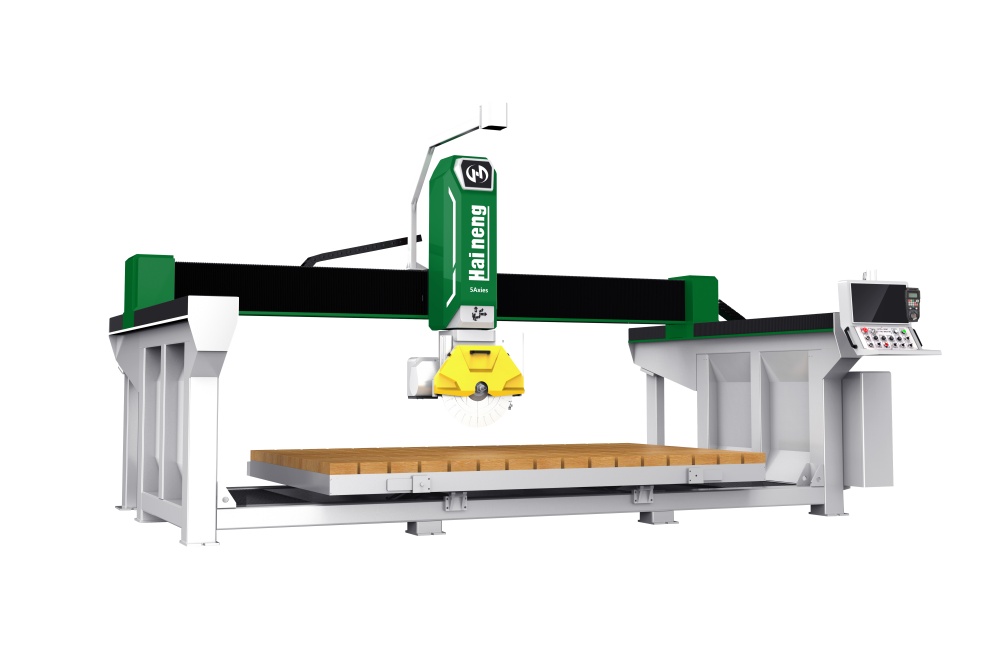
In the realm of stone processing, stone cutting bridge saware a linchpin of stone processing equipment. They've revolutionized precision stone cutting, allowing for levels of stone processing precision previously out of reach.
The Essence of Stone Bridge Cutting Machines
Stone cutting bridge saw, or simply stone bridge cutters, are engineered with a distinct bridge - like structure. This design provides stability crucial for accurate cuts. The cutting mechanism, often a diamond - tipped blade, moves smoothly along the bridge, enabling precise incisions on various stones. Whether it's a small artisanal project or large - scale industrial work, these machines are essential.
Achieving Unmatched Stone Processing Precision
Precision is the cornerstone of what stone bridge cutting machines offer. Their construction uses high - quality materials to minimize vibrations, a key factor in stone processing precision. Additionally, modern models come with advanced control systems.Some things can be manually adjusted, while others use computer numerical control for precise stone cutting. The computer numerical control is what helps to get accurate precision stone cutting. This is because the computer numerical control does the stone cutting, with precise movements.
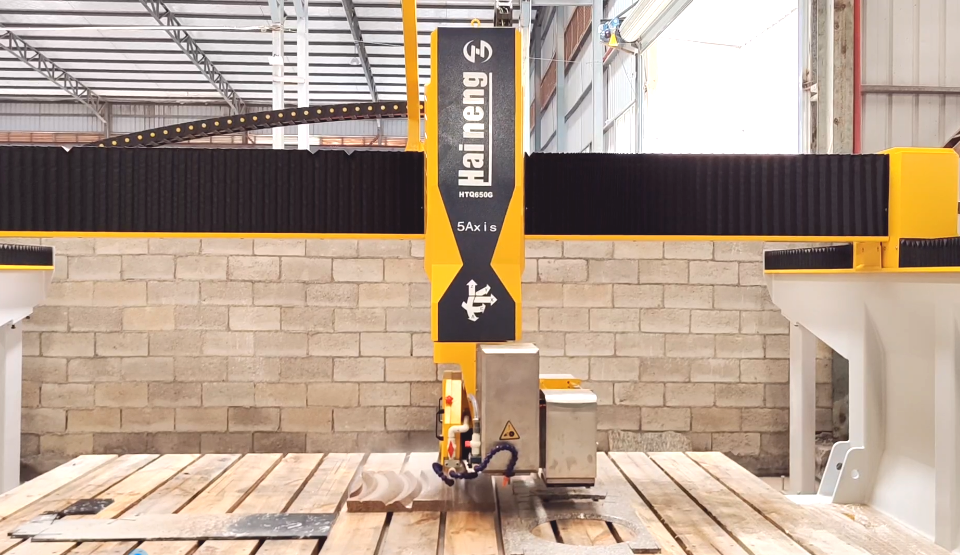
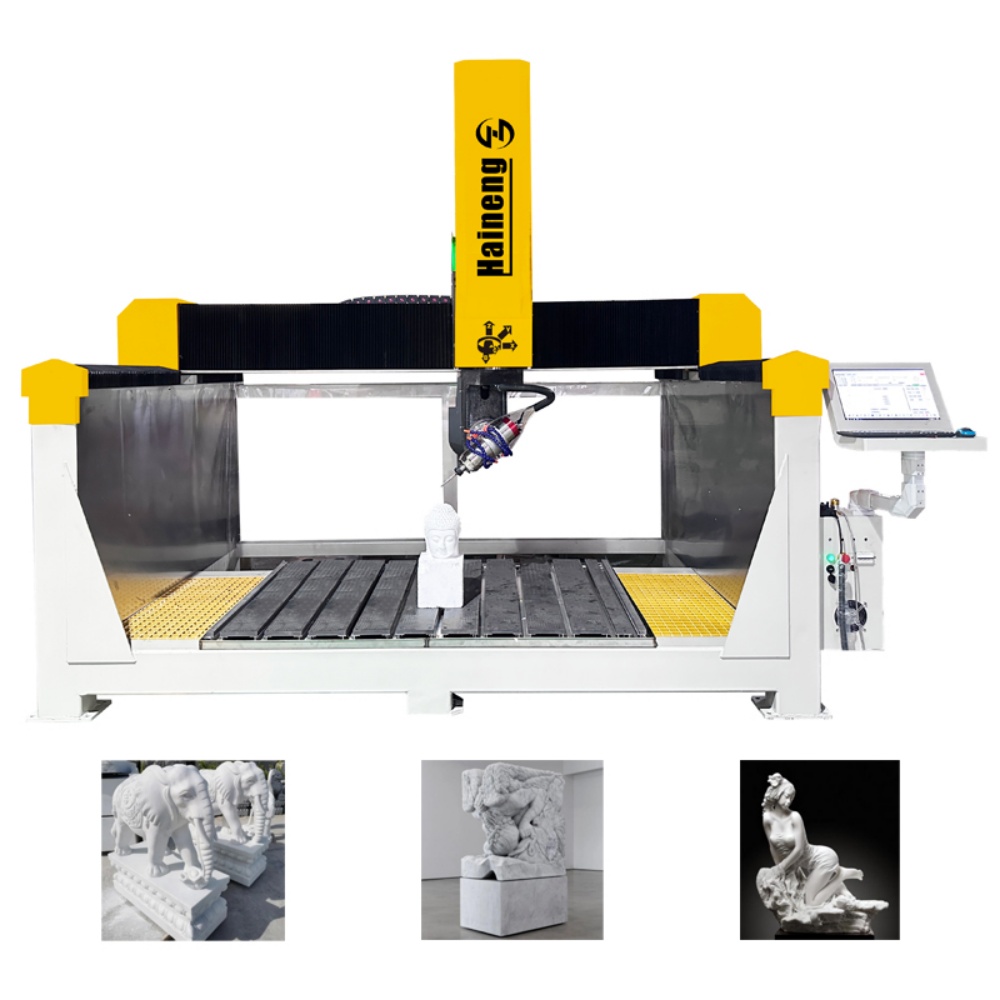
Haineng heavy-duty 5 axis cnc bridge saw, equipped with a high-precision DDX CNC system imported directly from Italy. Leveraging the spatial machining capabilities of five-axis simultaneous motion, the bridge cutting machine is specifically designed for the processing of highly complex, irregularly shaped stone. Its heavy-duty gantry structure ensures rigidity and stability during cutting, whilst the DDX system’s superior performance in toolpath generation and interpolation algorithms enables a seamless transition from 3D modelling to precision shaping, meeting the stringent requirements of the high-end stone industry for contour accuracy and surface smoothness.
Key Features for Optimal Performance
One of the primary features of stone bridge cutting machines is their cutting capacity. They can handle different stone sizes and thicknesses, from thin tiles to large granite blocks. This adaptability makes them suitable for a wide range of projects.Speed is another important aspect. While maintaining precision, these machines can cut stones at variable speeds. This allows operators to adjust according to the stone type and project requirements, enhancing overall efficiency.You need to select the stone processing equipment that suits your needs.
Choosing the Right Stone Bridge Cutter
When you are choosing a stone bridge cutting machine you should think about what you need it for. What kind of stones will you be cutting with the stone bridge cutting machine? How big is your project going to be? How precise do you need the stone bridge cutting machine to be?
If you like to do detailed work like sculpting then you probably want a smaller stone bridge cutting machine that can do very precise cuts.Also, research the manufacturer's reputation. Look for companies known for producing reliable stone processing equipment. Read reviews and testimonials to gauge the machine's real world performance.
Now it is time to decide how money you want to spend. Stone bridge cutters can be very cheap or very expensive. You need to find a stone bridge cutter that has the things you need and does not cost much. Remember, a good stone bridge cutter is worth the money because it will give you results and last longer.
To explore our top notch stone bridge cutting machine and take your stone processing to the next level, click here to view our Bridge Saw Machine .Unlock the potential of precision stone processing today.
In modern stone processing plants, the fine dust generated during the cutting of granite, marble, quartzite and other stone materials not only leaves workshops looking hazy, but untreated emissions also impact the surrounding environment and directly threaten workers’ respiratory health. With increasingly stringent environmental regulations, effectively controlling dust emissions has become a pressing practical challenge for many stone factories.
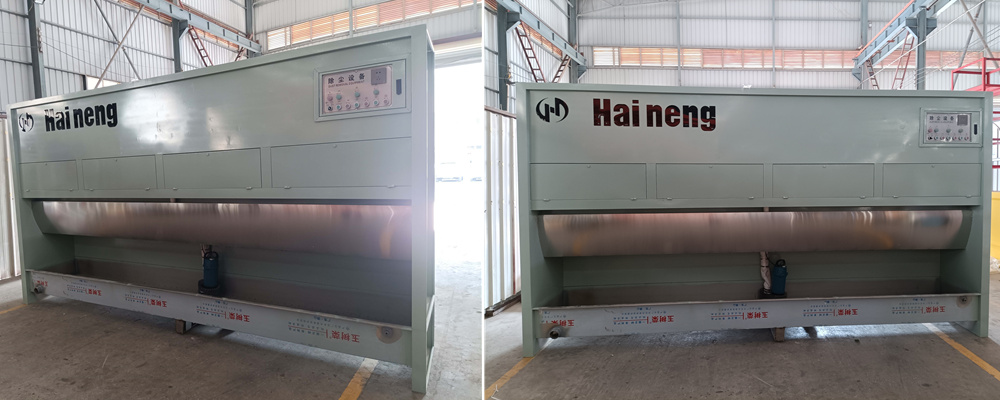
The operational process of the automatic water curtain stone dust collector comprises three key stages: Stage One: Powerful Suction The unit’s built-in high-efficiency fan rapidly draws dust-laden air into the system. Crucially, fan selection is pivotal—ensuring sufficient suction power while balancing energy consumption.
Step Two: Water Curtain Capture The drawn-in air encounters a meticulously engineered ‘waterfall curtain’. This curtain comprises countless minute water droplets that effectively capture dust particles as they pass through. This process resembles how rainwater carries dust particles from the air during rainfall.
Step Three: Sedimentation Separation
The dust-laden water flow enters a stainless steel tank. In this relatively static environment, stone dust particles gradually settle to the tank bottom. Purified air is discharged from the top, while the sediment can be periodically removed.
Matching the airflow capacity is the most critical selection parameter. You can make a simple estimate: measure the workshop area, consider the number of machines operating simultaneously, and the volume of dust generated. Typically, small to medium-sized stone processing workshops require equipment with an airflow capacity of 3,500–72,000 m³/h. Insufficient airflow yields poor dust removal, while excessive capacity wastes energy. The optimal operational range is within a 4-metre radius. For larger processing areas, consider deploying multiple units in zones or installing supplementary suction ducts. During planning, ensure sufficient space for maintenance operations. Stainless steel, though slightly more costly, offers superior durability in humid, dusty environments. For budget constraints, a practical solution involves using stainless steel for critical components like water tanks, while applying high-quality carbon steel with anti-corrosion coatings elsewhere.
Advantages: Water film stone dust collector effectively handle both coarse granite dust and fine marble powder. Unlike certain filter-based dust collectors prone to clogging, the water curtain design largely avoids this issue. Weekly maintenance involves a ten-minute rinse of the water curtain filter layer, with sediment removal from the water tank every fortnight – a frequency most factories find manageable. Stainless steel water tanks offer corrosion resistance and extended service life, reducing replacement costs. Multiple models available: 3m, 4m, 5m, 6m, etc., suitable for workshops of varying sizes.
Routine Maintenance: The stone dust collector requires regular servicing and upkeep, ideally assigned to a dedicated operator. After approximately one week of operation (depending on dust levels), open both front and rear doors to rinse residual dust from the filter layer. This prevents clogging of the ventilation system, which could impair suction performance. When dust accumulation in the water tank becomes excessive, promptly drain the contaminated water and refill with clean water before resuming operation. Regularly inspect the operational status of the fan and water pump to ensure sustained, efficient performance. In cold winter regions, implement frost protection measures by adding antifreeze to the water or employing insulation. During high summer temperatures, ensure adequate ventilation to prevent motor overheating.
Modern CNC stone carving machine and laser engraving machines have vastly expanded the possibilities of stone engraving through millimetre-level precision, efficient production, and boundless creative expression. They combine accuracy, speed, and artistic versatility.
Core Applications of Stone Engraving Machines 1. Text and Letter Engraving
Text and letter engraving represents the most common application, exhibiting remarkable versatility from minute serial numbers to monumental inscriptions. Whether handling diminutive serial codes or colossal commemorative texts, it proves equally adept.Supports a wide range of fonts and languages, enabling the creation of diverse effects such as deeply engraved three-dimensional lettering, shallow relief etching, V-cut bevelled fonts, and even raised embossed lettering.
2. Precision Marking and Complex Graphics
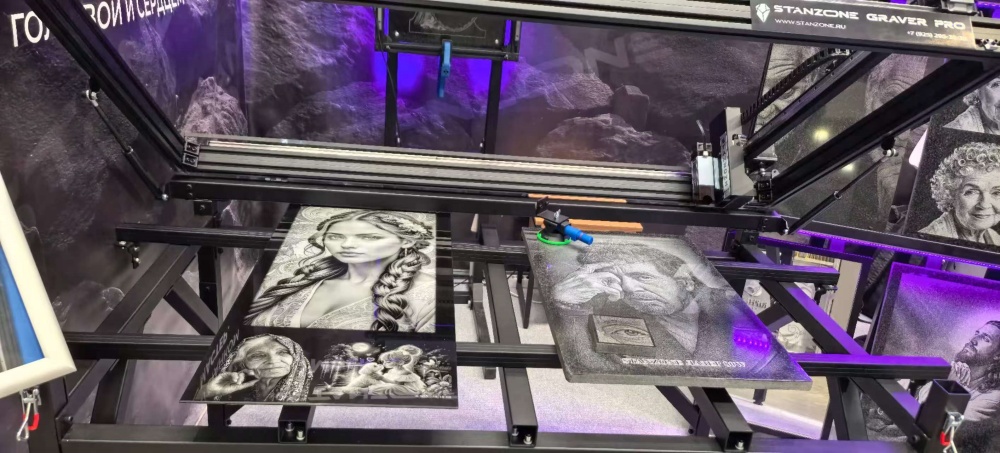
Suitable for corporate signage, architectural entrances, and trophy engraving. Delicate graphics include intricate line art, geometric patterns, mandalas, and clip art. Photorealistic simulations are achievable via halftone techniques—laser or CNC engravers employ varying depths or densities of dot patterns to create photo-like grey-scale images when viewed from a distance. This process excels on uniformly polished stone surfaces, such as black granite.
3. Photorealistic Portraits
High-end laser engravers transform photographs into stone artworks. By precisely controlling laser power and speed, subtle gradations are achieved across tonal areas, producing richly detailed, layered portraiture. This has become the preferred technique for memorials and bespoke artworks.
4. Decorative Textures and Architectural Details
Architectural ornamentation may be produced, including botanical motifs, scrollwork patterns, and decorative borders for interior design. Surface texturing can create slip-resistant finishes, artistic designs, or simulate natural textures such as wood grain or water ripples, and may be applied over extensive areas.
5. 3D Relief and Sculpture Engraving
Multi-axis CNC stone carving machine enable true three-dimensional sculpting, from small artworks to large-scale sculptures. Deep relief: flowers, animals, and figures appear to leap from the stone. Architectural elements such as capital decorations, corbels, and relief panels may also be carved.
6. Utility Items and Functional Markings
Includes durable, legible door numbers and address plaques, memorials and headstones, alongside bespoke trophies and customised awards for sporting events, corporate functions, or personal achievements.
Serial numbers or barcodes may also be engraved onto stone components.
Core Technology Comparison: How to Select the Appropriate Process?
CNC stone engraving machine employ physical diamond or carbide tool heads for mechanical stone carving. They excel at deep engraving, suitable for 3D reliefs, large dimensional lettering, and applications requiring pronounced tactile texture. Capable of handling large, heavy stone slabs.
Fibre laser engravers utilise high-power laser beams to vaporise the stone surface. This non-contact process delivers exceptional detail and smooth finishes while avoiding physical pressure. Delivers exceptional contrast when polishing dark stones like black granite. Also suitable for softer materials such as marble and slate.
CO₂ laser engravers employing laser technology to chemically alter the stone surface. Produces a frosted contrast effect on light-coloured stone, suitable for surface etching/bleaching on materials such as marble and travertine, rather than deep engraving.
Modern engraving technology precisely reproduces virtually any digital design onto stone surfaces. This achieves a perfect fusion of ancient materials and cutting-edge technology.
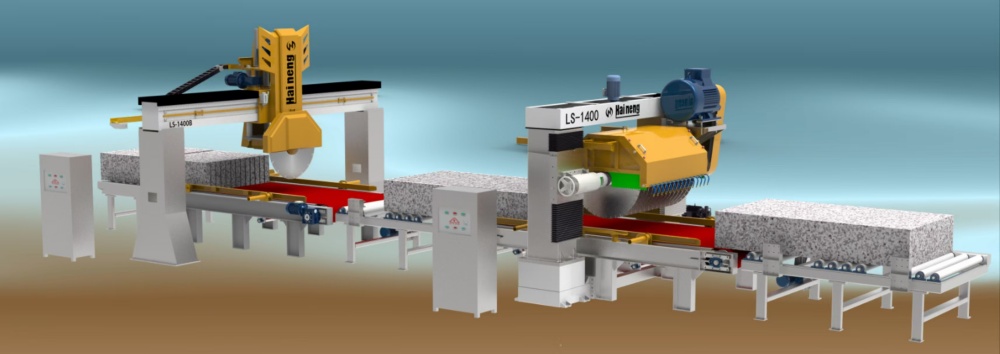
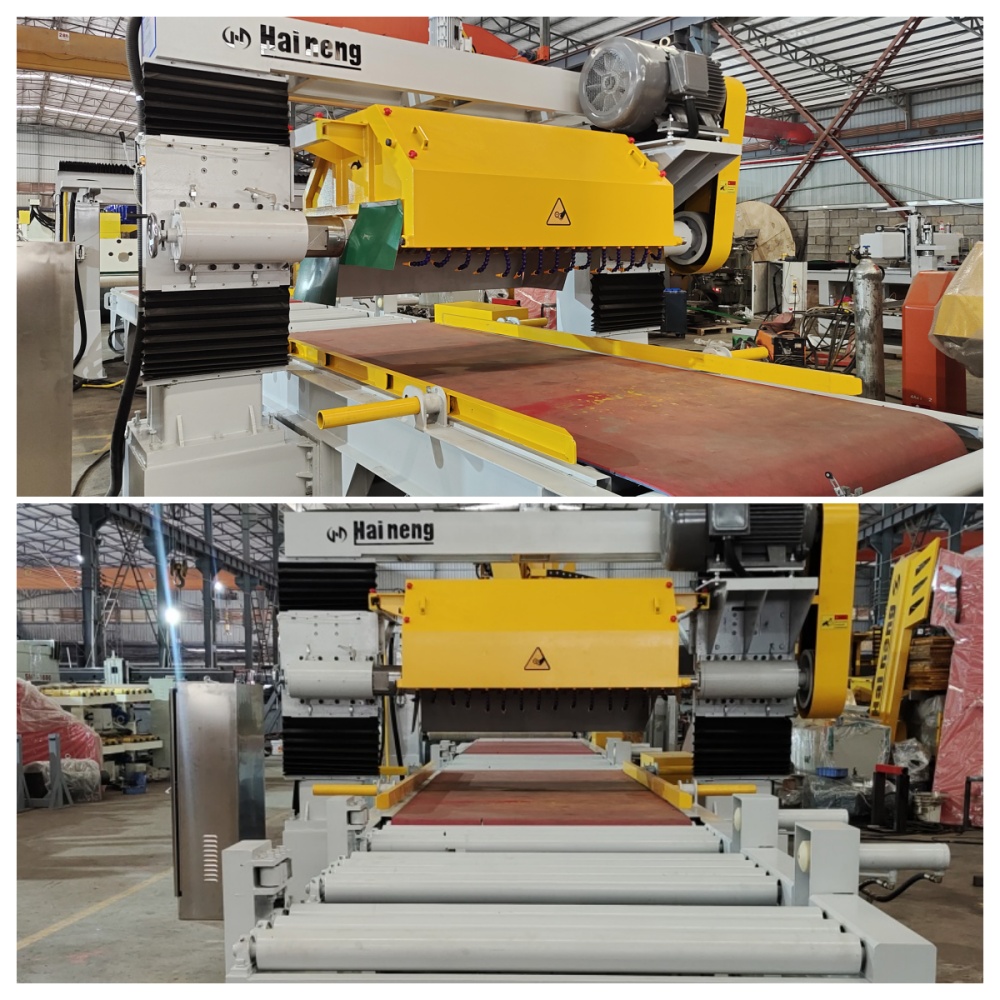
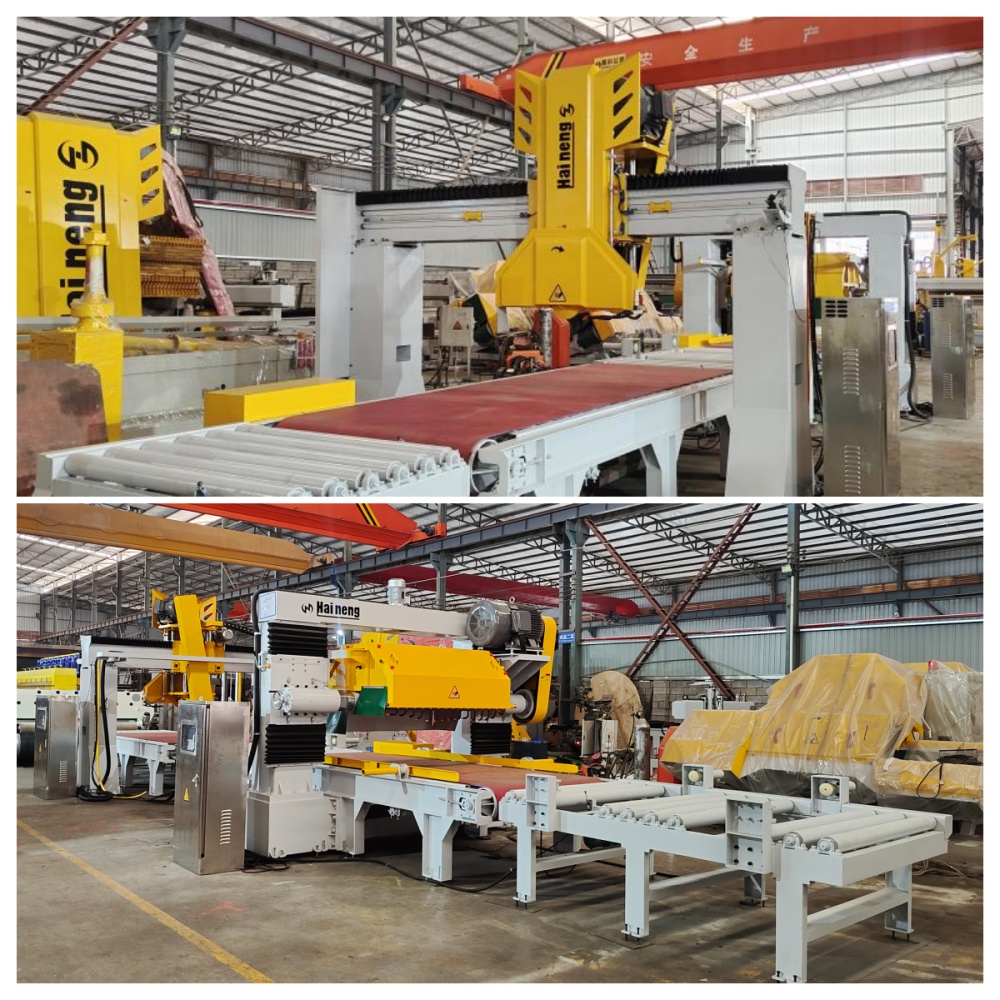
Urban development demands ever-increasing output and precision in kerbstone cutting. Haineng provides advanced end-to-end equipment solutions for kerbstone production. This curb stone machine line processes diverse materials including granite, marble, limestone, basalt, sandstone, concrete, and engineered stone to manufacture kerbstones, paving blocks, guardrails, and square semi-finished products. Haineng kerbstone cutting machine production line can process a wide range of common stones, such as granite, marble, sandstone, basalt, limestone and quartzite, as well as concrete, cement and lightweight building materials, including artificial stone blocks.
Highly Efficient Automated Kerbstone Cutting Production Solution
Kerbstone cutting machine production line features longitudinal (fixed-width) automatic feeding, longitudinal (fixed-width) automatic cutting, transverse (fixed-length) automatic feeding, transverse (fixed-length) automatic cutting, and automatic discharge to subsequent processes. Follow-up stages can incorporate optional equipment for chamfering, surface roughening, and other treatments, ensuring fully intelligent operation throughout.
Advantages:
1. Mainframe employs an integral welded structure for stable, durable cutting 2. Hydraulic system ensures smooth lifting and precise cutting 3. Dual-carriage independent cutting minimises loading/unloading time for maximum efficiency 4. Fully welded chassis undergoes machine-planned machining to guarantee parallel side rails 5. Customisable cutting widths and saw blade diameters
6. No concrete foundation required; simple electrical controls for user-friendly operation
Feature:
High output: Equipment can simultaneously mount 10 to 14 x 1200mm diameter saw blades for operation, significantly boosting production. High productivity: Stone is conveyed via rollers between two units, eliminating manual loading/unloading time and enhancing efficiency. High cutting standards: Utilises PLC programmable control systems and hydraulic lifting mechanisms, equipped with templates and hydraulic arms. Employs shallow, rapid-movement cutting techniques to ensure precision and quality. Low Capital Investment: Compared to other models on the market with equivalent capacity, equipment investment can be reduced by 20% to 30%, alleviating pressure on corporate capital expenditure. Low Consumable Costs: The shallow and rapid cutting method reduces the number of cuts required and accelerates cutting speed, effectively lowering diamond blade wear by 30% to 50%.
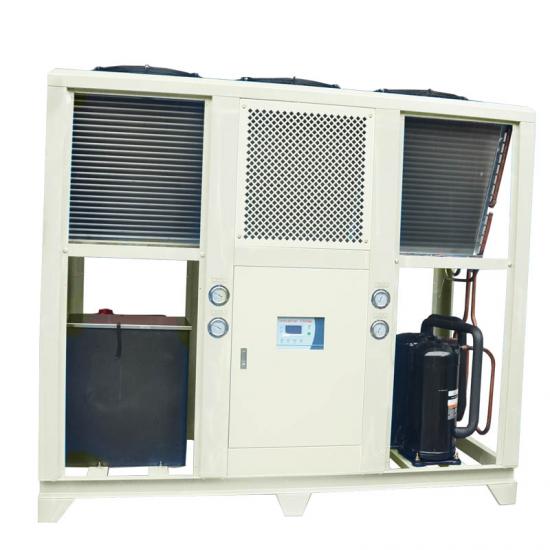
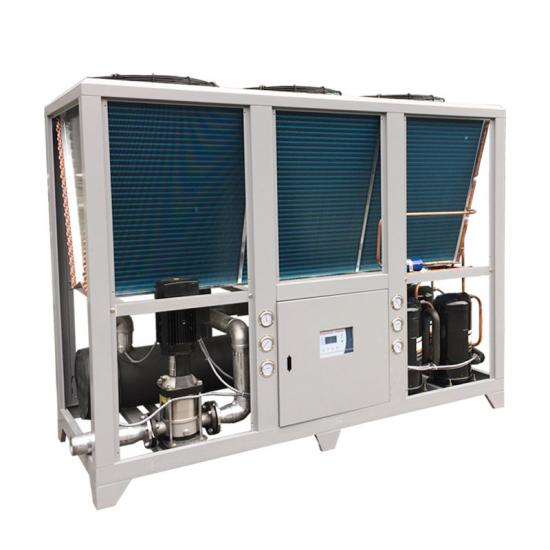
You want a cooling system that is smart and easy. Scroll chillers give you this benefit. They use special scroll compressors for good cooling. You can use them in stores, factories, or homes. Scroll chillers use less energy than old chillers. This means your energy bills are lower. They are small and quiet, so they fit in many places. These chillers also help the environment. They use safe refrigerants. If you want steady and reliable cooling, scroll chillers are a simple choice.
Key Takeaways
Scroll chillers use less energy. This helps you save money each month. They give steady cooling that you can count on.
These chillers use refrigerants that are good for the environment. This lowers your carbon footprint. It helps you reach environmental goals.
Scroll chillers have fewer parts that move. This means you pay less for maintenance. There are fewer chances for them to break down.
Their small size makes them easy to install. They fit well in tight spaces. This makes them great for many places.
The controls are easy to use. You can run scroll chillers without trouble. This makes managing your cooling system simple.
Energy Efficiency of Scroll Chillers
Lower Operating Costs
You want to save money on your building’s energy bills. Scroll chillers help you do that. These chillers use a special design that gives you high efficiency and steady performance. You get more cooling with less power. This means you spend less each month.
Scroll chillers reach over 95% volumetric efficiency. Their continuous compression process keeps gas from leaking out, so you get more cooling for every dollar you spend.
The coefficient of performance (COP) for scroll chillers is 10 to 15 percent higher than what you get from reciprocating chillers. You get more cooling output for the same amount of energy.
When your building does not need full cooling, scroll chillers still work well. At partial loads, they can reach an energy efficiency ratio (EER) of 4.2 to 4.8. Reciprocating chillers usually stay below 4.0.
Scroll chillers support frequency conversion. This means they adjust their output to match your needs. You avoid wasting energy when you do not need full power.
The simple structure of scroll chillers means you pay 15% to 20% less for yearly maintenance compared to reciprocating chillers.
You can see these savings in real-world products. For example, the Lennox Powered by Samsung Varix modular heat-pump chiller has an EER rating of up to 11.54. The Daikin Applied Trailblazer AGZ-F air-cooled scroll chiller reaches an EER of up to 11.13 and an IPLV rating of up to 17. These numbers show you how much energy efficiency you can expect.
Tip: When you choose scroll chillers, you lower your operating costs and get reliable cooling all year long.
Eco-Friendly Cooling
You care about the environment. Scroll chillers help you protect it. Many chillers now use new refrigerants that have a much lower impact on the planet. Older chillers used R-410A, which has a high global warming potential (GWP). Newer scroll chillers use R-32 and R-454B. These refrigerants have much lower GWP values. R-32 has a GWP of 675, and R-454B drops even lower to 467. This change means you help reduce greenhouse gas emissions.
Carrier, a leading brand, chose R-32 for its commercial scroll chillers. This move cuts the refrigerant carbon footprint by 80% compared to older systems. You get high efficiency and strong cooling, but you also help the planet.
Here is how scroll chillers compare in large buildings:
You can trust scroll chillers to give you energy efficiency and eco-friendly cooling. You save money, use less energy, and help the environment at the same time.
Reliability and Low Maintenance
Fewer Moving Parts
You want a cooling system that works when you need it. Scroll chillers give you that peace of mind. These chillers use a simple design with fewer moving parts than other types. This means less can go wrong. You do not have to worry about frequent breakdowns or complicated repairs.
You get easy maintenance because the scroll compressor has fewer parts to wear out. You save time and money on service calls. Compared to screw chillers, you spend less on upkeep. Screw chillers have a complex design, so they need more attention and cost more to maintain. With scroll chillers, you enjoy reliable operation and fewer surprises.
Here is how different chillers compare for maintenance and lifespan:
Scroll chillers need minimal maintenance.
Screw chillers require more frequent and costly service.
Tip: Choose scroll chillers if you want a system that runs smoothly and keeps maintenance simple.
Consistent Temperature Control
You want steady cooling in every season. Scroll chillers deliver this with ease. Their design keeps the temperature stable, even when your building’s needs change. You do not have to worry about hot spots or sudden drops in cooling.
Scroll chillers adjust quickly to changes in demand. This means your equipment, products, or people stay comfortable and safe. You get reliable operation in all conditions, from hot summer days to cooler months. When you pick scroll chillers, you choose a system that keeps your space at the right temperature, every time.
Quiet and Compact Chiller Design
Noise Reduction Benefits
You want your space to be calm and quiet. Scroll chillers help you keep things peaceful. These chillers do not make much noise when they run. You will not hear loud machines in your office or school. Small scroll chillers make about 50 to 60 decibels of noise. This is as loud as people talking. Bigger scroll chillers for factories are still not very loud. They make about 70 to 80 decibels of noise. This is quieter than many other chillers.
Scroll chillers are better than reciprocating chillers for noise. They have fewer moving parts, so they do not shake or make extra sounds. This makes them great for places where quiet is important.
Chiller Type
Noise Level (dB)
Scroll Chiller
Generally quieter due to fewer moving parts and smoother operation
Reciprocating Chiller
Higher mechanical noise and vibration due to more moving parts
Scroll chillers work well in places that need quiet.
You get cool air without loud noises from machines.
Tip: Pick scroll chillers if you want a quiet and cool place to work.
Space-Saving Installation
Sometimes you do not have much room for big machines. Scroll chillers are small and fit in tight spaces. You can put them in small rooms, on rooftops, or in corners. They do not need a lot of space.
Scroll chillers are small, so they fit where space is tight.
Screw chillers are bigger and used for heavy jobs.
Scroll chillers have a simple design with fewer parts to fix.
You save space and keep your building neat. There is less mess and more room for other things. You also do not have to fix them often because they are simple and strong.
Note: A small chiller gives you more space for other equipment and helps keep things tidy.
When you choose scroll chillers, you get quiet cooling and save space. Your building is more comfortable and works better with this smart choice.
Easy Setup and User-Friendly Controls
Simple Installation
You want a system that is quick to set up. Scroll chillers are easy to install. They are small, so you can put them in tight spots. You do not need big machines or hard steps. Most scroll chillers come ready to use, so you can start cooling fast.
When you put in chillers, you might have some problems. Here are the main ones:
New technology can change how much installation costs and what you need to do.
You need trained workers to keep the system working well.
Your team needs training for an easy setup.
You can stop delays by picking chillers with clear guides and help. Many brands give you training and instructions for your team. This helps you get your cooling system running with less worry.
Tip: Pick scroll chillers for a quick and easy setup. You save time and money right away.
Intuitive Operation
You want to use your chillers without any trouble. Scroll chillers have controls that are simple to use. You can check and change settings from anywhere. The dashboard shows important info with easy-to-read widgets. Four access levels keep your system safe and simple to handle.
You also get features like alarm logs, backup restore, and live checks. These tools help you find problems early and keep cooling steady. The programming tools are easy, so anyone on your team can use them. You get lots of help with guides and training.
Here is how scroll chillers and screw chillers compare for controls and upkeep:
Feature
Scroll Chillers
Screw Chillers
Control Complexity
Lower complexity
Higher complexity
Maintenance Frequency
Less frequent needed
More frequent required
Cost
Generally lower costs
Higher costs
You get a system that is simple to use and take care of. Scroll chillers help your building run well and keep cooling steady. Make the smart choice and enjoy easy, stress-free cooling.
Scroll Chillers vs. Other Chillers
Scroll vs. Screw Chillers
You want good cooling for your building. Both scroll chillers and screw chillers work well. But scroll chillers have some clear benefits. Look at this table to see how they are different:
Aspect
Screw Chiller
Scroll Chiller
Efficiency
0.5 kW/ton
0.6 kW/ton
Capacity Range
100-2,000 tons
10-200 tons
Noise Level
Low
Moderate
Initial Cost
Higher
Lower
Maintenance Needs
Moderate
Low
Scroll chillers cost less to buy and fix. You save money now and later. Screw chillers are best for very big buildings. Scroll chillers fit better in smaller places. You get steady cooling and do not pay extra.
Tip: Pick scroll chillers if you want lower costs and easy care for small or medium buildings.
Scroll vs. Reciprocating Chillers
You want to save energy and have smooth cooling. Scroll chillers are better than reciprocating chillers in many ways:
Scroll chillers have a Coefficient of Performance (COP) from 4.9 to 5.9. You get more cooling with less energy.
Scroll chillers work well from 20 to 200 tons. You can use them in many places.
Scroll compressors run smoother than reciprocating ones. You get less shaking and more steady cooling.
Scroll chillers need less fixing. You spend less time and money on repairs.
Scroll chillers are small and strong. They fit in tight spots and keep your building cool.
Scroll chillers give you better efficiency and are easier to use. Reciprocating chillers do not work as well for small loads.
Best Applications for Scroll Chillers
You want chillers that match your needs. Scroll chillers work great in many places:
Variable speed scroll chillers are good for offices, schools, and stores. You get flexible cooling and easy control with building systems.
Scroll chillers are great for data centers. They keep equipment safe with steady cooling and save energy.
Factories use scroll chillers for strong and efficient cooling. You get good performance and low upkeep.
Data centers need high-efficiency cooling. Scroll chillers keep servers safe and energy bills low.
Malls and office buildings use scroll chillers for air conditioning. You get comfort and help the environment.
Data centers like scroll chillers because they control temperature well and are easy to check.
You get the best results when you pick scroll chillers for data centers, commercial buildings, and factories. They are flexible and efficient, so they are a smart choice for many uses.
You want a cooling system that is smart and easy to use. Scroll chillers are special because they give you:
Quiet and smooth running with less parts that move
Better energy use and speeds that can change
Reliable cooling for any kind of place
You help the earth when you pick a system that uses less energy and makes less pollution. More people are choosing scroll chillers, so the market is getting bigger. Make a good choice. Choose scroll chillers for simple, steady, and earth-friendly cooling.
FAQ
What makes scroll chillers better than other cooling systems?
You get higher efficiency, quieter operation, and lower maintenance. Scroll chillers use fewer moving parts. You save money and enjoy steady cooling. Choose scroll chillers for a smart upgrade.
Can I use scroll chillers in small spaces?
Yes! Scroll chillers have a compact design. You can fit them in tight spots, rooftops, or corners. You keep your building neat and save valuable space.
How do scroll chillers help the environment?
You help the planet by choosing scroll chillers. They use eco-friendly refrigerants and consume less energy. This reduces your carbon footprint and supports green building goals.
Are scroll chillers easy to control?
You get user-friendly controls with scroll chillers. The dashboard is simple. You can check and adjust settings quickly. This makes operation stress-free for you and your team.
How long do scroll chillers last?
Scroll chillers last many years with proper care. You enjoy reliable performance and fewer breakdowns. Regular maintenance keeps your system running smoothly.
Learn how to select the perfect vision counting machine for your industry. This 2026 guide covers high-precision counting, multi-material compatibility, key selection factors, and FAQs for VisCount machines.
Why Vision Counting Machines Are Replacing Manual Counting
Vision counting machines deliver high precision, smart automation, and multi-industry compatibility, gradually replacing manual counting in industries like hardware, electronics, food, pharmaceuticals, and agriculture. Choosing the right machine can increase efficiency, reduce errors, and standardize production.
Quick Video Guide: Find out which vision counting machine fits your material
Common Industry Applications
1. Hardware Industry – Counting Irregular Parts VisCount machines accurately identify irregular shapes such as screws, washers, and seals, eliminating missing counts or overcounts.
2. Multi-Material Packaging With multi-channel VisCount machines, you can count multiple materials simultaneously and pack them together, optimizing production efficiency.
3. Food Industry – Precision and Hygiene Designed to meet strict hygiene standards, VisCount machines ensure materials are not damaged or sticky, while maintaining fast and accurate counting.
4. Pharmaceutical Industry – Capsules and Tablets Machines like the VisCount VX series efficiently count and bottle capsules, meeting high standards for pharmaceutical production.
5. Agriculture – Seeds and Colored Materials VisCount machines can handle multiple seed types and colors, providing consistent counts for large-scale packaging operations.
Key Factors When Choosing a Vision Counting Machine
Material Type & Shape: Ensure the machine can handle your specific material characteristics.
Production Volume: Match the machine’s counting speed with your required output.
Special Requirements: Consider moisture resistance, corrosion resistance, or delicate handling needs.
Multi-Industry Compatibility: A flexible VisCount machine reduces the need for multiple devices and tooling changes.
A well-chosen VisCount vision counting machine can lower labor costs, reduce errors, and enable high-speed automated packaging, supporting multiple industries with one versatile device.
FAQ – Common Questions About Vision Counting Machines Q1: Can VisCount machines count irregular hardware parts? A: Yes, they accurately recognize different shapes and sizes of screws, washers, and seals, avoiding missed or double counts.
Q2: Can multiple materials be counted and packed together? A: Absolutely. Multi-channel VisCount machines support simultaneous counting of different materials and mixed packaging.
Q3: Are VisCount machines suitable for the food industry? A: Yes. They comply with hygiene standards, prevent damage or sticking, and maintain fast, accurate counting for food items.
Q4: Can VisCount machines handle pharmaceutical capsules or tablets? A: Yes. The VisCount VX series can count and bottle capsules or tablets efficiently, ensuring compliance with pharmaceutical standards.
Q5: Can different colored seeds be counted in agriculture? A: Yes. Color does not affect recognition. Seeds of various colors and types can be counted reliably for large-scale packaging.
Q6: Are there any special considerations for material handling?
A: Yes. Depending on your product, you may need machines with features like moisture or corrosion protection, or gentle handling for fragile items.
Learn More & Explore Case Studies
For more selection guides, case studies, and industry solutions, visit our blogor leave a comment to get personalized advice for your material.
"Can One Machine Count Thousands of Different Items?" – The Ultimate Guide to Vision Counting System Compatibility In modern production, managing numerous material types often leads to complex counting processes and high equipment costs. Whether you're a large-scale manufacturer or a growing factory, finding a versatile and efficient solution is crucial.
Do these challenges sound familiar? "Our production line handles hundreds of different screws, nuts, and hardware components..." "We work with countless seed varieties, each with unique sizes, shapes, and colors..." "For tablets, capsules, and food grains – must we really invest in a dedicated machine for each type?"
We completely understand the concerns about equipment versatility. And the answer is clear: a single modern intelligent vision counting system is fully capable of handling thousands of different materials.
The Limitation of Traditional Counting: Why "Dedicated Machines" Struggle with Diversity Traditional counting equipment (e.g., photoelectric or weight-based) often relies on fixed physical characteristics like size, weight, or specific optical paths. This makes them inherently inflexible.
Changing materials typically requires replacing molds, making mechanical adjustments, or recalibrating the system. This process is not only time-consuming but also disrupts production, creating a significant bottleneck in modern flexible production lines where frequent product changeovers are essential.
The Vision Counting Solution: Achieving Versatility Through Intelligence Our smart vision counting system is essentially a "software-defined" platform. It utilizes high-resolution industrial cameras to capture images, which are then analyzed and counted by powerful intelligent algorithms – effectively giving the machine "intelligent eyes" and a "decision-making brain." Its versatility is demonstrated in several key areas:
Smart Learning & One-Touch Changeover No programming knowledge is required. Operators simply follow an intuitive testing process to register each material, name it, and save its profile. This quickly builds a proprietary database encompassing thousands of materials. Switching items is as simple as selecting the corresponding profile on the touchscreen – achieving true "one-touch product changeover" in seconds.
"Zero-Setup" Counting, Ready to Use For more flexible scenarios, our advanced "Zero-Setup" algorithm requires no pre-configuration. Simply pour in the material, start counting, and get immediate results. This "foolproof" operation is ideal for R&D environments or high-mix, low-volume production.
Accurate Performance in Complex Scenarios Color & Shape: Whether it's golden corn kernels or black watermelon seeds, round tablets, or irregularly shaped parts, our algorithms deliver precise identification.
Size Range: Easily adapts to everything from tiny sesame seeds to large nuts through simple parameter adjustments.
Overlapping & Clustering: Advanced image segmentation algorithms effectively handle slightly overlapping or clustered particles, significantly reducing the risk of double counts or misses.
Modular Hardware, Configured to Need Building on a universal platform, we offer modular hardware options to handle extremely unique or challenging materials. This ensures optimal counting performance for every item while maintaining core versatility.
One Machine in Multiple Industries: Proven Performance It is this exceptional versatility that has made our systems trusted by clients across various industries worldwide: Industrial Manufacturing: The same machine effortlessly counts everything from M2 screws to M10 nuts and various electronic components. Agriculture & Seeds: Seamlessly switch between rice, wheat, beans, and various vegetable seeds, greatly facilitating R&D and production for seed companies. Pharmaceuticals & Food: Confidently handle tablets and capsules of different colors and shapes, as well as counting and packaging needs for grains, nuts, and candies.
Conclusion A wide variety of materials no longer means exponentially increasing equipment investments. Choosing a flexible vision counting system not only significantly reduces procurement costs but also simplifies production management and enhances changeover efficiency, providing a solid foundation for future business growth.
Unsure if our system can handle your specific materials? We invite you to send us samples for a free counting test. Let the data demonstrate the limitless potential of one machine for all your counting needs.
How the Two-Level Vibrating Feeder Vision Counting Machine Achieves High-Precision Counting Without Setup
1. Product Definition & Working Principle
The VST-4 Two-Level Vibrating Feeder Vision Counting Machine is a high-precision counting device based on vision recognition and dual vibrating feeders. Key features include drop-in counting, no setup required, and optimized material dispersion.
Technical Principle
Level 1 Vibrating Feeder: Initial dispersion of lightly stacked materials to ensure smooth single-layer flow for accurate counting.
Level 2 Vibrating Feeder: Further spreads materials and separates sticky or hard-to-dispense items, providing a stable single-piece flow for vision counting.
This two-level vibrating feeder structure ensures compatibility with different materials and high counting accuracy.
2. Application Scenarios
Scenario
Description
Production Parts Counting
Ensures precise material supply on production lines using the vibrating feeder vision counting machine.
Warehouse Verification
Automatically verifies inventory quantity and specifications for efficient warehouse management.
Order Picking & Dispatch
Accurate sorting according to BOM, ensuring high-precision automatic counting and packing.
Daily Inventory Counting
Quickly counts and organizes materials for better stock control and operational efficiency.
3. Core Advantages & Material Compatibility
No Setup Required: Count different materials immediately without modeling.
High Accuracy: Stable counting across various materials.
Sticky/Hard-to-Dispense Material Compatible: Even lightly stacked or sticky materials are accurately separated and spread.
Compatible Materials: Plastics, fasteners, electronic components, rubber parts, aerospace small components, etc.
4. Oversized Material Handling
Materials exceeding set dimensions or abnormal items are automatically rejected via the reverse discharge belt, ensuring only qualified items are counted and packed.
5. System Integration & Diagram
MEAS Integration: Syncs with warehouse management systems for batch counting and automated inbound/outbound.
Sorting Line Integration: Connects with production line sorting devices for automatic merging, routing, and packaging.
It is recommended to combine diagram 1 (barcode facing up) and diagram 2 (production line sorting integration) for a clear visual guide.
Q1: What material sizes are suitable for the VST-4? A: Suitable for materials up to 50mm in length. Larger items may require other models.
Q2: Can it count non-fastener materials? A: Yes, it supports plastics, electronic components, rubber parts, aerospace small components, and other materials.
Q3: How does the machine handle oversized or abnormal materials? A: The discharge belt automatically reverses to remove oversized or abnormal items, ensuring counting accuracy.
Q4: Can it connect with material management or production systems? A: Yes, it supports MEAS integration and can synchronize with sorting lines or warehouse management systems.
Q5: Is the machine ready for export? A: Yes, the VST-4 has 60+ patents, CE certification, and has been verified by multiple Fortune 500 companies.
7. Industry Standards & Certifications
60+ Independent Patents
International Certifications: CE, etc.
Long-term Cooperation with Fortune 500 Companies
Export-Ready with Global Reliability Verification
8. Video Demonstration
Watch the full operation of VST-4 warehouse counting machine.
Summary
The VST-4 Two-Level Vibrating Feeder Vision Counting Machine delivers drop-in counting, optimized material dispersion, and high precision, solving industrial production and warehouse material counting challenges. It is an essential device for industrial counting and packaging automation.
How to Achieve Accurate Counting for Pre-Packaged Items
Candies, puffed snacks, coffee sticks, marinated eggs, chicken feet, konjac snacks, and other pre-packaged food and pharmaceutical products bring protection and convenience, but they also make accurate counting and secondary packaging on production lines challenging.
What: What is Vision Counting for Pre-Packaged Items?
VisCount automatic vision counting machines use industrial cameras and algorithms to identify and count each individual package, ensuring high-precision batch packaging. This method does not rely on weight or volume but directly “sees” each item, avoiding errors caused by traditional weighing methods.
Why: Why is Counting Pre-Packaged Items Challenging?
Light-weight individual packages lead to large weighing errors
Soft or flexible packaging easily stacks or overlaps
Photoelectric sensors struggle to distinguish closely packed small bags
Reflective packaging or printed designs may interfere with detection
How: Workflow of Vision Counting and Packaging
1. Counting
Set the desired quantity per bag
Material is dispersed evenly using a vibration feeder
Multi-channel counting ensures uniform drop of small packages
Excess items are automatically removed and recirculated
2. Conveying and Bagging
The complete batch is conveyed to the packaging station
Small packages can be aligned or slightly pressed if needed
Packaging machine completes sealing and printing
3. Inspection
Manual or sampling checks for package completeness
Verify small package quantity
Check sealing quality
Application: Suitable Materials for Vision Counting
Industry
Example Materials
Food
Small bag candies, puffed snacks, coffee sticks, marinated eggs
Pharmaceuticals
Blister-pack medication tablets
Agriculture
Small seed packets
Why: Can Different Package Sizes be Compatible?
Standard machines can handle multiple package sizes, and special items can be adapted with partial upgrades without replacing the entire machine.
How: How to Ensure Efficiency with Large Items?
Adjust parameters during trial tests
Increase channel numbers to boost counting speed
FAQ: Common Questions
Can different package sizes use the same machine?
Most standard models cover a wide range, and multiple sizes can be accommodated with partial upgrades.
Will large items reduce counting efficiency?
Increasing channel numbers can improve overall throughput and maintain production speed.
Are vision counting machines suitable for food and pharmaceuticals?
Yes, when complying with CE, ISO, and other relevant standards, vision counting machines are applicable for pre-packaged food and pharmaceutical products.
Why: Why Vision Counting is the Best Solution
Vision counting can identify each individual package, eliminating errors caused by weight differences, shape irregularities, and stacking. Combined with multi-channel design, automatic removal, and system integration, it provides high-precision, traceable counting and packaging, becoming the mainstream solution for pre-packaged items.